













































NEFCISA
NEFCISA

The Music In Africa Foundation (MIAF) is proud of its partnership with the Industrial Development Corporation (IDC) as a Strategic Implementing Partner (SIP) for its Social Employment Fund (SEF). Through this collaboration, MIAF is running a national programme that is creating jobs, addressing skills gaps, and strengthening South Africa's creative industries — in line with the SEF's overarching goal to generate work for the common good and build community value through employment, social contribution, and inclusive economic participation. Operating under the banner NEFCISA (National Employment Facility for Creative Industries in South Africa), the initiative is recruiting and training participants, matching them with host organisations, and has already placed 1 500 workers across the country — surpassing its original target of 1 000. NEFCISA is delivered through a network of 20 host organisations spanning five provinces, who are actively hosting participants and contributing to work for the common good across South Africa's creative and cultural industries. Key Objectives: Support employment and entrepreneurship in the creative industries. Offer skills development and training programmes. Foster partnerships between public and private creative sectors. Promote South African creativity at both provincial and national levels Foster community development through social contribution.

ACCES
ACCES

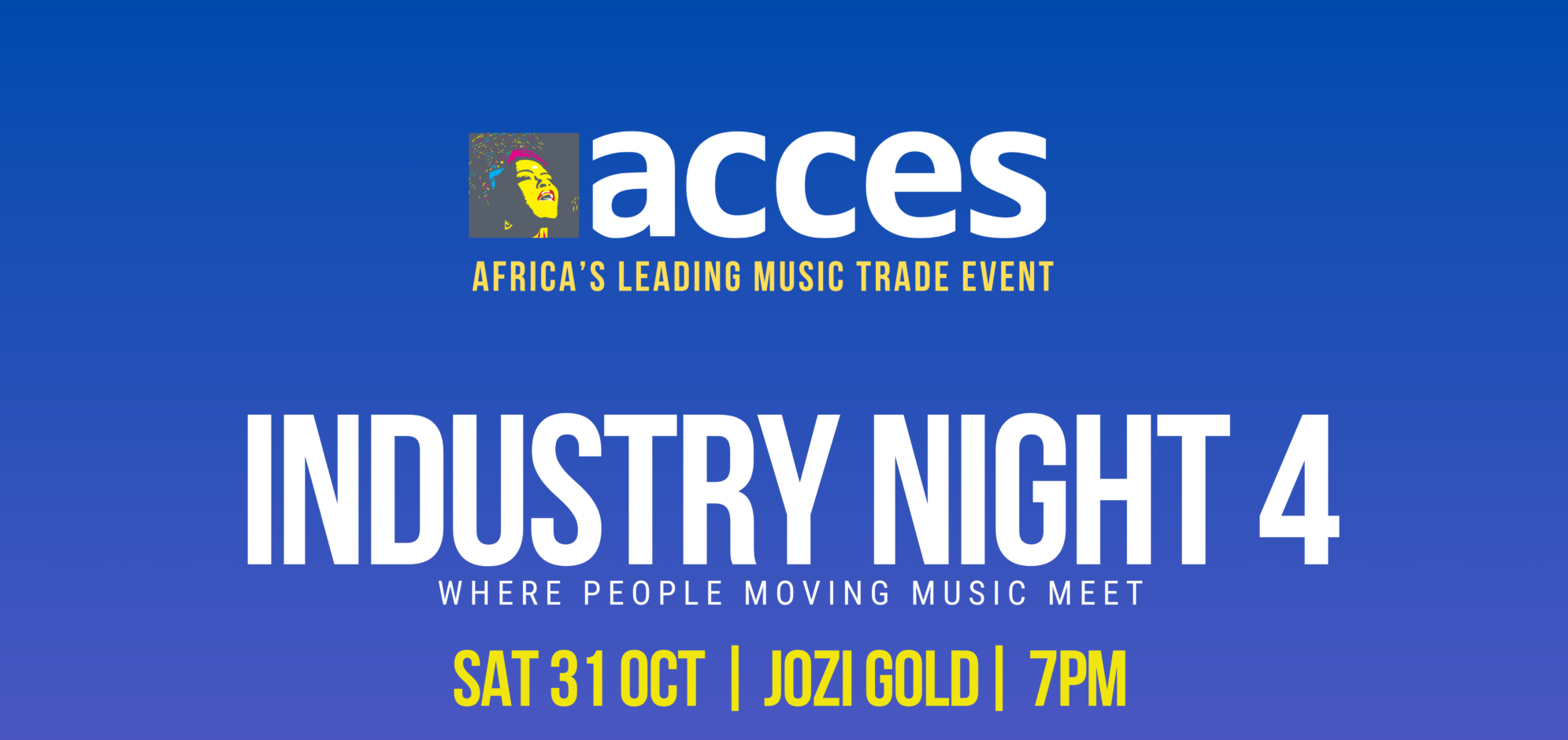
ACCES Conference and Showcase Festival is Africa's leading music industry gathering, bringing together the people shaping the future of the continent's music business. Artists, entrepreneurs, executives, investors, policymakers and cultural leaders from across Africa and around the world come to ACCES to build partnerships, exchange ideas, discover talent and create new business opportunities. Since its launch in 2017, ACCES has become the continent's premier platform for professional exchange and music market development. Combining a high-level conference with a curated showcase festival, networking, exhibitions and industry programmes, ACCES offers a unique space where creativity meets business and where African music connects with the global industry.

Gender@Work
Gender@Work

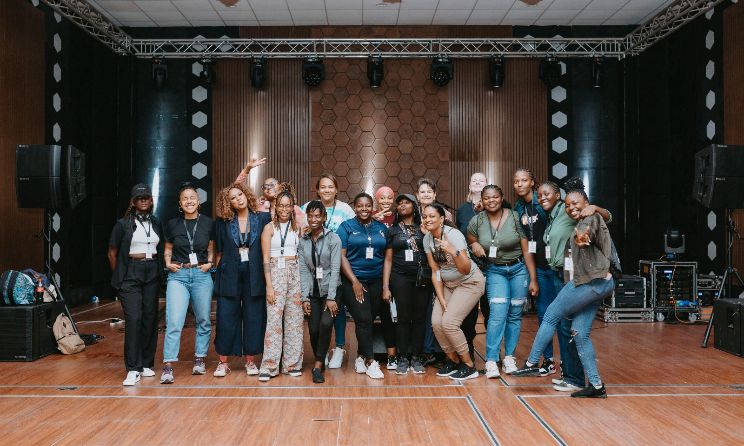
Music In Africa Gender @ Work is a three-year training programme aimed at upskilling and increasing the participation of female professionals in the African music sector. Launched by the Music In Africa Foundation (MIAF) in April 2019, the programme is connected to the MIAF’s ACCES music conference – a pan-African event held in a different African country every year. This connection enables the programme to reach new participants in a different African country every year. The programme marks the beginning of a more concerted effort by the Foundation to support the participation and inclusion of women in all facets of its programmes and the music sector in Africa as a whole. Over the three years, the programme will aim to address gender imbalances in the sector through training, lobbying, facilitating knowledge exchange and dialogues that foster the interest of women. The broader objectives of the programme are to: Provide industry training for women on critical music industry skills, focusing on: Stage management Electronic music production and recording Music business management Technical knowledge Provide an opportunity for both professional and aspiring women to benefit from the Music In Africa network and its broad range of activities in 2019, 2020 and 2021. Provide a solution-based platform in the form of a round table at ACCES with a view to identify challenges, discuss opportunities and lobby for the interests of female practitioners. Offer participants the opportunity to benefit from programmes offered by MIAF’s partners. Increase access to educational materials. Integrate participants in the broader ACCES programme to maximise experience and exposure to the industry. Record and present training materials on the www.musicinafrica.net, including but not limited to tutorials, templates and other best-practice materials. Communicate women-based themes that support the initiatives and messages of the programme. MAIN TRAINING ACTIVITIES Training in first country (Ghana): In the first year, participants will be trained on all aspects of stage management by a team of experienced stage managers from 10 to 17 November 2019. The programme will offer robust classroom training as well as practical, hands-on training in which participants will also be given the opportunity to manage various aspects of the ACCES performance programme. Training in second country: The second training iteration will take place at ACCES 2020 when the programme will diversify its course to include music production lessons and training on other music business topics. A round-table platform will also be introduced to coincide with the ACCES programme. Training in third country: The third training iteration will take place at ACCES 2021 in a different country, offering an advanced course. HOW DO YOU GET INVOLVED?  As a participant, facilitator or trainer: The programme enrolls up to 12 trainees every year. All opportunities are advertised publicly on this website, and will be added to this page. Please keep checking this page for new calls (below under UPDATES & CURRENT OPPORTUNITIES). As a partner Please contact Claire Metais at [email protected]. APPLY The call for applications for 2020 will be announced soon. The Music In Africa Gender @ Work programme is made possible with the support of the Prince Claus Fund, Siemens Stiftung and Goethe-Institut.

Sound Connects Fund
Sound Connects Fund

For cultural and creative practitioners and organisations operating in southern Africa, access to funding remains a major challenge. The COVID-19 pandemic has also had a massive impact on government policy, spending and the economy in general, and has seen spending on culture being moved further down the list of priorities. Further, the cultural and creative industries repeatedly cite four main areas where investment is needed for growth, which are increased visibility, mobility including access to new markets, finance and support structures.

Instrument Building And Repair Project

Experience the Vibrations African Instruments Exhibition online in 3D

Features

Majek Fashek thrills Afropolitan Vibes

06 Jan 2016 - 16:54

cc-img flag-img

It is a longstanding ritual at the monthly Afropolitan Vibes concert in Lagos that more than one dancing lady shall at some point climb the stage. And so it was at 2015’s last concert that a skinny, diminutive lady got on first. A far cry from the more endowed women the crowd is used to, Ms Skinny more than made up for it by an impressive dance. The crowd loved it.
majek-fashek-afropolitan-vibes

Soul singer Ayo Awosika had just left the stage and this interval of dance was familiar to the Afropolitan audience. This familiarity is at the heart of the Afropolitan Vibes appeal: the building of a family instead of fans. Every month the same people clamber up the steps—give or take the awkward but enthusiastic foreigner or returnee Nigerian—yet the excitement never wanes. How much of this due to a stifling Lagos environment that makes cooling-off imperative or the time between AV editions—30 days—is unknowable.

"He's parking," Ade Bantu informed the audience about the next performer. “So we are going to stall you with some music.” A beat went out, with the Bantu band imploring the audience to “shake wetin your mama dash you.”

Tonight the regulars were not climbing the stage, scared perhaps of not living up to the performance of Ms Skinny.

“Where are all the beautiful dancers?” Ade Bantu asked. “Where are the sexy dancers? Chioma you dey run?” Chioma, a regular Afropolitan dancer wearing a black gown on the night, scampered away.

The Bantu band played on. Chioma finally climbed on. In a few minutes three women were onstage dancing to classic Yoruba tunes.

"It's our 32nd edition,” Ade Bantu announced. The edition’s much advertised surprise guest was about to make an entrance. “We are making history tonight. Brothers and sisters we are making history. Hashtag this one. Welcome the Prisoner of Conscience, Majek Fashek. Don't call it a comeback.”

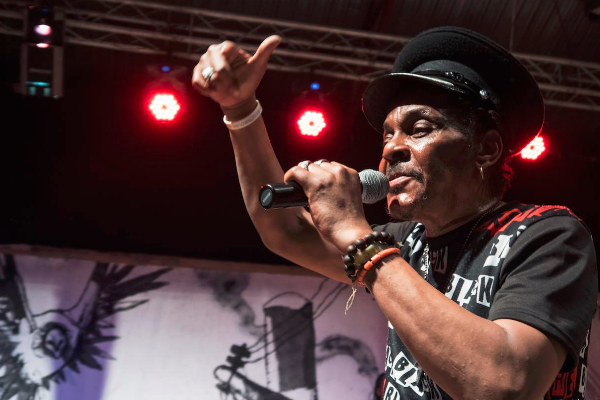
Majek Fashek, a popular artist from the ’90s with a well-documented decline, came onstage. There were shouts and screams and furious whipping-out of mobile phone. But there must have been nervousness as well.

“How you dey my brothers and sisters”? Majek Fashek asked. The band started playing and before the man's words came forth, the crowd was singing. Decades after his peak and several misfortunes later, the Nigerian audience remembered those words. Whatever percentage of the audience had no inkling who he was must have caught the excitement by induction.

Majek had the moves but looked dissipated. His jeans jacket revealed a black t-shirt within, a pendant hung from his neck. Ade stood on the side of the stage, arms folded across chest, looking on in wonder. Apparently, part of the reason Majek Fashek must have been a surprise guest was the general unreliability of having him as headliner. It was a while since the man had a public show and perhaps no one could be certain how it would go.

Ordinarily Majek Fashek would be headliner, a move that would draw a huge crowd. Not like the Freedom Park venue could take anymore revellers.

Among the excited audience, foreigners had to make do with half the enjoyment: the songs. The locals in the crowd had both songs and memories. “Praise the Lord,” Majek shouted at some point. He offered an expletive the way of Nigeria’s president for no clear reason. Thereafter he sang ‘Holy Spirit’ from his 1991 album, Spirit of Love.

“Those lost years, those lost years,” a middle aged member of the audience said, clearly recalling better times. “He has the magic, he still has the magic.” No questions there. The man had it.

None of the succeeding acts came close to the Majek effect. Rapper Naeto C, who succeeded Majek Fashek, was rather underwhelming. And Brymo, who was a last minute filler for the advertised Sir Shina Peters, had a set too brief to be enjoyed.

If the audience left the venue feeling they had witnessed an anti-climax, it was because the main act had performed way before the concert closed.

Please log in to post a comment.

Most popular

Disclaimer: Music In Africa provides a platform for musicians and contributors to embed music and videos solely for promotional purposes. If any track or video embedded on this platform violates any copyrights please inform us immediately and we will take it down. Please read our Terms of Use for more.

newsletter banner

Subscribe to our monthly Newsletter

Follow us on social media