















































By Richard Alemkeng
Music is not a new-comer in the school curricula in Cameroon. Thorough investigation would reveal that at independence in 1960 and up to the Referendum in 1972, it was evident that the place accorded to music in most primary and secondary schools in Cameroon, particularly in the former West Cameroon, was sufficiently distinguished to justify the above assumption. A particular emphasis was laid on this subject both at primary and secondary levels, even though it never had much to do with final examinations.
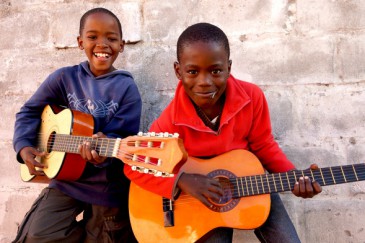
The reason for musical training at the time was discernible. Music was taught as a worthwhile subject in the school curriculum as it was seen to be relaxing, uplifting and soothing, civilizing and strengthening national sentiments and providing some relief from more serious studies. But this attitude has evolved with time and today music education in Cameroon has been reduced drastically or almost left out of most schools’ programmes due to the domination of classical subjects such Geography and Physics.
In Cameroon, besides Western and traditional music there are other music genres such as Makossa and Bikutsi music. Since their creation after World War II, Makossa and Bikutsi have enjoyed widespread popularity. More recently, other genres have developed out of traditional music, much like Makossa and Bikutsi from the Littoral and Centre Regions. Today each of the country’s regions has its own genre of music that is somehow distinct from traditional music. In the North-West we have bottle dance and Njang; in the West Region Chamasi, Magabeu, Ben skin and Makassi; in the Northern regions of Cameroon the music is Sahelien; in the South-West Region it’s the ngom a vetuli of Bakweri and Balondo tribes and the Abanda of the Bangwa people.
The question that interests us here is the place of music in Cameroon’s educational system. In the past, the educational system of East Cameroon followed the methods of French model and the West Cameroon's system was based on the British model. In 1976, the two systems merged, forming a stronger, unified learning system in Cameroon, although some differences still remain. Cameroon today has a highly centralised system of education, such that the different Ministries of Education in the capital decide and instruct heads of educational establishments, both public and private, on what is to be taught, when it should be taught and how it should be taught. The resources, curriculum and teaching methods are provided by the state. As for what concerns music in English-speaking schools in Cameroon, the revised syllabuses of 1965 published by West Cameroon Ministry of Primary Education and Social Welfare with the addition of some new subjects in still in place. In the Franco-phone sub-system the story is not different.
Music Education in Primary Schools
The teaching of music in primary schools in Cameroon aims to develop the sensory and motor aptitude of the child and to sharpen his/her auditive perception, structuring time and space, and acquiring rhythm. To this effective, the Ministry of Basic Education, the organ in charge of primary education, has included music in the National Syllabus of English-speaking Primary Schools with a time allocation of 1h 30min for one-shift systems and one hour for both morning and afternoon shift systems. It is at this level that greater emphasis is laid on music education for the reasons stated above. Here the focus is on singing; little is learned about musical instruments. The children are taught patriotic songs, colonial songs like ‘The Lord Baden Powell’, rhymes, the country’s national anthem, as well as devotional songs are not left out. This is a characteristic of the two systems of education that exist in the country.
Music Education in Secondary Schools
In Cameroon, secondary schools are under the direct supervision of the Ministry of Secondary Education. For the seven years that a student spends in secondary school, music has little or no place in the school curriculum. In most government institutions, music education is only promoted through school clubs. It does not feature on the school programme nor the national syllabus, apart from at the teacher training colleges that were recently transferred to this Ministry. In these colleges, it is part of the syllabus because these students are destined to teach in primary schools. Music education is promoted more at some religious institutions in Cameroon, through choir singing and training in the use of modern musical instruments. This is common in the Minor Seminaries owned by the Catholic church, where future priests are identified for the Major Seminar, for example: Bishop Rogan College in Buea, Petit Seminaire St Paul in Mbalmayo and College de la Retraite in Yaoundé. The emphasis is similar: students are introduced to the art of music. They do not only learn how to sing but also how play both modern and traditional instruments such as the xylophone, drums, guitar and piano.
Music Education at Universities
It is only at university level that music is given much importance, particularly in Faculties of Education. Universities without Faculties of Education therefore have little or nothing to do with music, except at club levels to prepare for university sports or other extra-school activities. Here one can cite the University of Buea and Maroua as examples. At the University of Buea, it is a whole course on its own, entitled ‘Introduction to Music in Nursery and Primary Education’, that runs across the various levels of studies in the Faculty of Education.
The Role of Individuals and NGOs in Music Education
It is this informal sector that has much to offer on music education in. Non-governmental organizations, private individuals and city councils offer great opportunities to the youth to study music and make a living out of it. Here established musicians and artists are also involved. Adolph Moudi (aka Petit Pays) has a music academy in Douala where learners are trained to sing and play both modern and traditional musical instruments. He has established a big musical band that has been in place for the past 20 years. Andre Marie Talla also has a music school in Douala with the same objectives, while André Belinga (aka Ben's), a reputed saxophonist, has organized pedagogic music lessons for music trainers at private schools in Cameroon. In big cities like Douala and Yaoundé, NGOs, churches and development agencies are involved in this exercise, such as the French Cultural Centre, Centre de formation Yaoundé Ongola, and the Franco-Cameroun Alliance in Dschang, which trains youths in music assisted by computers. Courses on music offered by Recreational Centers across the country are numerous.
Challenges
The challenges facing music education in Cameroon are enormous. It is the government that dictates and spells out the school programme and provides resources. Due to the financial weaknesses of the state, schools are often not equipped with the basic material required for this subject, including musical instruments and instructors. In most city schools, there is little or no space, no material resources or financial assistance from the government. In rural areas the situation is even worse. There are no provisions for learning modern music, although traditional music is encouraged during youth and national week activities. Choral singing is also encouraged. The government needs to review its policy on the provision of support for school bands, as it used to do in the early day of independence. Music festivals should be held more regularly, such as the National Arts and Music Festival of Cameroon, run by the Ministry of Arts and Culture, which is currently held every five years. At the level of secondary schools, the government needs to recognise music as a worldwide source of employment and therefore allocate resources for music education.
[i] Cameroon Education - World Map, www.mapsofworld.com 01/08/2014
[ii] Introduction to music in nursery and primary education, university of Buea, DED 404, 2008, P.83
[iii] National Syllabuses for English Speaking Primary Schools in Cameroon, Mineduc, Yaoundé 2000 p.vi
[iv] www.scoutsrecords.org/aboutus.php?
[v] www.university-directory.eu/Cameroon/University-of-Buea.htm
[vi] www.peitpays.net, http://www.petitpaysofficiel.com Wikipedia: petitpays. 29/07/2014
[vii] www.africapresse.com/andre-marie-talla-ouvre-une-ecole...29/07/2104
[viii] www.planete-urgence.org/documents/.../fiche-projet-conge-solidaire.php.
[ix] www.ongola.com/formation.htm 29/07/2014
[x] www.afcdschang.com (training in music) 29/07/2014
[xi] Formation de formateurs en pédagogie musicale à l’Institut Technologique Africain des Métiers de la Musique. www.planete-urgence.org/
Disclaimer: Music In Africa's Overviews provide broad information about the music scenes in African countries. Music In Africa understands that the information in some of these texts could become outdated with time. If you would like to provide updated information or corrections to any of our Overview texts, please contact us at [email protected].


Most popular
Call for applications: ACCES 2026 Emerging Artist Spotlight Competition
01 Oct 2026

Top amapiano songs of 2026
16 Feb 2026

Top Naija songs of 2026
31 Mar 2026

Top Afrobeats songs of 2026
19 Mar 2026
Open call: 2026 Gender@Work music industry training in Johannesburg
03 Oct 2026
AFRIMA 2026: All the winners
12 Jan 2026
Disclaimer: Music In Africa provides a platform for musicians and contributors to embed music and videos solely for promotional purposes. If any track or video embedded on this platform violates any copyrights please inform us immediately and we will take it down. Please read our Terms of Use for more.

Subscribe to our monthly Newsletter
Follow us on social media


Please log in to post a comment.