






















































By Dr. Joshua Alfred Amuah
This text provides a broad overview of music education in Ghana, covering its history, structure and present environment.
Background
There are no written records of the exact dates when formal music education started in Ghana, however, evidence suggests that it included the teaching of singing in a manner analogous to existing practice in Europe, this being in the 19th century. Early European Music teachers taught the songs they brought with them from Europe. The immediate purpose being to train Africans to teach simple hymns and songs to the various church choirs which had begun to emerge.
This system continued throughout the nineteenth century and until the end of the first half of the century. Music in schools was, therefore, principally a preparation for church worship. That no aspect of traditional music was considered suitable for use in church worship as well as in the schools.
Major developments in music education
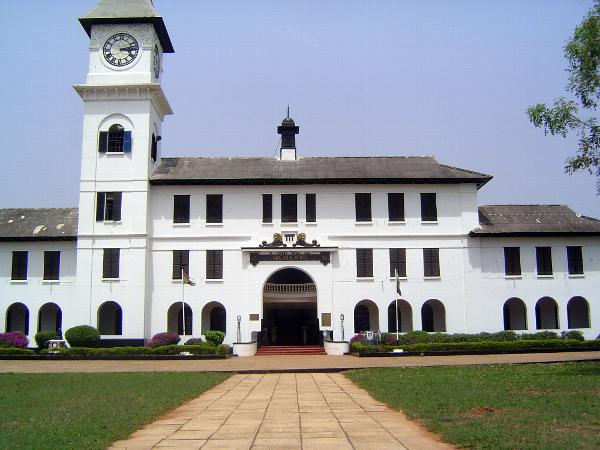
Through the efforts of Governor Guggisberg and at the initiative of Emmanuel Aggrey, Achimota College was opened in 1927. He introduced music in the secondary school department with a famous choir and an orchestra who performed only European pieces. The need to diversify the repertoire of the choir to fulfil the colonial regime’s policy of promoting African culture brought in pioneer Ghanaian Musicologist, Ephraim Amu to join the staff of the secondary section in 1934, with responsibility for the teaching of African songs.
In 1949, three-year teacher education programmes were opened in home science, art, physical education and music at Achimota School. Ephraim Amu who had been teaching music in the secondary department at Achimota School was appointed to take charge of the music programme as head and tutor. In addition to the Theory of Western music, practical courses in African music- drumming and piping – were taught on Amu’s initiative. This was the first successful attempt to introduce indigenous music into the school music programme.
In 1951, the teacher education programmes were transferred to Kumasi to form part of the University of Science and Technology, and in 1958 they were moved to Winneba to become the main branches of the newly established Specialists Training College. At Winneba the music programme was expanded, and the graduates were required to pass the British Licentiate of the Royal School of music (LRSM) diploma examinations.
By 1970, in the era of post-Independence, the nation was becoming more and more interested in music education. Subsequently, the National Academy of Music was established on a separate campus at Winneba, to expand further the scope of music teacher education. This institution became the Department of Music of the University College of Education, Winneba in 1992 as part of the Government’s University Rationalisation programme.
By 1974, an increasingly important place was offered to African Music in the curriculum of schools; in that same year, the new structure and content of educational curriculum was published to include music not as an independent subject, but clustered with Dance, Drama and Religious Studies for Junior Secondary Schools. At the Senior High school lower level, (Forms 1-3) Religion, Music, Art and Physical Education were made optional subjects.
Present state of music education in Ghana
In recent times, basic music education has not seen significant progress, having been placed under Music and Drama in the curricular hierarchy, and clustered with other disciplines such as Pattern Making and Visual Arts, under the broad tag - Creative Arts. The subject features only in the lower primary and has no place in the Junior High Schools. The syllabus designated for the course is unexplainable. Teachers therefore find it difficult to translate the content of the syllabus in practical terms.
The situation however, is different in the Senior High Schools. During the 90’s the subject recorded only 50 candidates involving 10 schools nationwide. Currently music examines 2,000 candidates involving 105 schools at West African Senior High School final Examinations. The writer is aware of a lot more schools who are preparing to enroll in the music programme at the Senior High School.
In the Colleges of Education, music is taught to student teachers in two semesters; one semester in the first semester, which seeks to equip students with generative processes, which may be termed rudiments, to expose students to music, and one semester on methodology to equip the beneficiaries with music teaching methodological skills in the second year. The content of the syllabus therefore concentrates largely on a brief rudiments, African music and methodology.
The situation looks brighter in the universities. In three of the public universities, University of Ghana, Legon, University of Cape Coast, University of Education, Winneba, music features prominently. All the three universities house Schools of Performing Arts and produce musicians of all categories; teachers, performers, technologists, theorists and composers.
Besides public schools, private institutions as well, contribute in the production of music practitioners in Ghana. The School of Music and Cultural Studies which was established by Musama Disco Christo Church is one of such institutions. A lot more individuals have also established private instrumental teaching in their homes. Individuals also contract people to prepare them for Associated Board of Royal School of Music (ABRSM) Examinations which is organised by the West African Examinations Council.
Disclaimer: Music In Africa's Overviews provide broad information about the music scenes in African countries. Music In Africa understands that the information in some of these texts could become outdated with time. If you would like to provide updated information or corrections to any of our Overview texts, please contact us at [email protected].


Most popular

Top amapiano songs of 2026
16 Feb 2026

Call for applications: ACCES 2026 Emerging Artist Spotlight Competition
01 Oct 2026
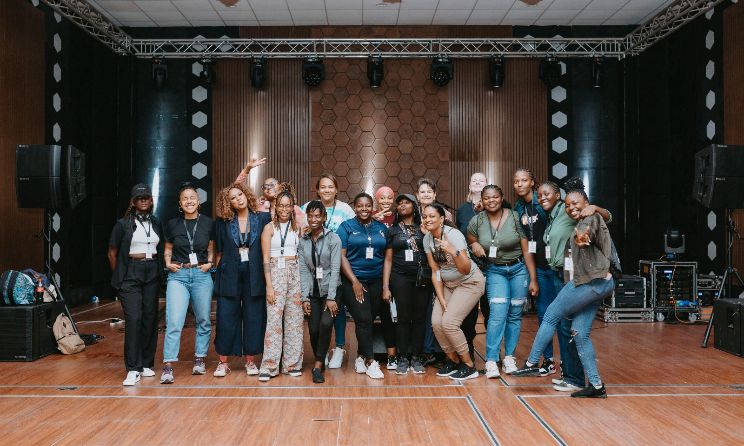
Open call: 2026 Gender@Work music industry training in Johannesburg
03 Oct 2026

Top Naija songs of 2026
31 Mar 2026

Top Afrobeats songs of 2026
19 Mar 2026
AFRIMA 2026: All the winners
12 Jan 2026
Disclaimer: Music In Africa provides a platform for musicians and contributors to embed music and videos solely for promotional purposes. If any track or video embedded on this platform violates any copyrights please inform us immediately and we will take it down. Please read our Terms of Use for more.

Subscribe to our monthly Newsletter
Follow us on social media


Please log in to post a comment.