

































NEFCISA
NEFCISA

The Music In Africa Foundation (MIAF) is proud of its partnership with the Industrial Development Corporation (IDC) as a Strategic Implementing Partner (SIP) for its Social Employment Fund (SEF). Through this collaboration, MIAF is running a national programme that is creating jobs, addressing skills gaps, and strengthening South Africa's creative industries — in line with the SEF's overarching goal to generate work for the common good and build community value through employment, social contribution, and inclusive economic participation. Operating under the banner NEFCISA (National Employment Facility for Creative Industries in South Africa), the initiative is recruiting and training participants, matching them with host organisations, and has already placed 1 500 workers across the country — surpassing its original target of 1 000. NEFCISA is delivered through a network of 20 host organisations spanning five provinces, who are actively hosting participants and contributing to work for the common good across South Africa's creative and cultural industries. Key Objectives: Support employment and entrepreneurship in the creative industries. Offer skills development and training programmes. Foster partnerships between public and private creative sectors. Promote South African creativity at both provincial and national levels Foster community development through social contribution.

ACCES
ACCES

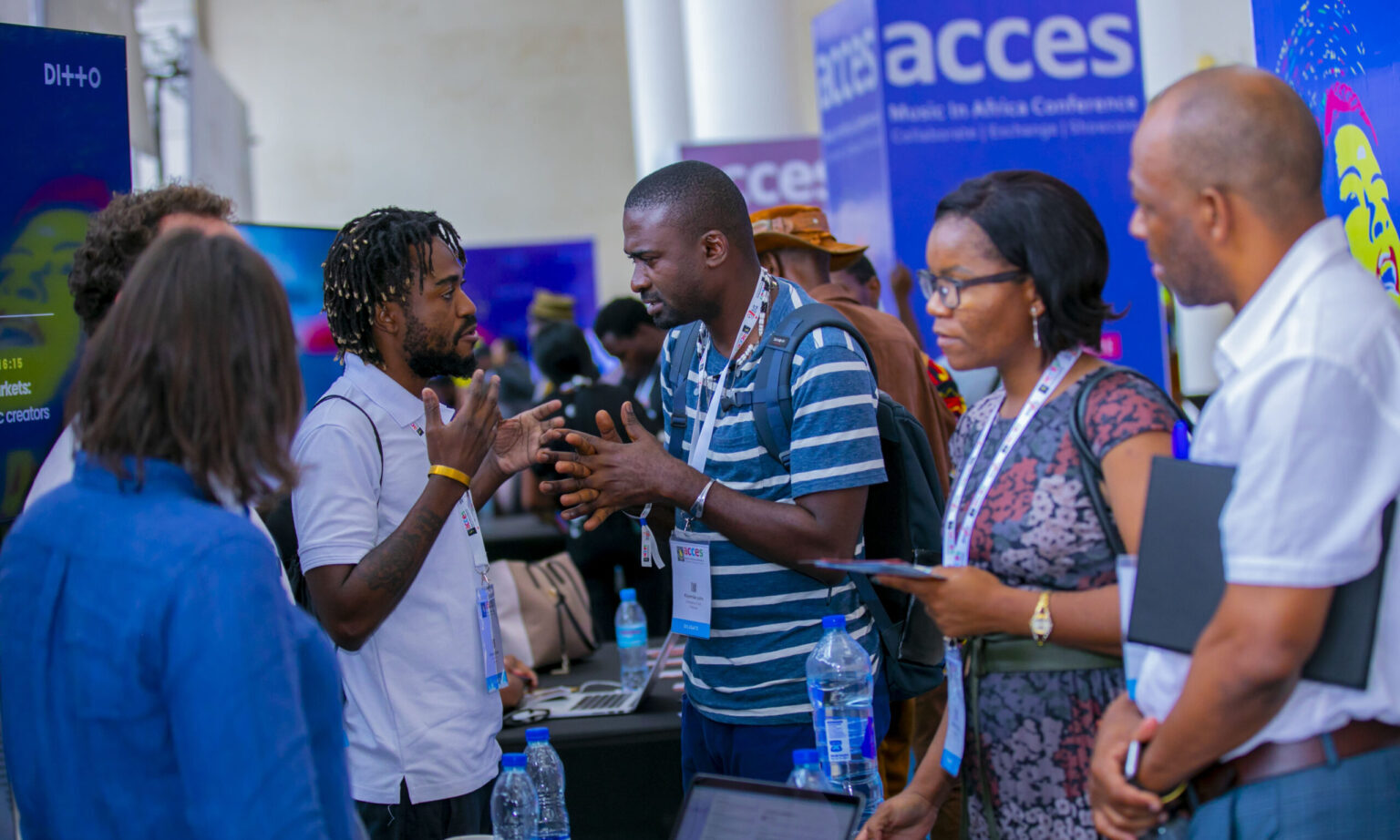
ACCES Conference and Showcase Festival is Africa's leading music industry gathering, bringing together the people shaping the future of the continent's music business. Artists, entrepreneurs, executives, investors, policymakers and cultural leaders from across Africa and around the world come to ACCES to build partnerships, exchange ideas, discover talent and create new business opportunities. Since its launch in 2017, ACCES has become the continent's premier platform for professional exchange and music market development. Combining a high-level conference with a curated showcase festival, networking, exhibitions and industry programmes, ACCES offers a unique space where creativity meets business and where African music connects with the global industry.

Gender@Work
Gender@Work

Music In Africa Gender @ Work is a three-year training programme aimed at upskilling and increasing the participation of female professionals in the African music sector. Launched by the Music In Africa Foundation (MIAF) in April 2019, the programme is connected to the MIAF’s ACCES music conference – a pan-African event held in a different African country every year. This connection enables the programme to reach new participants in a different African country every year. The programme marks the beginning of a more concerted effort by the Foundation to support the participation and inclusion of women in all facets of its programmes and the music sector in Africa as a whole. Over the three years, the programme will aim to address gender imbalances in the sector through training, lobbying, facilitating knowledge exchange and dialogues that foster the interest of women. The broader objectives of the programme are to: Provide industry training for women on critical music industry skills, focusing on: Stage management Electronic music production and recording Music business management Technical knowledge Provide an opportunity for both professional and aspiring women to benefit from the Music In Africa network and its broad range of activities in 2019, 2020 and 2021. Provide a solution-based platform in the form of a round table at ACCES with a view to identify challenges, discuss opportunities and lobby for the interests of female practitioners. Offer participants the opportunity to benefit from programmes offered by MIAF’s partners. Increase access to educational materials. Integrate participants in the broader ACCES programme to maximise experience and exposure to the industry. Record and present training materials on the www.musicinafrica.net, including but not limited to tutorials, templates and other best-practice materials. Communicate women-based themes that support the initiatives and messages of the programme. MAIN TRAINING ACTIVITIES Training in first country (Ghana): In the first year, participants will be trained on all aspects of stage management by a team of experienced stage managers from 10 to 17 November 2019. The programme will offer robust classroom training as well as practical, hands-on training in which participants will also be given the opportunity to manage various aspects of the ACCES performance programme. Training in second country: The second training iteration will take place at ACCES 2020 when the programme will diversify its course to include music production lessons and training on other music business topics. A round-table platform will also be introduced to coincide with the ACCES programme. Training in third country: The third training iteration will take place at ACCES 2021 in a different country, offering an advanced course. HOW DO YOU GET INVOLVED?  As a participant, facilitator or trainer: The programme enrolls up to 12 trainees every year. All opportunities are advertised publicly on this website, and will be added to this page. Please keep checking this page for new calls (below under UPDATES & CURRENT OPPORTUNITIES). As a partner Please contact Claire Metais at [email protected]. APPLY The call for applications for 2020 will be announced soon. The Music In Africa Gender @ Work programme is made possible with the support of the Prince Claus Fund, Siemens Stiftung and Goethe-Institut.

Sound Connects Fund
Sound Connects Fund

For cultural and creative practitioners and organisations operating in southern Africa, access to funding remains a major challenge. The COVID-19 pandemic has also had a massive impact on government policy, spending and the economy in general, and has seen spending on culture being moved further down the list of priorities. Further, the cultural and creative industries repeatedly cite four main areas where investment is needed for growth, which are increased visibility, mobility including access to new markets, finance and support structures.

Instrument Building And Repair Project

Experience the Vibrations African Instruments Exhibition online in 3D

Features

Najee, Joss Stone jazz up Lagos

02 May 2017 - 17:49

cc-img flag-img

Gbenga Adeyinka, host of the Runway Jazz event, which took place on 30 April, was quick to tell his audience that they will see "some of the finest jazz artists the world has to offer". At the end, besides the necessary exaggeration of "some", he was correct. 
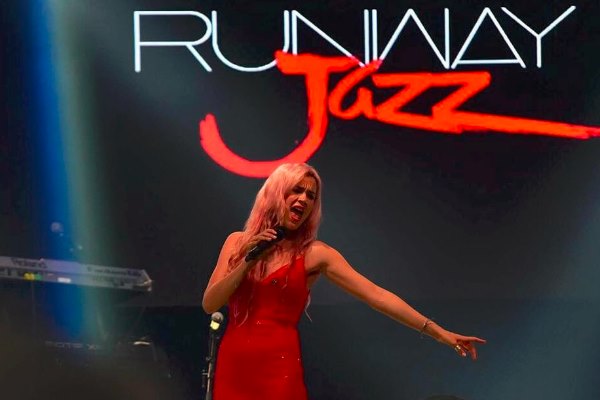
Joss Stone performing at Runway Jazz Lagos.  Photo: RJ

The night began proper about 9pm, with an introduction of the national anthem, which was transformed to a smoothly sung tune. This was followed by host band Sweet Sounds singing a plea for peace. "All we need is peace," said the song, with the vocalist hitting high notes. Her own performance, though great, was matched by a six-year-old child singing a cover of Whitney Houston's Greatest Love of All', working the song's tricky turns effortlessly.

Last year at the first Runway Jazz event, former governor of Cross River State stole the show, performing popular tunes on his saxophone. This year, his daughter Xerona took over singing 'Freefalling', an original song with muted rock influences. Her voice suggested Alanis Morrisette and the lustre of midtempo rock from the 2000s. The delightful Yinka Davies sang 'Eko Ile' and worked some magic with Victor Uwaifo's 'Guitar Boy'.

There was a brief pause to allow for speeches, one given by the wife of the Vice-President Dolapo Osinbajo, who announced that her outfit cost 1800 naira (six dollars), emphasising the need for patronage of Nigerian designers.

One of the night's headliners, Joss Stone, came on barefoot and clad in a red gown. "I'm Joss Stone," she said by way of introduction. Her voice rang clear in the arena, her vocals climbing up the walls of the Eko Hotel concert hall. 'The Look of Love', a late '60s number composed by Burt Bacharach and written by Hal David, followed. "A lovely, lovely song," Stone said. A mellow marvel, the song was rendered with only a guitar as accompaniment. It seemed an impromptu session and called for some intimacy, to which the blonde singer, hair past shoulder length, then enforced.

"I feel so far away from you guys," she said, and moved closer to the audience. From there she performed her version of Willie 'Sugar Billy' Garner's 'Super Duper Love'. She left about an hour before midnight, her set enjoyably low-key. Models dressed by Jewel by Lisa walked on the stage, serenaded by the music of the aptly named Sweet Sound.

At 11.50pm it was Najee's turn. A burst of live percussion and strings poured from the stage amid coloured lights. He took the stage in a white jacket, black pants and shades, playing the sax. His sound was pure, the different sections of his ensemble working well. Onstage an elaborate dancer with a guitar shook his head like a rockstar. Only a few minutes in, and Najee's performance was already an event.

"Nigeria," the American shouted, "how you doing? I don't hear you Nigeria. How you doing?" Some noise came off as response. Smooth jazz has been criticised in some quarters and it was clear why Kenny G has been compared to Najee unfairly. Yet for anyone listening closely, there is an edge to Najee's music not easily found in Kenny G's. He did some moves on his instrument, indicating that he wanted to impress the audience as much as he wanted to play his music. The man wasn't taking his Grammy-nominee status for granted.

"It is my second time coming to Nigeria, first time in Lagos." he said. And then a song about peace and love followed from the Just an Illusion album. A cool tune, it was the exception. Many of his songs on the night rang with the force of major announcements. He played the eternal Anita Baker tune 'Sweet Love' and some more originals. He let the head-bopping guitarist Chuck Johnson get some of the spotlight that he couldn't steal by bopping his head. In a 2010 interview Najee spoke about his guitarist's showmanship. "Even if we do something different, if he's covering a song I may have done with somebody else, his own element is so natural and so easy," Najee said. "And he's just got such a great stage presence. No matter what he does, people love him."

Although past midnight, most of the audience stayed on, a testament to the line-up at Runway Jazz. One of Najee's last songs was one that appeared to have been sampled by rapper Ja Rule and Bobby Brown years ago. A part of the audience sang along.

"Are you ready to go to Paris with me," he asked the audience, and then he played 'Champs Élysées'. The song featured the heaviest percussion of Najee's set. Minutes later, local instrumentalist Yomi Oyelade joined the Grammy-nominated artist for a jazzy version of the national anthem. Jazz and Afrobeat share a filial relationship. And so it was then that Najee left and Dede Mabiaku, an acolyte of Fela, came on, capping a fine night of great music with an energetic Afrobeat performance.

Please log in to post a comment.

Most popular

Disclaimer: Music In Africa provides a platform for musicians and contributors to embed music and videos solely for promotional purposes. If any track or video embedded on this platform violates any copyrights please inform us immediately and we will take it down. Please read our Terms of Use for more.

newsletter banner

Subscribe to our monthly Newsletter

Follow us on social media