




















































The Ocean’s Robin Staps talks about upcoming SA tour
28 Aug 2023 - 13:03


The depressing South African drought of international gigs in heavier music will get some respite and a needed dose of negative ions when The Ocean comes to Stellenbosch and Pretoria on 1 and 2 September.
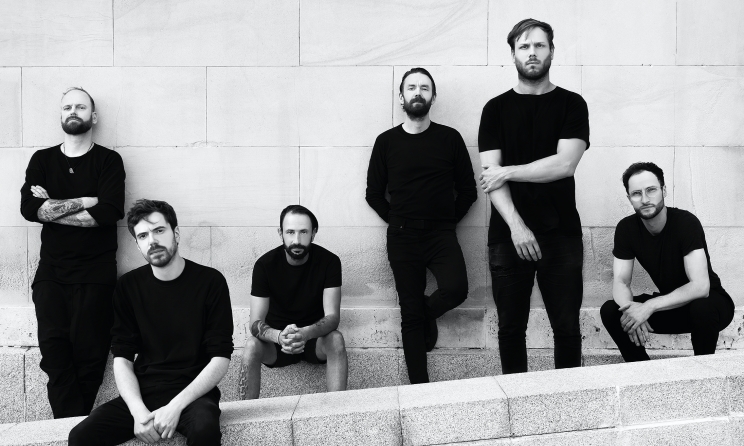
The German progressive metal band will be in the country alongside British alternative/post-hardcore troop Enter Shikari and a host of local acts for the 2023 edition of RAMFest – a music celebration that has previously booked serious names in heavy music like Trivium, In Flames, Rise Against, and Bring Me the Horizon. But unlike those bands, The Ocean will bring more depth to listeners’ ears with a progressive sound built upon concept and careful musical layering.
The Ocean was started as a collective by guitarist Robin Staps in 2000 and saw something like 40 musicians join and leave the band in the first couple of years. The Berlin-based group released its debut full-length collection Fluxion in 2004 but it wasn’t until singer Loïc Rossetti joined The Ocean in 2010 that the band attained its vocal fingerprint. The band upped its sonic game with the release of Phanerozoic I: Palaeozoic (2018), Phanerozoic II: Mesozoic (2020) and its latest album Holocene (2023). The first two of these albums were very much lockdown soundtracks for progressive music heads, when live performances were replaced by headphones and home theatres.
“We’re going to cover a good part of our catalogue, or more recent catalogue obviously,” Staps tells me about the band’s RAMFest setlist during a recent interview. “We have 11 records so it’s impossible to play songs off every one but we’re going to focus on the new record and the last two, Phanerozoic I and II, and also play some Pelagial [2013] tracks.”
The Ocean’s last three albums are conceptually based on geological epochs and aeons – to perhaps divert attention from the little things like mere human lifetimes and bring perspective to the fact that the earth beneath us has been here for a hell of a long time – much longer than we can remember as a species. And now The Ocean is heading to one of the world’s most ancient of places – South Africa – home to some of the oldest mountains and geological formations, and of course the first humans.
“To the Cradle of Humankind?” Staps asks me rhetorically. “It’s actually also our first time ever on the African continent. We’ve never played a show in Africa, we’re extremely excited. For us, it’s always been about getting to know places we’ve never been to, and not seeing the world through the eyes of a tourist but being somehow more involved.”
The eight-track Holocene is quite a departure from The Ocean’s earlier releases – which can be categorised as works within the post-metal genre, defined by bands like Isis, Neurosis and Pelican. The latest compositions employ more Eastern scales and have an air of mysticism about them, giving The Ocean a maturity that also comes with more than two decades of creating alternative music.
“This album [Holocene] was actually mostly based on ideas that were written by our synth player Peter [Voigtmann], who sadly will not come to South Africa with us – he’s not in a good place mentally and health-wise right now. But he sent me these ideas during mid-lockdown and I liked them ... and lay down some parts over them. And in the end, it sounded like an Ocean album with a bit of a different direction and more focus on the senses. It somehow felt like it was logically connected to the end of Phanerozoic II, which had already been going in this direction of more electronics, and more dark and more minimalist instrumentation. And so it made sense to also add another chapter conceptually and dive deeper into Holocene. It was kind of like an unusual writing process, compared to our previous albums, which were mostly songs that I wrote. It was the first time that I was working with ideas that somebody else had written that were already there. That was really, really interesting for me, and I think for the band, it led to this outcome that has a bit of a different emphasis.”
Playing music in the same outfit for 23 years also means that The Ocean transitioned from working in a music business that was radically different than the Spotify era. How has The Ocean navigated the disruptive changes of the music industry where CD sales are dead and most emphasis falls on digital?
“It's challenging, but it’s also very interesting. When we started out, it was entirely different, all based on physical products. Nowadays, streaming income has become very important for what we do. I also run a label, Pelagic Records, which is now releasing the new Ocean album entirely in all formats. Before that, we used to work with Metal Blade for digital and for CDs. But with this record, we do everything. So of course, we’re sitting right at the source and I deal with it on a daily basis, not only for The Ocean but also for other artists.
“As much as it’s true that the payouts of Spotify and the likes are total shit for artists and for labels alike, we still depend on them, and without that type of income we wouldn’t be able to do what we do. Most people simply ‘consume’ music, and I don't like to use that term. But this is what is essentially digital these days and to deny that or to boycott it would make no sense. We rely on it and at the same time we’re trying to make it better to speak out for that, but there’s only so much you can do.
“For The Ocean, particularly, and for Pelagic, vinyl is a big deal. I don’t even want to call it [vinyl] a revival, it’s always been there. When we realised that early, I wanted Metal Blade to release our old records on vinyl, and they were sceptical back then, and so I got the rights back and that was probably the best thing that ever happened to us, because we could do whatever we wanted to for all of the upcoming records. It’s such a huge part of business and our daily reality. It’s kind of like an antidote to the digital world. We’ve done a box set for Phanerozoic that included authentic prehistoric fossils and an engraved slate rock plate and almost like a printed aluminium diamond plate. I just really enjoy looking at what’s possible and what you can do with physical music packaging, and it seems that our fans really appreciate that – that we give them a reason to spend their money on something that is really special and unique.”
Buy tickets to RAMFest here and here.


Most popular
Open call: 2026 Gender@Work music industry training in Johannesburg
09 Oct 2026

Top amapiano songs of 2026
16 Feb 2026
Call for applications: ACCES 2026 Emerging Artist Spotlight Competition
01 Oct 2026

Top Naija songs of 2026
31 Mar 2026

Top Afrobeats songs of 2026
19 Mar 2026

AFRIMA 2026: All the winners
12 Jan 2026
Disclaimer: Music In Africa provides a platform for musicians and contributors to embed music and videos solely for promotional purposes. If any track or video embedded on this platform violates any copyrights please inform us immediately and we will take it down. Please read our Terms of Use for more.

Subscribe to our monthly Newsletter
Follow us on social media


Please log in to post a comment.