
















































Goethe-Institut is inviting artists to submit applications for the 2024 edition of Studio Quantum residence programme.
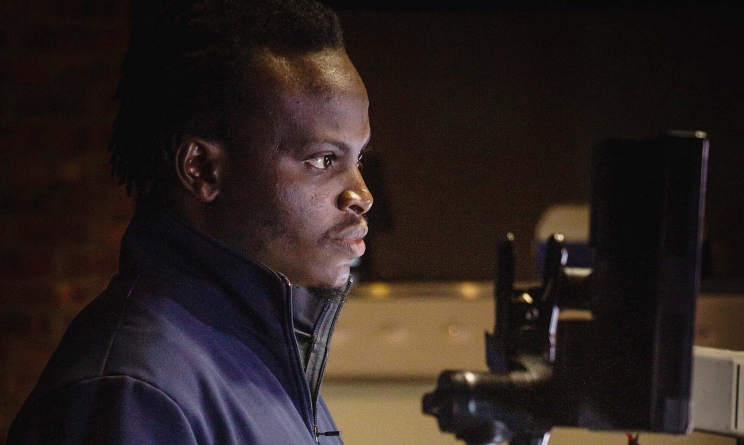
Studio Quantum is an international events and artist-in-residence programme from the Goethe-Institut exploring emerging quantum technologies through the lens of art. Studio Quantum is exploring important cultural, ethical and ecological questions around the impact of quantum technologies. The project consists of three key strands: residencies, events and a project showcase.
Studio Quantum residences in 2024 are open to artists based in the following project locations: Germany, Ireland, Mexico, Netherlands, United Kingdom, Nigeria, India (States of Karnataka and Kerala) and South Africa. One artist will be selected to represent each location. During the residencies, artists will be invited to travel to a different location and incorporate quantum technologies into the subject matter of their work and/or create work using quantum technologies, accessed via the cloud. Artists are also invited to explore new techniques and methods of artistic production enabled by quantum technologies.
Participating artists will be connected with local experts in both the cultural and technology sectors as well as a global network via an eight-week tutorial. All artists-in-residence will be invited to participate in public events in each location and present work and/or findings at a project showcase in Germany in 2024.
The programme and accompanying event series will explore the impact of quantum computing on sustainability and climate change, the relationship between quantum technologies and artificial intelligence, as well as data security and data encryption.
Residencies
All residencies will be two months in length. Applicants must be willing to travel for a minimum of eight weeks as part of this programme. Each location will provide a unique network of project partners. Please see below:
June to July
- Dublin, Ireland
- Johannesburg, South Africa
- Lagos, Nigeria
September to December
- Karlsruhe, Germany
- Rotterdam, Netherlands
- Bangalore, India
- Mexico City, Mexico
- London, United Kingdom
As part of their residency, artists will be invited to take part in a tutorial comprising two weekly sessions over a period of eight weeks. Experts from around the world in both the cultural sector and the field of quantum technologies will present at the tutorial.
In addition to the tutorial, artists should be willing to independently arrange meetings or calls with the experts in technology, research and cultural organisations throughout their residency time. Where possible, the Goethe-Institut will assist with contacts. Each artist will participate in one event organised by the Goethe-Institut during their residency time. (e.g. a talk, a presentation of preliminary work or approaches, participation at a local festival, an interview or networking event).
A production budget of up to €3 000 (about $3 250) travel costs, accommodation and an honorarium will be provided for all Studio Quantum artists-in-residence. Travel costs will be covered according to distance (including any/all luggage, transfers, local transport, etc). The final amount allocated will be dependent on distance travelled.
Who can apply?
Artists applying to the Studio Quantum artist-in-residence programme should:
- Have an interest in technology and innovation, demonstrated through previous work.
- Be established in their practice.
- Be interested in learning about or developing their understanding of quantum technologies.
- Be motivated to work with experts and partners in cultural, educational and tech sectors.
- Contribute to a new global network of experts, cultural partners, scientist and artists to share their findings/work in a professional setting.
- Participate in one event (format tbc – interview, presentation, discussion, etc) as part of their residency.
- The artists selected should be willing to participate in or contribute to a project showcase in Germany in November 2024. For the artists participating in the residencies in autumn 2024, this can include remote participation and presentation of preliminary findings.
- Be proficient in English (C1+).
To foster international exchange and enhance the sustainability of this programme, only artists with an official place of residence in the participating countries are asked to apply to Studio Quantum.
The Goethe-Institut and Studio Quantum are committed to offering equal access, opportunity and outcomes to all potential applicants regardless of their gender, sexual orientation, civil or family status, religion, age, disability, race or cultural and/or socio-economic backgrounds.
Application process
The following documents and materials should be prepared for the Studio Quantum application:
- A short proposal outlining the focus of the residency time and what you would hope to achieve, research, develop or create.
- Indicate which theme your proposal aligns with the most:
- Quantum technologies, sustainability and climate change.
- Quantum technologies and artificial intelligence.
- Quantum technologies, data security and data encryption.
- Wildcard.
- An indication of the preferred residency location (number one is the first choice, then number two, and so on. E.g., 1. Lagos, 2. Karlsruhe 3. Dublin).Artists should fill out all three locations.
- A proposed production budget of up to €3 000 for the residency period relating to the outline above that covers any materials required.
- An up-to-date CV including links to websites and previous work.
The following documents should be submitted in the form of one continuous PDF document (max. four pages in total):
- Artist CV and artist bio – max. two pages.
- Artist proposal and budget – max. two pages.
- Create a profile on gap-online.goethe.de. See below for the link.
Please note:
- Submitting a proposed production budget does not guarantee that all costs will be covered.
- Location preferences will be taken into consideration but cannot be guaranteed.
- All proposals should be original concepts and ideas.
Interested creatives should apply here before 11 February.
View the original call here.


Most popular
Call for applications: ACCES 2026 Emerging Artist Spotlight Competition
01 Oct 2026

Top amapiano songs of 2026
16 Feb 2026

Top Naija songs of 2026
31 Mar 2026
Open call: 2026 Gender@Work music industry training in Johannesburg
03 Oct 2026

Top Afrobeats songs of 2026
19 Mar 2026

AFRIMA 2026: All the winners
12 Jan 2026
Disclaimer: Music In Africa provides a platform for musicians and contributors to embed music and videos solely for promotional purposes. If any track or video embedded on this platform violates any copyrights please inform us immediately and we will take it down. Please read our Terms of Use for more.

Subscribe to our monthly Newsletter
Follow us on social media


Please log in to post a comment.