













































Opportunities for musicians in Sudan – past and present
01 Dec 2022 - 05:57


By Drum Circle Sudan
Where do musicians in Sudan go for opportunities? With so little available in the country, this article aims to present a guide for opportunities available for musicians in Sudan.
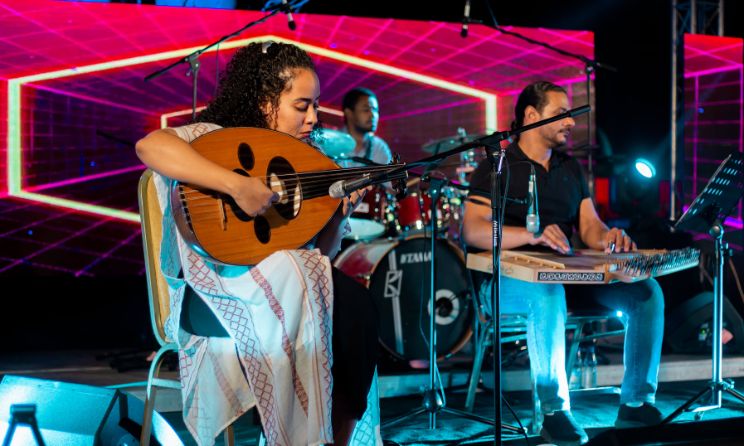
For over 30 years, Sudan's art and music scene underwent oppression and silencing. Due to civil war and unrest, so much of Sudan's rich musical heritage had been neglected and overshadowed by state-sponsored artists, who made it big by singing at weddings or on TV stations which heavily focused on a unified Arab worldview, as shown by channels such as Sudan TV, Blue Nile TV and Ashorooq.
Only in recent years did the national stations begin to include underground musicians and people doing what is known in Sudan as jazz music (popular music with influences from genres like blues, funk and rock). It is then that bands like Sudan Roots, the country’s first and finest reggae group, made appearances regularly on such stations.
Training and workshops
Since the early 2000's cultural Institutes in Khartoum have led the way in creating opportunities for musicians. This ranged from events, to training and workshops, which were held every year. Experienced trainers or artists would be invited to either come to Khartoum or give sessions online to talk about topics such as music promotion and copyrights (Blick Bassy) and sound engineering (Saintrick). The trainings are either short, intensive sessions or long two-year programs. It is safe to say that the British Council Sudan and Goethe-Institut Sudan, offer many of the opportunities available to artists.
British Council Sudan has organised events like WAPI (words/spoken poetry and pictures), organised training for to artists in social leadership and project creation (Active Citizens), put on shows such as Shakespeare Lives (Voices & Choices concert) with artists like Akala and Potent Whisper and organised festivals like Festival of the Nile (2015). It also frequently offered free workshops for dancers, musicians and creators.
Goethe-Institut Sudan organised a yearly festival that ran for seven years, called SAMA International Festival. It focused on promoting local music and on exchanges between Sudanese musicians and invited counterparts from places like Kenya, Germany and Burkina Faso.
With a Google form sign-up, selected artists could attend the workshops and perform on the days of the festival, either opening for the main acts or playing with them.
The last edition of the festival in 2021 included a two-year training program for sound technicians and another for event, band and festival managers, addressing some of the most basic needs of musicians in the country. The trainings were led by the experienced Mayitoukou brothers, Saintrick and Luc. On the second day of the four-day festival, a military coup interrupted work and kept some visiting bands stuck for some time. SAMA Festival ended abruptly and as this was the final edition, but Goethe-Institut announced it had high hopes for its continuity after training live audio technicians and festival and band managers. With the Islamist military government back and tightening its grip once again on artists, the future is uncertain.
SAMA Music Campus was also supported by Goethe-Institut Sudan which offered a free academic programme to train musicians who are interested in becoming teachers in their country.
The SAMA Music Campus is a new initiative by SAMA Music Festival in partnership with Global Music Academy to develop the skills of Sudanese musicians in a two-year programme.
The Global Music Academy has been working since 2010 to develop a new innovative curriculum using modern teaching methodologies designed for use in Music Academies in Africa. The curriculum is focused on African music and is designed to provide professional training for young aspiring musicians and music teachers. It works in partnership with schools in Mozambique, Zimbabwe, Malawi, Tanzania, Uganda, Ethiopia, South Sudan and Sierra Leone.
SAMA Music Campus in Khartoum is conducted in partnership with the Goethe-Institut and the European Union. So far the academy has trained around 30 musicians how to read, write and teach music in their respective instruments.
Live music
For live music, new places are being established, but Sudan still does not have a large live music scene. The now closed JAZZ café was frequented by many of Sudan's underground musicians. Open daily, many jams, shows and events were held there, its closure was a blow to the morale of the local musicians. Other impactful places that were frequented by musicians include Orem Art Space and Mellow Art Space.
While hubs, art and cultural centres operate in a harsh regulatory environment, many places try to keep the spirit of live music alive. Currently, Rateena cafe is among the most popular for iconic and lesser known artists. Although there is no sign-up process for artists to play there, it's still a go-to for many music lovers. Nirvana Cultural Foundation is now also hosting live music events regularly.
Street performances are not allowed in Sudan so it was very noticeable when Aswat Al Madina band began throwing street parties in Khartoum, Omdurman and other cities. It became the first band to continuously host and throw street parties.
Scrolling on social media is one way to find an invitation to a workshop or a registration link to perform at a mini-festival. Sudanese musicians can find opportunities to play at Andariya or Contraband’s events. Andariya has been hosting live shows and providing opportunities and training to artists and musicians over the last four years.
Omdurman Cultural Centre is a government organisation that is open to the community. Reclaimed by the people of Sudan after the 2018 revolution, it supports musicians by offering its stage and space for live shows and other art forms.
Funding
To work, most musicians think of procuring funding. Here we have highlighted some of the most important funding opportunities for independent artists and artist collaboratives in the scene
- Goethe-Institut Sudan's New Spaces Production Fund (2019 to date, opens yearly, around April). From environment awareness to cultural activities, it has supported many projects over the last three years from comics to drum circles and instrument building to architectural street photography.
- Sudan Artist Fund up to $500 for artists every month (open 1st-15th), the fund supports one Sudanese artist each month.
- International Funds: AFAC the Arab Fund for Arts and Culture supports musicians from Sudan with their yearly grants for independent artists.
Challenges
Musicians in Sudan mostly struggle to attend workshops at cultural institutes, although the training is important and often a way to network with other artists.
When they perform on stages with international artists, musicians do not receive any form of payment. Most opportunities are for exposure only and professional musicians are not compensated for their time or experience. But this is slowly changing.
Many musicians are now trying to create their own opportunities or wait around for the next big festival.
In one of Khartoum's biggest festivals in 2017, Karmakol International Festival, many musicians gathered to perform in Al Shimaliyya, the northern part of the country with bands such as Imarhan and Sinkane. Due to a lack of opportunities, local musicians have to choose between not playing or not getting paid.
Artists who live outside of Khartoum have fewer opportunities than those near or in the capital.
Sudan is not just Khartoum
Outside of the capital, things seem bleak but hope emerges in the form of Share Zone, a hub in Al Fashir, the capital of Darfur. It provides training through workshops and holds discussions with artistic communities via webinars. Since most events and opportunities are centralised, there is now an effort to expand projects to other states and either create hubs (supported by Goethe-Institut Sudan) for networking and opportunity creation. More cultural institutes and organisations are now beginning to understand the importance of including artists from states like Darfur, Kordofan and Blue Nile. Through social media, more musicians are able to participate in the scene.
Jeenak is one programme that features Sudanese bands from all over the country. It is a project that focuses on restoring public places as a space to enhance culture, arts and social discourse.
The project is based on movement between the various cities of Sudan by use of a truck, which is the platform of the show through which the artists showcase various cultural and artistic activities in public places.
In the first season, the project featured a group of artists from all over Sudan including Port Sudan, El -Fasher, Nyala and Damazin, working to cover all cities of Sudan.
It is one of the programmes of New Spaces, a project by the Goethe-Institute funded by the German Federal Ministry.


Most popular
Open call: 2026 Gender@Work music industry training in Johannesburg
09 Oct 2026

Top amapiano songs of 2026
16 Feb 2026
Gambia: Suntou Susso announce UK tour for ‘The Path of a Griot’
09 Oct 2026

Top Afrobeats songs of 2026
19 Mar 2026

Top Naija songs of 2026
31 Mar 2026
Call for applications: ACCES 2026 Emerging Artist Spotlight Competition
01 Oct 2026
Disclaimer: Music In Africa provides a platform for musicians and contributors to embed music and videos solely for promotional purposes. If any track or video embedded on this platform violates any copyrights please inform us immediately and we will take it down. Please read our Terms of Use for more.

Subscribe to our monthly Newsletter
Follow us on social media


Please log in to post a comment.