


















































Opportunities for musicians in Zimbabwe
28 Aug 2015 - 09:06


By Innocent Tinashe Mutero
Zimbabwe’s arts industry has witnessed steady growth over the years. Music in particular now has an unprecedented number of new players. This growth has been attributed to the 70% local content quota that the government imposed on all broadcasting stations in Zimbabwe through the Zimbabwe Broadcasting Services Act Chapter 12.06 (2001), which made it compulsory for Zimbabwean radios and televisions to broadcast 75% local content. In recent years, the growth in the number of musicians has also been attributed to the closure of industries and the loss of jobs, leading unemployed youth to increasingly turn to Zim-Dancehall. This growth raises the urge to discuss the opportunities that are availed by the Zimbabwean government and non-governmental institutions to support musicians at various stages of their career. These include competitions, educational institutions, performance platforms and grants.
Competitions
Starbrite is probably Zimbabwe’s most celebrated talent discovery show. In the past they have discovered stars such as Prudence Katomeni-Mbofana, Tendai Chidarikire, Mateo, Potato and more. The show has a friendly format where producers travel the nation searching for talent from any age group. It has a strong media presence and a loyal fanbase.[i]
Zimbabwe Talent Hunt is a recent entrant in availing opportunities to musicians. The agency runs a talent discovery project, with an easily accessible online platform where musicians register and upload their profiles. Registrants have access to help and guidance from a pool of volunteering mentors. In addition, the organisation records and helps musicians from all genres with recording and album launches.[ii]
Other talent search programs include Zimbabwe’s Got Talent (or simply Zim Got Talent), which launched in 2014. The organisation has plans to facilitate to facilitate an exchange trip to China for the winners.[iii]
Chibuku Road to Fame Competition is another talent identification programme that seeks to give underprivileged groups a chance to record their first albums. The competition, which is organised by National Arts Council of Zimbabwe (NACZ)[iv] and Delta Beverages, is open to upcoming artists who have not yet recorded their music.
Institutions
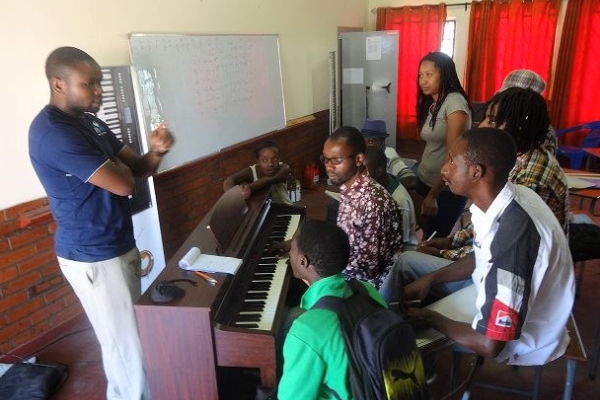
Besides for competitions, there are a number of insitutions where musicians can better their compositions, stage craft and brand through workshops and courses.
The Pakare Paye Arts Centre in Norton is run by Oliver Mtukudzi and is involved in nurturing talent. The centre is a unique experience-sharing platform where bands, networks and friendships are created. The centre takes an emancipatory approach to learning where budding artists are exposed to Tuku and other greats sharing their musical skills and knowledge. Pakare Paye is free and does not charge learners. They also provide instruments to keen learners who do not have means to purchase instruments. Artists such as Munya Matarutse, Donald Kanyuchi and Charles Chipanga were nurtured at Pakare Paye.[v]
The Music Crossroads Zimbabwe Academy has an impeccable menu of opportunities for young musicians. Besides the prestigious Imagine Zimbabwe Festival, which offers young musicians aged between 13 and 20 the opportunity to compete for a European tour, the academy also engages participants in music skills and management workshops. The Music Crossroads Academy also runs a Music Certificate Course, which offers all students a 50% fee waiver, which rises to 60% as the student progresses with his or her studies. The course has been hailed for its intensive training, creating life skills opportunities and combining various approaches to music in Zimbabwe and other southern African countries. In addition, through an arrangement between Music Crossroads Academy and Midlands State University, musicians who ordinarily would not have access to university education can proceed to study for a B.Sc (Honours) degree in Music and Musicology. The Music Crossroads Zimbabwe Academy also has a campus, which musicians can use as a creative hub to explore and experiment with ideas. The organisation has an open-door policy and can be contacted through various platforms.[vi]
Unfortunately, most musical hubs are located in Harare and its surrounding areas. The only exception is in the city of Bulawayo, where the Inkululelo Yabatsha School of Arts (IYASA) runs a workshop programme called the Isiphiwo Sami talent search. Here they give training in music and other art genres to scholars and teachers in secondary and high schools.[vii]
Another institute in Bulawayo is the Amakhosi Culture Centre. Founded in 1995, the centre offers rehearsal and performance space to musicians. It is known for its discussion-based approach, where experienced artists and upcoming artists freely share their experiences. The organisation also runs a performing arts course.[viii]
There are five institutions offering degree course in different fields of music: Midlands State University[ix], University of Zimbabwe[x], Great Zimbabwe University[xi], Africa University in Mutare[xii] and the Zimbabwe College of Music[xiii]. Of all the institutions, the Zimbabwe College of Music has a robust community outreach programme, through which they frequently reach out to musicians who are not enrolled with them. In the past they have conducted workshops on copyrights and arts management, for example. Most recently they are actively involved in sensitizing Zim-Dancehall musicians on censorship and ‘clean’ lyrics. Entry requirements to these institutions can be found on their respective websites. More details can be find in the overview of music education in Zimbabwe.
Performance platforms
It is every musician’s wish to have a platform to showcase their art on stage. However, it is difficult for little-known musicians to find that platform as most venue owners are not keen on ‘experimenting’. Venues like the now-defunct Book Café, Alliance Francaise and the Zimbabwe Germany Society (ZGS) have typically covered this gap. Alliance Francaise offers a professional space for local artists to create and present high quality work. The centre is driven by facilitating opportunities between producers of cultural products. The ZGS splits its activity between regular events such as Acoustic Night and the Artists Management Forum, and special events such as the Flame Festival.
Zimbabwe also has a strong network of festivals where musicians can showcase their art. Usually these festivals also run workshops on various carefully selected topics which meet musicians at their point of need, such as the Impact Conference at HIFA. The Zim Festival Network[xiv] aims to provide a bridge between the various festivals on offer. More details are provided in the overview of Zimbabwe's live scene.
Grants
The biggest challenge facing Zimbabwean musicians is access to funds to inject into their business. Most musicians are either not aware of funding opportunities or they fail to meet the grant requirements. However, the Culture Fund of Zimbabwe Trust offers grants which can be applied for in vernacular. However, the Trust does not specifically target musicians; their grants are open to the whole arts sector. In 2015 they hosted a Culture Impacts programme, and also offered a mobility fund that offers travelling grants. Earlier in 2015 a group of female musicians graduated from the College of Music with support from the Culture Fund. It is the prerogative of individual musicians to check the specific grant requirements from the Culture Fund of Zimbabwe Trust website.[xv]
In a 2013 study commissioned by Harare-based Nhimbe Trust, Pamberi Trust and others, Melissa Eveleigh posits that “opportunities are missed, lost, not known about and/or not taken due to misconceptions, lack of information, and lack of open channels” (2013:9)[xvi]. It was thus in the spirit of sharing and developing Zimbabwe and by extension Africa’s music industry that this article shares information on the many opportunities available to Zimbabwean musicians. However, the article is not exhaustive of all the options and musicians are encouraged to visit the National Arts Council provincial offices in their area to get more information, as well follow updates from the various arts bodies that are posted on their websites social media platforms.


Most popular

Top Naija songs of 2026
31 Mar 2026

Top Afrobeats songs of 2026
19 Mar 2026

Ghana: Mr Eazi and MOLIY’s ‘Comfort’ earns Urban Music Awards nomination
21 Oct 2026

Top amapiano songs of 2026
16 Feb 2026
Open call: CANEX Music Business Lab and Songwriting Camp
15 Oct 2026
Nigeria: CANEX WKND unveils 2026 programme
21 Oct 2026
Disclaimer: Music In Africa provides a platform for musicians and contributors to embed music and videos solely for promotional purposes. If any track or video embedded on this platform violates any copyrights please inform us immediately and we will take it down. Please read our Terms of Use for more.

Subscribe to our monthly Newsletter
Follow us on social media


Please log in to post a comment.