







































Preserving the cultural heritage of Sudan
25 May 2022 - 12:59


Sudan is one of the most diverse and culturally rich countries in the world. Sudan has more than 500 ethnic groups speaking more than 400 languages and dialects, with poetry, art, drama, music and dance forming part of the cultural traditions [1].
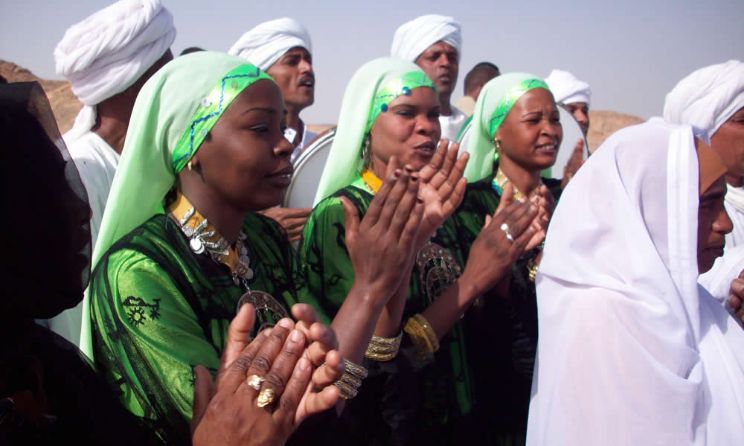
But decades of conflict have placed Sudanese archives under threat due to under investment and poor protection measures. However, several projects have been carried out with the aim of preserving the cultural heritage in the country.
This text explores preservation of cultural heritage in Sudan.
Physical archives
There is a wealth of archival material in Sudanese cultural institutions, including maps, photographs, manuscripts, newspapers and even political papers, all carrying very rich intangible cultural heritage. Much of the cultural heritage and practices are recorded in archives [2].
In 2009, UNESCO, through Intangible Cultural Heritage, granted $12 167 to assess the needs of audiovisual collection of traditional Sudanese music housed in the Folklore and Traditional Music Archives of the University of Khartoum. The Sudanese National Commission recruited Simon Tanner, an expert who conducted a mission to Khartoum from 15 to 28 October 2012 and subsequently elaborated a strategy for the digitisation of archival materials [3].
Tanner, a professor of digital cultural heritage and vice dean arts and humanities (impact and innovation) at King's College London, was also tasked by Sudanese Association for the Archiving of Knowledge (SUDAAK), to advise the National Cultural Heritage Digitisation Team (NCHDT) on the digitisation and archiving of Sudanese cultural heritage.
The project began 21 months behind schedule but was completed rapidly and closed in June 2013 when the Institute of African and Asian Studies (IAAS) of the University of Khartoum finalised the project. From the findings of the project, the Folklore and Traditional Music Archives constituted a valuable collection containing more than 3 000 audio recordings and photographs of traditional Sudanese music collected since 1963 as a result of different research initiatives on folklore and oral traditions from diverse communities [4].
Sudan Radio and TV had extensive archives of audio tapes as well as video tapes of TV programmes and documentaries. These included 160 000 hours of radio tapes that were cleaned, conserved and digitised. About 27 000 hours of audio was converted. Sudan TV also had 60 000 TV tapes in a range of formats but none of them were converted [5].
Inaugurated in 1902, Khartoum University (originally named Gordon Memorial College) had other significant archives such as the folklore archive which held materials on music, folklore, religion and history from different parts of Sudan. The National Archives and the National Museum had vast numbers of artefacts and documents. There were around 30 million documents in the National Archives alone. The Department of Photography at the Ministry of Culture holds 76 million negatives in 35mm and other formats. All events of any significance had been photographed for decades.
State of physical archives
Among the conclusions of the project, an urgent need was identified for capacity building to create an improved mechanism for data acquisition, digitisation, storage and retrieval, as well as implementing adapted measures to ensure the security and safety of the archives. The physical archives were found in a dire state with some decaying away [2].
A register of cultural institutions and artefacts was compiled, and a priority schedule for conservation and digitisation drawn up. A professional cataloguing and digitisation service was set up in Khartoum, with roving facilities available for other regions. A large volume of at-risk content was captured, including 100,000 maps, fragile photographs (in excess of 10 million) and AV materials documenting disappearing cultures and customs. Staff and volunteers in local cultural institutions were trained with a view to building digitisation and conservation capacity in Sudan in the future.
Digital plans
The NCHDT was formalised in April 2013. Dubbed Digital Sudan, the Ministry of Information, SUDAAK, museums and libraries working on archives throughout the country collaborated to form the NCHDT.
Working with teams in Durham University and King’s College London in the UK, and with other organisations throughout the world, the NCHDT is creating a collaborative infrastructure to integrate resources and facilitate usage.
The countrywide project aims to transform access to cultural heritage and transform Sudanese intellectual productions to modern electronic and digital media, which will be safer to preserve and easier to retrieve [7].
Community projects
There is a growing interest in preserving music heritage in Sudan. Other than international collaborations and government programmes, individuals have set up community projects.
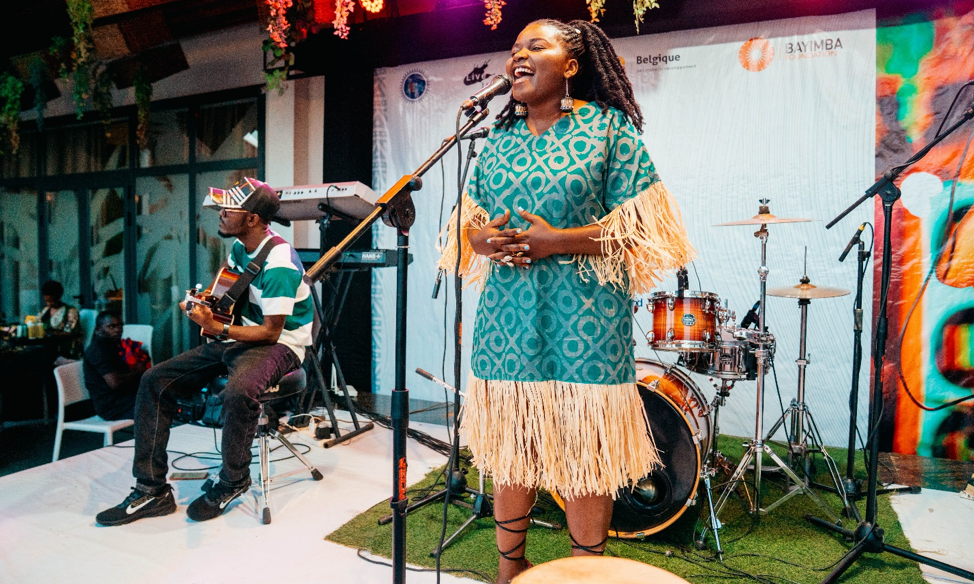
Salma Omar and Ahmed Homaida founded Drum Circle Sudan, a project concerned with roots, rhythm and nature. It seeks to spread drumming culture through percussion sessions, environment awareness workshops as well as live shows with various musicians [8].
In addition to that, Drum Circle Sudan works on documenting traditional instrument building and stories of musicians and artists who preserve culture and protect important knowledge through their work.
Another project with a similar focus is Mashrou Nuggara, Nogara Project. The nuggara is the oldest drum in Sudan, similar to a dundun from West Africa. The project documents musical cultures from the Western region of Sudan and then performs the songs as part of the band ASLAF. They are mostly focused on areas in West Sudan and have been performing all over the city, introducing people to the rich culture of Darfur and nearby regions.
Challenges
According to Omar and Homaida, the challenges they face range from security concerns to a population unaware of the value of cultural heritage.
“The challenges are many. We need access to these places to get the information out there. We’re seeing art forms disappear as there are not many people who know these things, especially in the city,” the duo said. “Most of our culture is dying out, it is not being passed on. There is a lack of interest in looking inward and delving into the richness we are.”
Mohammed Wad Abo of Nogara Project says, “We have more than 570 tribes and 114 local languages. We have so much diversity but we didn't know how to manage what we were given. Wars have caused a great divide [9].”
References and citations
- https://minorityrights.org/country/sudan/#:~:text=More%20than%20500%20ethnic%20groups,within%20the%20borders%20of%20Sudan.
- https://www.britishcouncil.org/arts/culture-development/cultural-protection-fund/projects/sudan-library
- https://ich.unesco.org/en/news/digitization-of-sudan-folklore-and-traditional-music-archives-00046
- https://ich.unesco.org/en/news/digitization-of-sudan-folklore-and-traditional-music-archives-00046
- http://simon-tanner.blogspot.com/2013/07/digital-sudan-cultural-heritage-revived.html
- https://www.britishcouncil.org/arts/culture-development/cultural-protection-fund/projects/sudan-library
- https://www.facebook.com/Drum-Circle-Sudan-209229393236430/
- https://youtu.be/32raYAaA5eE


Most popular

Top amapiano songs of 2026
16 Feb 2026

Top Afrobeats songs of 2026
19 Mar 2026

Top Naija songs of 2026
31 Mar 2026
Open call: 2026 Gender@Work music industry training in Johannesburg
09 Oct 2026
Gambia: Suntou Susso announce UK tour for ‘The Path of a Griot’
09 Oct 2026

R&B collective Both Worlds targets SA market
16 Oct 2026
Disclaimer: Music In Africa provides a platform for musicians and contributors to embed music and videos solely for promotional purposes. If any track or video embedded on this platform violates any copyrights please inform us immediately and we will take it down. Please read our Terms of Use for more.

Subscribe to our monthly Newsletter
Follow us on social media


Please log in to post a comment.