

























































For keeping a reggae maestro waiting an hour behind schedule, my colleague and I get a mild, even lyrical telephone scolding: “Where are yo meen? Been waiting for yo Jah man...Jah bless, Jah bless!”
Between Oshodi and his office at Agege, Lagos, we are immobilized by mindless construction, human traffic and lunatics on wheels. Along the road we oblige area boys winking motorists to a makeshift car park—a refuse dump—abandoning the car to their care and trekking instead.
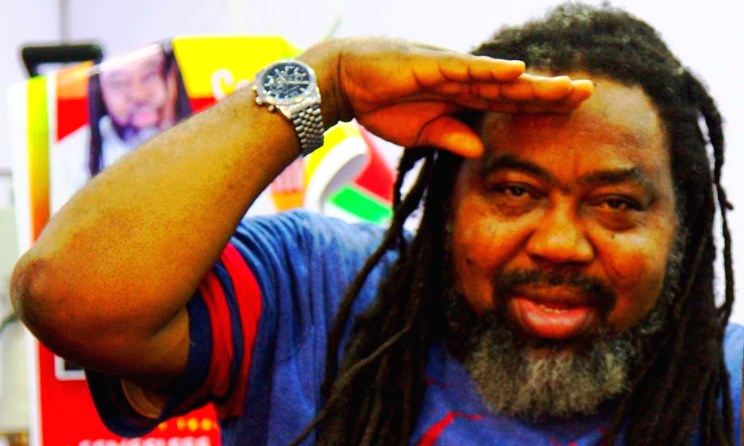
Ras Kimono stands akimbo in front of his office. An unmistakable and quaint presence, strands of his dreadlocks are packed into a rastacap, their weight drooling upon his back. A cordial welcome later, he ushers us into a spacious office where we prepare for the interview. He sits and whips out a bunch of locks from his cap. They fall quietly behind him, dangling two inches from the ground.
“I have had them for 37 years, man,” he says, grinning at our surprise. I am tempted to count the locks as the cameraman captures their length and fullness.
“By the way, Rastaman,” he adds, “I will celebrate 37 years on stage in May this year. We will bring at least one big Jamaican reggae artist.” He hands me a physical copy of an EP released last year.
Back in the day, an album had 10 to 12 tracks, an EP up to 6. His is 4 tracks long. I tell him that nowadays an artist can record one single and blow but success is difficult for a reggae act.
He agrees that in his prime artists worked harder, but says reggae thrives. “I just returned from Abuja, brotherman,” he says. “Recently I have been on tours in the Americas and in Nigeria. And I’m having An Evening with Ras Kimono on 25th of February at Freedom Park.”
He attributes his energy to his discipline. “All my life, I’ve never smoked. I drive myself and I have no bodyguards. I have been a vegetarian for 27 years and I read my Bible.”
The popular, perhaps false, notion is that smoking, especially of hard substances, enhances artistic energy. But the Rastafarian lifestyle despises materialism and graft. By siding with the poor, it pushes against the Babylonians—all structures of oppression, inequality, and wanton gloss. But today’s youth do not seem sufficiently persuaded by the principle, at least judging from their music. Rastafarianism has failed at finding a wider reach, seeming a provincial movement found in pockets. Kimono explains that it is not a religion and doesn’t proselytize; it is an Africa-centered philosophy embracing simple living, truth, and social change.
“Some of our youth do dancehall and that’s okay. The rhythm is great unlike the lyrics. My daughter, Oge Kimono, does reggae. We have to keep reggae going, man. That’s why I’m hustling like I’m just starting. We need to speak for the people.” He however laments the poor airplay given to reggae music, once the inspiration and foundation of many now in Afro hip-hop, who “leave the real story about our situation in Africa and are singing gospel pop. A lot a-them are sellouts”.
Notwithstanding his concerns about “profanities and all the talk about boobs and buttocks” in Nigerian hip hop, he gives his support. “Timaya called the other time about using ‘Dem go like me, me no like them’ in his song,” he tells me. “I gave my permission. I always tell all of them to feel free to use my music. I just wish to see better lyrics and more conscious content.” He says there is a need to deploy music in speaking truth to power in Nigeria right now, yet musicians are not doing that.
After mentioning his daughter Oge, Ras Kimono refuses to speak further about his family, which consists of five daughters and a wife, a former musician who became his manager. All six family members live in the US.
But America is part of Babylon. He goes on a long defense of pan-Africanism, praising Nkrumah, Gadaffi and Sankara, denouncing the White Man. It is not clear that he recognizes the irony. “I’m not Nigerian,” he says huskily. “I’m African. The White Man organised Africa’s problems.”
From the continental success of the single 'Rum-Bar-Stylee', which preceded Under Pressure from 1989, Ras Kimono became one of Africa’s most important reggae acts. What’s Gwan, released a year later, secured Ras Kimono’s place in the continent’s reggae pantheon, with over 20 powerful tracks dropped within three years.
There is no denying the intellectual acumen of Nigerian reggae musicians of the era, an asset enlisted as it were against colonialism in various forms and military misrule. From Andy Shurman to Oritz Wiliki, Maxwell Udoh, Peterside Ottong, and Ras Kimono himself, reggae artists inspired important political conversations and freedom movements—more so at a time when free speech was dangerous. Even the then teenage group Dready Boys while singing laidback reggae, took a shot at Apartheid.
But the advocacy seems to have failed. The conditions remain the same.
“Well your generation has to take it up from there,” he responds. “They don’t have to be afraid of telling the truth. You hear Dino Melaye [a senator] say since you will die whether or not you speak the truth, man, why not speak it?”
I recall that as a boy, I was obsessed with the hit songs: ‘Under Pressure’, ‘Rastafarian’, ‘Gimme Lickie Sugar’, ‘Natty Get Jail’ and ‘Dem Persecute’. I babbled his lyrics—“Rastafarian…some are saying that we crazy/some are saying that we lazy/All what we here in this world to do/Is just to preach the word of freedom”—and his music ignited a musical zeal that later spawned a failed stint with rap in secondary school. Today, music has left the Nigerian masses to speak on behalf of power, designer brands and sex.
We have been spent hours in a cordial conversation through several topics. Our last topic—on queerness—changes his demeanor. “Fire burn them! Boomba-clat!”
His argument against homosexuality is quite conservative, unlike what seems like his liberalism on matters of religion: “While growing up, our parents would tell us not to do certain things so that we wouldn’t offend God. And it ends there. Times have changed. Today if you do the same to your kids, they will ask you hard questions about a God they can’t see. They want evidence, Rastaman.”
The office has become stuffy. Ras Kimono’s greying locks collect a few drops of sweat, and I am struck by his simplicity in contrast to his fame. He lives modestly “with the people to be able to see their suffering” and he shares with them his love and resources.
“I’m a poor man,” he says, though the evidence is manifest only in his lifestyle. “And at the end we just have to make our mark in life.”


Most popular
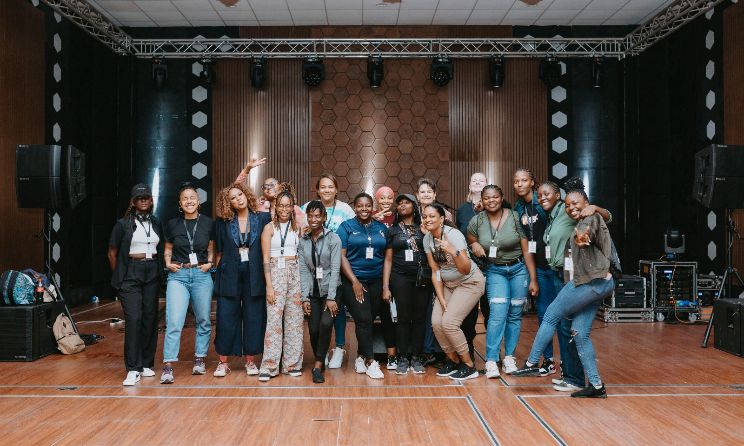
Open call: 2026 Gender@Work music industry training in Johannesburg
09 Oct 2026

Top amapiano songs of 2026
16 Feb 2026

Top Naija songs of 2026
31 Mar 2026
Call for applications: ACCES 2026 Emerging Artist Spotlight Competition
01 Oct 2026

Top Afrobeats songs of 2026
19 Mar 2026
AFRIMA 2026: All the winners
12 Jan 2026
Disclaimer: Music In Africa provides a platform for musicians and contributors to embed music and videos solely for promotional purposes. If any track or video embedded on this platform violates any copyrights please inform us immediately and we will take it down. Please read our Terms of Use for more.

Subscribe to our monthly Newsletter
Follow us on social media


Please log in to post a comment.