






















































By Amadou Dieng Bator
"Senegal is a country of filmmakers but it does not have a film industry". This statement by Youssou N'Dour, former Minister of Culture, highlights a reality: the success of Senegalese filmmakers does not necessarily reflect the state of the film industry (the country even no longer has movie theaters). The same is true about the music industry. The success of singers like Baaba Maal and Ismaël Lô hides a more mixed reality.
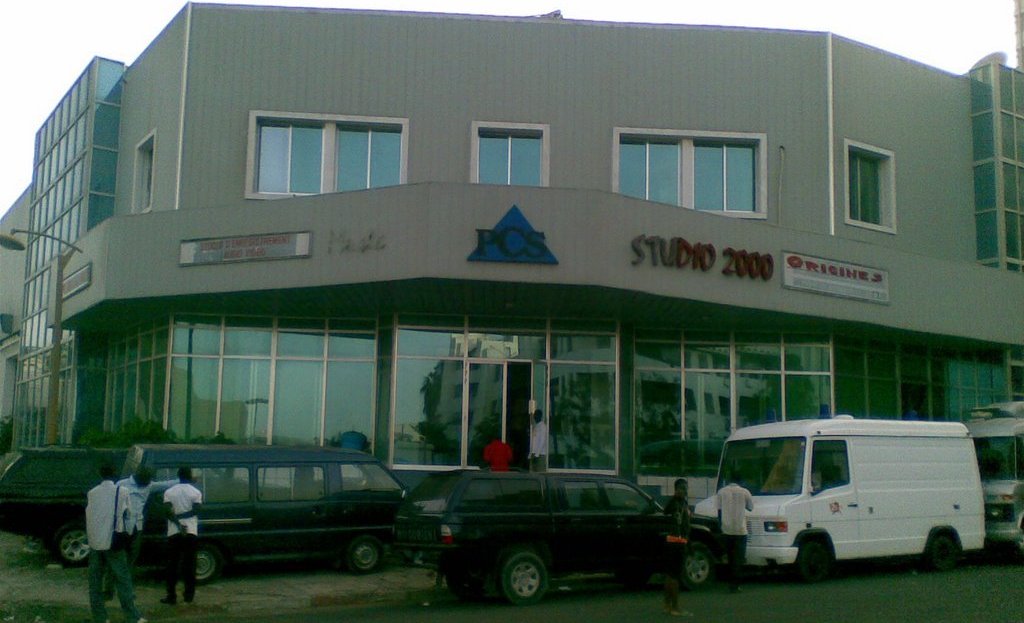
Over the years, Senegal has seen the opening of several recording studios, filling a great need. However, the country still suffers from a lack of infrastructure in the musical field. There is still a lack of organisations dedicated to music production and promotions, and there are no performance venues. Furthermore, the legal environment of the music industry needs to be improved.
The Recording Industry in Senegal
In the 1970s, Senegalese artists traveled to Abidjan or Paris to record their albums. Today, it is no longer necessary. Senegalese entrepreneurs, mainly artists themselves, have invested heavily in recording studios.
One of the oldest and most famous studios is probably the Studio 2000 owned by El Hadj N'Diaye, now renamed “Origines”. Major artists such as Youssou N'Dour, Baaba Maal, Thione Seck, and Omar Pène have used the facilities of Studio 2000 to record their albums. Opened in 1990, Studio 2000 was for a while the only recording studio available and remains a reference in the field.
The studio Xippi, owned by global star Youssou N'Dour, is another reference. Like Studio 2000, Xippi was opened in 1992 under the name Saprom. This is the studio where Ndour’s Grammy-nominated 1992 album Eyes Open was recorded
Studio Sankara is owned by Didier Awadi, the African rap icon, and is among the best-known studios in Dakar. It was built in the 2000s by the activist and is considered a valuable asset to the local music industry.
Studio Midi Music was created in the late 1980s - the first home-studio of the country - by Aziz Dieng and has since contributed to the emergence of numerous artists. Aziz Dieng was the president of the Association des Métiers de la Musique (AMS - Music Trades Association) in Senegal and the Chairman of the Board of the Senegalese Office of Copyright (Bureau Sénégalais du Droit d'Auteur - BSDA).
In recent years, a new recording studio was added to the Senegalese music scene. Owned by Mamadou "Jimi" Mbaye, a guitarist in Youssou N'Dour’s band, Studio Dogo now hosts a new wave of singers such as Abdou Guité Seck and Waflash of Thiès. Established artists such as Thione Seck also use Studio Dogo. The Studio Dogo engineers assisted Thione Seck and his band for the recording of their 19th anniversary album.
Obviously, this is not a complete list of all the recording studios available in Senegal. However, the studios cited above are among the best in the country. Other recording studios include A2S-studio, Youkounkoung (managed by the rapper Fou Malade and available to the artists of Dakar’s suburbs) and Djegui Rails Records in Pikine.
Of particular note is the proliferation of home studios. Computers and software have become more accessible thanks to the development of information and communication technologies. Singers and musicians who are interested in writing and producing their own music can therefore have their own studio at home and work on various projects.
The Live Music Scene in Senegal
The Senegalese music industry still has many defects. One of them is the lack of space and music venues. At first glance, one can say that entertainment venues are available. However, they are poorly structured, inadequate and inaccessible to artists.
Senegal needs more places like Just 4 U, a music venue created in the early 2000s. Located on the famous Avenue Cheikh Anta Diop in Dakar, the Just (as it is called locally) is an after-work hangout where artists regularly perform in the evening. There are other venues similar to Just 4 U and they also possess performance venues. Examples include Must and Villa Krystal in Dakar, Quai des Arts in St. Louis and the Palais des Arts (owned by the band Waflash and opened in December 2007) in Thiès. A particularity of Senegal is the fact that artists perform a lot in nightclubs. Yengoulene, Madison, Nirvana (in the Almadies neighborhood), the Thiossane (Youssou N'Dour’s club) or Ravin (in the suburbs of Dakar) are all places that offer Senegalese popular music and performances by local singers and groups. However, there are still not enough venues for live music.
Moreover, there aren’t any big concerts held in the country. Even Youssou N'Dour, who used to give huge concerts in the 1980s and 90s, no longer does so. Similarly foreign artists do not perform concerts in Senegal. Common until the mid-1990s, these musical events have become rare if not non-existent. The only major exception was the World Festival of Black Arts (Festival Mondial des Arts Nègres - FESMAN), which took place in 2010.
What explains this decline? According to Guissé Pene, consultant and expert on Senegalese music’s legal environment: "It is almost impossible for show promoters to make a profit on concerts because of heavy taxes, artists' fees and various organizational costs. Promoters cannot afford to operate in these conditions”. Pene, who is also general secretary of the Music Trades Association (Association des Métiers de la Musique - AMS) believes that “it is imperative to review the legal environment for the organization of musical events to encourage promoters and revive the concert culture." Furthermore, he says, "artists should be encouraged to be more professional in order to attract sponsors and advertisers who currently prefer to support wrestling events."[i]
Copyrights and Royalty Collection in Senegal
Until recently, the law governing the distribution of music royalties in Senegal was very vague. In 2008 the National Assembly passed a law to strengthen the rights of authors. The law would recognize two new rights for artists: the related rights and private copying remuneration rights. Promulgated by the then President of the Republic, however, the law has yet to be implemented. Everyone is happy about this law that will, according to experts, enable artists and those working in the music field to live from their art. In other words, this new legislation is expected to finally bring income to cultural actors. A board has been set up and a chairman elected. The board is ready to take over from the BSDA, but everyone is still waiting for the presidential decree that will put this new law into effect.[ii]
Aziz Dieng, former president of the Music Trades Association (Association des Métiers de la Musique - AMS) is behind this initiative. He is a copyright and related rights’ activist. For 30 years, Dieng, who is now an adviser to the Ministry of Culture, has fought for the recognition of the status of the artist. In a recent interview with the daily newspaper l’Enquête, he declared: "The artist is a worker. As a worker, he must have the same rights as other workers. Thus, he can have the same responsibilities such as contributing to social security or paying taxes."[iii]
A new collection society is due to be launched and will replace the Senegalese Office of Copyrights (BSDA). The new entity will work with authors, producers, artists and performers. All those involved in the development of musical works may benefit from neighboring rights. It is truly a revolution that will also address the issue of counterfeiting and piracy thanks to the private copying remuneration. A fee will be applied for recording creative works through any analog and digital media.
This law sends a strong signal to radio and television networks, who are often guilty of not paying royalties but are large consumers of music. TV and radios are key partners of the music industry, and thus have a crucial role to play. Under the new law, they will have to pay a fee for the music used. This is especially important now that there is a huge growth in the audiovisual sector. Indeed, more than a dozen radio stations with great potential were recently launched. Examples include RFM, Zik FM, Sud FM and RTS, along with numerous community radios. In television, more than half a dozen channels were created in the past three years, including TFM, SenTV and 2STV. TFM is owned by world-famous artist Youssou N'Dour. SenTV belongs to the same publishing company that owns Zik FM radio. 2STV offers mainly cultural programs.
According to Aziz Dieng, "related rights will be shared equally - 50% for performers and 50% for producers. Private copying remuneration will be distributed as follows: one third for authors, one third for producers and one third for performers."[iv]
With this law, one hopes that artists will be able to make a living from their art and will not die in poverty, as has sometimes been the case. Everybody still remembers the case of Laba Sosseh. Sosseh was the first Senegalese to win a Disque d’or (Golden Disc) but was destitute when he died and did not receive any financial assistance. Fifteen percent of the sums received for private copying remuneration will be used to support creation and live performances, and for the education of rights holders.
Until this law is in effect, Senegalese artists cannot make a living from their art. One can therefore understand why they do not always produce quality work. Today Senegalese artists are caught in a vicious circle. Even tours abroad are no longer profitable. With the exception of Youssou N'Dour, Baaba Maal and Ismaël Lô, all Senegalese artists perform to an audience of fellow immigrants when they are in Paris, Milan or Durban. Their music does not touch a wide audience - unlike Malian music, for example, which collects Grammy Awards and enjoys international success. This is unfortunate for a country known for its cultural diversity and rich history.
In summary, the promulgation of the forthcoming law on authors' rights brought a glimmer of hope to the music industry in Senegal. Everyone expects that it will bring about many changes, such as the promotion and enhancement of cultural diversity. Consequently, the creative economy will be reinvigorated and artists encouraged.
[i] http://www.baobabafrique.com/interview/guisse-pene-on-ne-peut-pas-etre-une-societe-de-gestion-collective-qui-defend-les-interets-de-la-musique-et-vouloir-negocier-ou-discuter-avec-des-gens-consideres-comme-des-pirates.html
[ii] http://www.lesoleil.sn/index.php?option=com_content&view=article&id=37283:societe-de-gestion-collective-des-droits-dauteur--la-realisatrice-angele-diabang-elue-presidente-du-conseil-dadministration&catid=78:a-la-une&Itemid=255


Most popular

Top Naija songs of 2026
31 Mar 2026

Top Afrobeats songs of 2026
19 Mar 2026
Ghana: Mr Eazi and MOLIY’s ‘Comfort’ earns Urban Music Awards nomination
21 Oct 2026

Top amapiano songs of 2026
16 Feb 2026
Open call: CANEX Music Business Lab and Songwriting Camp
15 Oct 2026
Nigeria: CANEX WKND unveils 2026 programme
21 Oct 2026
Disclaimer: Music In Africa provides a platform for musicians and contributors to embed music and videos solely for promotional purposes. If any track or video embedded on this platform violates any copyrights please inform us immediately and we will take it down. Please read our Terms of Use for more.

Subscribe to our monthly Newsletter
Follow us on social media


Please log in to post a comment.