
















































NEFCISA
NEFCISA

The Music In Africa Foundation (MIAF) is proud of its partnership with the Industrial Development Corporation (IDC) as a Strategic Implementing Partner (SIP) for its Social Employment Fund (SEF). Through this collaboration, MIAF is running a national programme that is creating jobs, addressing skills gaps, and strengthening South Africa's creative industries — in line with the SEF's overarching goal to generate work for the common good and build community value through employment, social contribution, and inclusive economic participation. Operating under the banner NEFCISA (National Employment Facility for Creative Industries in South Africa), the initiative is recruiting and training participants, matching them with host organisations, and has already placed 1 500 workers across the country — surpassing its original target of 1 000. NEFCISA is delivered through a network of 20 host organisations spanning five provinces, who are actively hosting participants and contributing to work for the common good across South Africa's creative and cultural industries. Key Objectives: Support employment and entrepreneurship in the creative industries. Offer skills development and training programmes. Foster partnerships between public and private creative sectors. Promote South African creativity at both provincial and national levels Foster community development through social contribution.

ACCES
ACCES

ACCES Conference and Showcase Festival is Africa's leading music industry gathering, bringing together the people shaping the future of the continent's music business. Artists, entrepreneurs, executives, investors, policymakers and cultural leaders from across Africa and around the world come to ACCES to build partnerships, exchange ideas, discover talent and create new business opportunities. Since its launch in 2017, ACCES has become the continent's premier platform for professional exchange and music market development. Combining a high-level conference with a curated showcase festival, networking, exhibitions and industry programmes, ACCES offers a unique space where creativity meets business and where African music connects with the global industry.

Gender@Work
Gender@Work

Music In Africa Gender @ Work is a three-year training programme aimed at upskilling and increasing the participation of female professionals in the African music sector. Launched by the Music In Africa Foundation (MIAF) in April 2019, the programme is connected to the MIAF’s ACCES music conference – a pan-African event held in a different African country every year. This connection enables the programme to reach new participants in a different African country every year. The programme marks the beginning of a more concerted effort by the Foundation to support the participation and inclusion of women in all facets of its programmes and the music sector in Africa as a whole. Over the three years, the programme will aim to address gender imbalances in the sector through training, lobbying, facilitating knowledge exchange and dialogues that foster the interest of women. The broader objectives of the programme are to: Provide industry training for women on critical music industry skills, focusing on: Stage management Electronic music production and recording Music business management Technical knowledge Provide an opportunity for both professional and aspiring women to benefit from the Music In Africa network and its broad range of activities in 2019, 2020 and 2021. Provide a solution-based platform in the form of a round table at ACCES with a view to identify challenges, discuss opportunities and lobby for the interests of female practitioners. Offer participants the opportunity to benefit from programmes offered by MIAF’s partners. Increase access to educational materials. Integrate participants in the broader ACCES programme to maximise experience and exposure to the industry. Record and present training materials on the www.musicinafrica.net, including but not limited to tutorials, templates and other best-practice materials. Communicate women-based themes that support the initiatives and messages of the programme. MAIN TRAINING ACTIVITIES Training in first country (Ghana): In the first year, participants will be trained on all aspects of stage management by a team of experienced stage managers from 10 to 17 November 2019. The programme will offer robust classroom training as well as practical, hands-on training in which participants will also be given the opportunity to manage various aspects of the ACCES performance programme. Training in second country: The second training iteration will take place at ACCES 2020 when the programme will diversify its course to include music production lessons and training on other music business topics. A round-table platform will also be introduced to coincide with the ACCES programme. Training in third country: The third training iteration will take place at ACCES 2021 in a different country, offering an advanced course. HOW DO YOU GET INVOLVED?  As a participant, facilitator or trainer: The programme enrolls up to 12 trainees every year. All opportunities are advertised publicly on this website, and will be added to this page. Please keep checking this page for new calls (below under UPDATES & CURRENT OPPORTUNITIES). As a partner Please contact Claire Metais at [email protected]. APPLY The call for applications for 2020 will be announced soon. The Music In Africa Gender @ Work programme is made possible with the support of the Prince Claus Fund, Siemens Stiftung and Goethe-Institut.

Sound Connects Fund
Sound Connects Fund

For cultural and creative practitioners and organisations operating in southern Africa, access to funding remains a major challenge. The COVID-19 pandemic has also had a massive impact on government policy, spending and the economy in general, and has seen spending on culture being moved further down the list of priorities. Further, the cultural and creative industries repeatedly cite four main areas where investment is needed for growth, which are increased visibility, mobility including access to new markets, finance and support structures.

Instrument Building And Repair Project

Experience the Vibrations African Instruments Exhibition online in 3D

Reviews

Thandiswa Mazwai – Zabalaza

31 Jan 2015 - 20:07

cc-img flag-img

Artist: Thandiswa
Album: Zabalaza
Label and year: Gallo, 2004
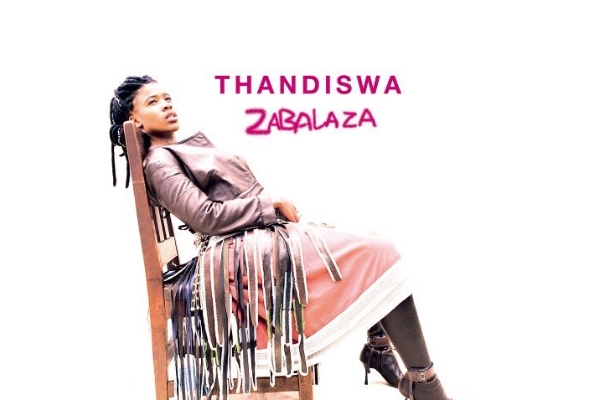
Thandiswa Mazwai - Zabalaza

By 2004, Thandiswa Mazwai had been with Bongo Muffin for close to 10 years. As a four-person crew, Bongo Maffin released songs such as ‘Makeba’ to nationwide acclaim. When their fourth member Speedy left, Bongo Muffin continued creating unmatched feats of musical brilliance. They were kwaito, but not quite; hip-hop, but not quite; roots, maybe, but also pop. Bongo Muffin were an institution unto themselves. When their Shona-toasting raggamuffin Jah Seed (then known as Apple Seed) was deported from South Africa, they refused to perform in the country without him, focusing instead on their increasingly-expanding international fanbase, playing festivals as far afield as Europe and North America in support of their 2001 album Bongolution.Despite having been the “voice” of Bongo Muffin - and of early kwaito outfit Jacknife before that - Thandiswa still felt she had more to say. So she released Zabalaza, her solo debut album. Those who wondered what she’d sound like and how she would fare as a solo artist were pleasantly surprised. Thandiswa had come into her own – she had defied the odds and created a timeless body of work.

Thandiswa lends her soulful, carefully controlled voice to songs with a wide-ranging musical scope. The subjects in her lyrics were varied too; “Are the beatiful ones really dead?” she asks in ‘Nizalwa Ngobani’ (a reference to Ayi Kwei Armah’s The Beautyful Ones Are Not Yet Born). In that moment, she gave her artist’s statement: she opened up a gallery that, albeit first and foremost pan-African, was not afraid to embrace influences from further afield. Looking for Southern-style gospel funk? Look no further than ‘Revelation’, with a bass groove and fast-paced organ capable of sending the listener straight to the pulpit of an American Pentecostal Church sermon. Wondering whether she’d left her kwaito and house roots? ‘Kwanele’ erases all doubt. ‘Ndiyahamba’, a lilting soundtrack to departure, captures Thandiswa at her unadulterated best. You can hear her dancing and prancing, wondering frantically through the train station, jumping from one platform to the next seeking the right carriage. “N’yegele mina mfondini, ndiyahamba” (let me go, I’m going) she beckons her captors - captors of her spirit, her artistry. Elsewhere she covers ‘Ntyilo Ntyilo’, penned by Alan Silinga and first made famous by Miriam Makeba and the Manhattan Brothers in the 1950s.

Zabalaza is an important album. It has even threatened to eclipse Thandiswa’s later work, such as the magnificent 2009 release Ibokwe. But because of her immense presence, relevance and a relentless work ethic, people have afforded Thandiswa the space to be, to exist, and to continue breaking borders and boundaries. And people love her for it!

Please log in to post a comment.

Most popular

Disclaimer: Music In Africa provides a platform for musicians and contributors to embed music and videos solely for promotional purposes. If any track or video embedded on this platform violates any copyrights please inform us immediately and we will take it down. Please read our Terms of Use for more.

newsletter banner

Subscribe to our monthly Newsletter

Follow us on social media



