






























































By E.I Aimiuwu
Considerable research has been carried out on traditional music in Nigeria, but mostly on music from the south. Work on the north is limited due to the peculiar nature of the people as shown from the history of the region. One of the most important external influences on Northern Nigerian traditional music came as a result of the contact between Islam and Christianity and Nigeria culture. Nketia maintained that ‘the impact of Islamic and Arabic cultures had a far reaching influence on the savannah belt of West Africa.’
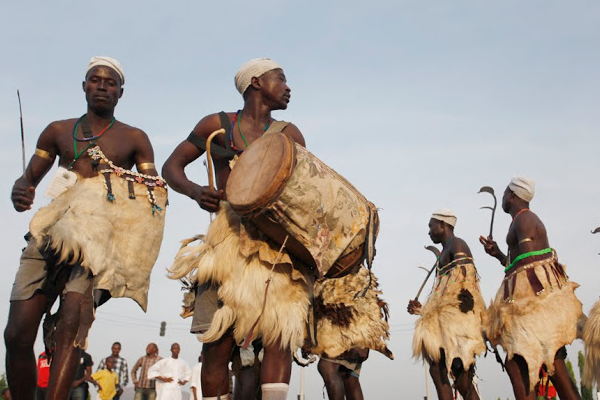
I would like to add that the major visible differences between the practice and performance of northern Nigerian traditional music can be found in the attitudes of both Christian and Islamic scholars that held sway before and during the conquest and colonializations of the various kingdoms, empires and the ethnic nationalities of the area now known as Nigeria.
Nketia maintained that “The existence of a very strong Islamic ruling class and formation of Islamic states in the north before and during the conquest period in the northern Nigeria by leaders who had embraced Islam and were committed to waging holy wars in order to subjugate the indigenous populations who were deep in their practices and traditional culture that were highly prohibited under Islam political rule. The result is that all conquered states and kingdoms were forced to abolish all traditional rites, customs and music. They were only allowed to adopt Arabic music and musical instruments. Arabic musical instruments, particularly aerophones and drums and features of vocal technique, identified with Islamic cantillation such as ornamentation or ululation”.
As a result, music of the people which was traditional came under strict control under Islamic rule and religion. Under the Muslim influence the traditional music of the area known as Northern Nigeria adopted the Hausa free-rhythmic style of music, improvisation in instrumentation and styles using the pentatonic scale, similar to that of Islamic standard throughout West Africa; such as the Kanuri, Fulani and Songhai. As a result of these developments, the real nature and practice of traditional music in Northern Nigeria can only be found in history before the 9th century, particularly in the north central zone of the present day northern Nigeria.
Nature
The Hausa, Fulani and the Kanuri uses of music is well known and is not much different from the use of music in any African communities except for the restrictions that follow Muslim influences. Traditional music of the people found in the Middle Belt or North Central Nigeria are usually done to worship the gods of the lands before they were conquered by the Jihadists and later on colonialized by the British. However, some of the people of North Central Nigeria were not conquered before the British colonization, proclamation of the Northern protectorate and they were able to keep and practice some of their traditional music style that usually follows the Hausa ceremonial music styles dominated by praise singers.
According to Bode Omojola in his book ‘Nigeria Art Music’, the advent of Islam has, however, not completely eroded traditional, pre-Islamic religious practices which still survive today mainly in the north central zone of northern Nigeria. One of such musical practice which still survives and is thriving among the Islamic dominated area in the north is the Bori possession Music.
Bori music is a type of music believed to have enormous spiritual power which can help worshippers to reach a state of ecstasy through which they can communicate directly with their ancestral spirits. In the New Grove Dictionary of Music, A. King observed Hausa professional musicians belong to a distinct social class which has the character of an euedaus within the society because of its low social status, hereditary membership and dependence on patronage. Such patronage is usually provided by the emir, palace officials and chiefs who till today constitute the aristocrats, the feudal Lords in traditional Hausa northern society.
In other words, musical practice in the north is closely and seriously controlled by religious, social and political consideration. As a result of Islamic introduction to the area around the 13th century, the region’s music is influenced by Arabic and Islamic elements. Serious musical performances are frequently held in the palace to entertain the Emir, and paramount rulers or chiefs under serious unadulterated Islamic culture. During such performances the Emir’s visitors and subjects are entrained in front of the palace. In such occasions the Emir restates his religious and political authority while his subjects reaffirm their confidence in the authority of the Emir or chief and the acceptance of his leadership. For example ‘in Katsina, when an Emir is to be crowned, the Yanibari drum is struck 12 times so that the people can know that they have a new Emir’.
Like any African society, the north central zones and in the northern Nigeria generally, most of the musical instruments can be classified under the categories of idiophones, aerophone, chordophones and membranophones.
Instrumentation
Their instrumentation are basically backed up by some percussive instruments such as the tamburo, drum and the talking drum, similar to the ones found in Yoruba land in Western Nigeria. The most popular and common Hausa music instrument to all the people in the North and the North Central is the Kakaki and it stands as a symbol of authority and power. Others are Kuntigi, Grumi and various musical instruments made from local materials. Traditional music are used to celebrate births, marriages, circumcisions and all other important events such as sports, gaming, wrestling, coronations, worships, works and storytelling.
Their music follows the call-and-response method in which a lead singer sings and the chorus is provided by other singers and the audience in some cases. The instruments are used to shadow the lead singer or repetition of an ostinato phrase. Usually they are repetitive and stay in one pitch emphasizing rhythmic basic style influenced seriously by the tradition of Islam.
Some musical instruments popular and very visible among the North Central Zone of Nigeria are:
- Gourd struck with rings on fingers among the Boze
- Wooden clappers used by the Tarok
- Tin can rattles
- Eten iron ankle rattles
- Berom gwashak scraper
- Tarok barrel-drum (Igangan)
- Berom ju reed end-blown flute
- Eten raft zither
These are the few musical instruments that are peculiar to various ethnic groups whose origin are different from the Hausas in the north. Suffice to say here that most of the instruments used by the traditional musicians have been found to either belong to the tuned idiophones or just idiophones, membranophones, aerophones and the chordophones.
Conclusion
The advent of Islam and Christianity and the western government system changed all that was in traditional music performance and practice. The tradition and practices of traditional music changed drastically from that of communal to that of individual. Hence, the emergence of solo or group traditional musicians that took advantage of traditional music revival as a result of the FESTAC '77 (The Second World Black and African Festival of Arts and Culture that held in Nigeria in 1977)—one of the greatest musical events that brought traditional African music a universal recognition.
The Nigerian music and particularly the northern Nigeria music became vibrant and with its negative and positive repercussions.
Finally, what we have now in the north has been so influenced that there is now a problem of identity. Suffice to say that traditional music in the North Central is now the link between the old and new traditional music that gave birth to popular music. Traditional music has found solace in the establishments of states and Federal musical troupes.
The government should therefore establish more musical groups in all the local government areas throughout the federation to fill the gap created by the abolition of authority of the traditional rulers to prevent a total extinction of traditional music as we know it in pre-Islamic/Christianity and colonial rule. That will create room for youths to go into the study and practice of traditional music for economic growth and preservation of our rich musical culture.
References
- Adamu, M. The Hausa Factor in West African History. Zaria: Ahmadu Bello University Press, 1978.
- Aimiuwu, E.I. Unpublished Lectures on the Prospects and Sustainable Development of Traditional Music in the North: A Case Study of Traditional Music in the North Central Zone, University Jos, 2015.
- Anthonia Eleojo Dugga. Issues of Eggon Minority Language Transmission of “Offspring” from Cross-Lingual Household in Central Urban Nigeria: Jos and Abuja. Cactus Multi-Disciplinary Journal.
- New Grove Dictionary of Music, Vol. 13, 1980.
- Okafor, Richard. Music in Nigerian Education Bulletin of the Council for Research in Music Education, 108, pp. 59-68, 1991.
- Omojola, Bode. Nigerian Art Music. University of Ibadan, 1995.
- University of Jos. 40th Anniversary 1975-2015, Public Lecture Series.
- Internet and Newspapers


Most popular
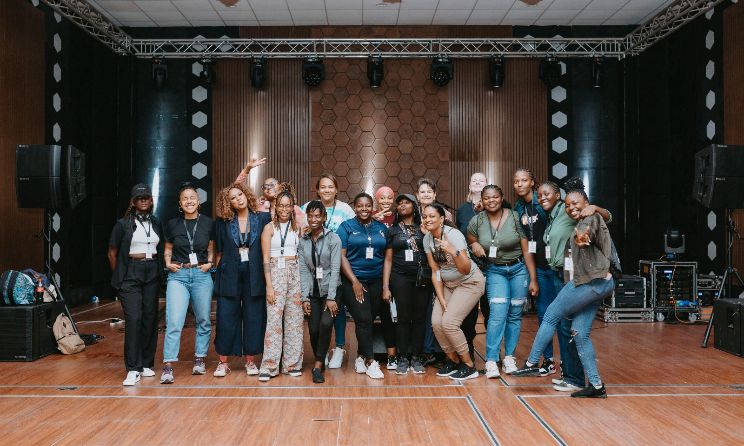
Open call: 2026 Gender@Work music industry training in Johannesburg
09 Oct 2026

Top amapiano songs of 2026
16 Feb 2026

Top Naija songs of 2026
31 Mar 2026

Call for applications: ACCES 2026 Emerging Artist Spotlight Competition
01 Oct 2026

Top Afrobeats songs of 2026
19 Mar 2026
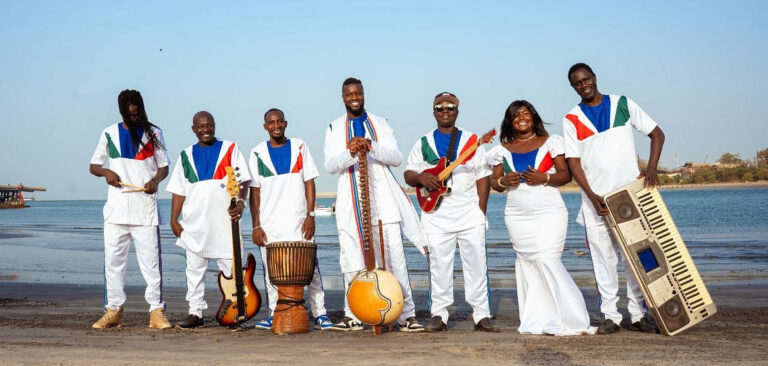
Gambia: Suntou Susso announce UK tour for ‘The Path of a Griot’
09 Oct 2026
Disclaimer: Music In Africa provides a platform for musicians and contributors to embed music and videos solely for promotional purposes. If any track or video embedded on this platform violates any copyrights please inform us immediately and we will take it down. Please read our Terms of Use for more.

Subscribe to our monthly Newsletter
Follow us on social media


Please log in to post a comment.