




















































As the West toasted men on the moon, Algeria held a party to a post-imperial world
24 Jul 2019 - 11:49


By David Murphy
The First Pan-African Cultural Festival (PANAF) formally opened in Algiers on 21 July 1969. This was the day after Neil Armstrong and Buzz Aldrin’s historic moon landing 50 years ago. But most pan-Africanist commentators didn’t see the coincidence as detracting attention from the festival. On the contrary, while the moon landing marked the white, Western world seeking out new frontiers in space, the festival denoted something just as significant: the emergence of a post-imperial world in which Algiers was positioned as the ‘mecca of revolution’.
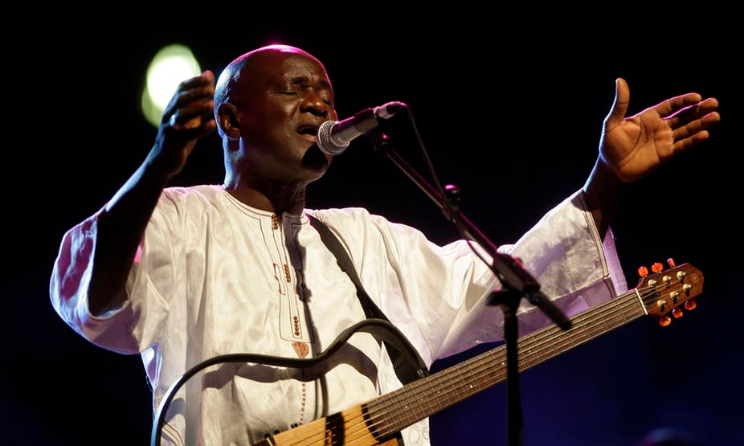
Mandated by the Organisation of African Unity to organise the festival, the Algerian state sought to involve the entire black and African world. This included representatives from various liberation movements in Africa, as well as the Black Panthers from the US. Even the Palestinian Liberation Organisation was invited, explicitly linking pan-African culture with an ongoing global process of political liberation from Western colonial rule.
The festival is held up by many critics and participants as the radical response to an earlier pan-African event held in Dakar, Senegal, in April 1966: the First World Festival of Negro Arts. Senegalese President Léopold Sédar Senghor’s vision of pan-African culture in 1966 had been racially defined and delimited, which meant that North African culture and participants were largely omitted.
Senghor also excluded representatives of the liberation movements that were at that time still fighting against racist colonial regimes in the settler colonies of Southern Africa, as well as in Lusophone Africa. Senghor’s critics perceived this as proof of his desire to keep culture and politics separate and to appease the former European colonial powers. The 1969 event explicitly set out to right these perceived wrongs.
Algeria’s successful struggle against the French in a bloody war of independence (1954-62) had inspired independence movements around the world. During the war, Algerian militants of the National Liberation Front (FLN) had received international support. And the post-imperial FLN regime now wished to return the favour.
American activist Elaine Mokhtefi was one of those drawn to the Algerian cause. She worked at its UN office in New York during the war and settled in the country after independence. In her remarkable memoir Algiers, Third World Capital (2018), Mokhtefi wrote: "Algeria opted for an open-door policy of aid to the oppressed, an invitation to liberation movements and personalities from around the world."
As her book also demonstrates, however, Algerian support was generally conditional, uneven and prone to come to a rather abrupt end.
Black Power in Algiers
The festival ran from 21 July to 1 August 1969. It began with a parade by members of the various national delegations through downtown Algiers that was attended by thousands of ordinary Algerians.
A central colloquium accompanied the festival. Through its deliberations it sought to express a shared vision of pan-African culture. Popular music also featured centrally. There were nightly concerts by the likes of Miriam Makeba, Nina Simone and Archie Shepp.
In his celebrated documentary film on the festival, William Klein famously captured Shepp’s impromptu jazz improvisations with Touareg musicians, shouting that ‘Jazz is Black Power!’ The performance enjoyed great symbolism as an emblematic example of pan-African artistic collaboration.
The organisation of the festival and the regime’s open doors policy towards anti-colonial liberation movements hinted at a new form of global, black revolutionary citizenship. One representation of this was the presence of the Black Panthers, several dozen of whom had gathered in Algiers by the late 1960s.
Shortly before the festival, the Panthers’ charismatic and volatile Information Minister Eldridge Cleaver – who had served time in prison for violent sexual crimes – had arrived unannounced into Algerian exile. He became one of the festival’s star attractions.
The FLN welcomed the latest revolutionary arrival to their shores with Mokhtefi serving as the Panthers’ interpreter and general ‘fixer’. A new, two-story Afro-American Information Centre was opened in central Algiers, stocked with Black Panther pamphlets and posters. This was where the Panther delegation, Cleaver in particular, held court with the press as well as local and international visitors.
As the historian Andrew Apter has argued, Cleaver had fled his vulnerable citizenship as an African American and had embraced a new form of ‘cultural citizenship’ in Algeria. There was, however, significant doubt as to how long his political welcome would extend beyond the festival.
The limits of pan-African citizenship
Algeria may have been keen to proclaim itself 'Capital of the Third World'. But it was also an authoritarian, one-party regime that tolerated little dissent. Cleaver had established a Black Panther Embassy in Algiers with FLN support. But he was not invited to engage with Algerian President Houari Boumedienne as an equal partner.
The FLN gradually grew impatient towards its radical guests. It’s not clear whether the Black Panthers were formally expelled, but by the early 1970s all had drifted back to the US or into alternative sites of exile. For his part, Cleaver sought refuge in France in 1973.
The form of pan-African citizenship that the festival appeared to promise proved all too ephemeral. Mokhtefi herself was expelled from Algeria without explanation in 1974.
In 2009, Algeria hosted a major 40th anniversary celebration of PANAF. The festival was, in part, a way of marking the country’s gradual emergence from its ‘black decade’ of murderous civil war between government forces and Islamist rebels in which tens of thousands died.
There are no such plans for a 50th anniversary event this year, as the country goes through its latest period of political unrest after almost 60 years of one-party rule by the FLN. As the major global powers gear up for new missions to the moon, Algerian protestors are also channelling some of the idealism of the late 1960s. They are seeking freedom and equality but without the controlling hand of the all-powerful, one-party state.
David Murphy is professor of French and postcolonial studies at the University of Strathclyde. This article first appeared on The Conversation.


Most popular
Open call: 2026 Gender@Work music industry training in Johannesburg
09 Oct 2026

Top amapiano songs of 2026
16 Feb 2026

Call for applications: ACCES 2026 Emerging Artist Spotlight Competition
01 Oct 2026

Top Naija songs of 2026
31 Mar 2026

Top Afrobeats songs of 2026
19 Mar 2026

AFRIMA 2026: All the winners
12 Jan 2026
Disclaimer: Music In Africa provides a platform for musicians and contributors to embed music and videos solely for promotional purposes. If any track or video embedded on this platform violates any copyrights please inform us immediately and we will take it down. Please read our Terms of Use for more.

Subscribe to our monthly Newsletter
Follow us on social media


Please log in to post a comment.