



































NEFCISA
NEFCISA

The Music In Africa Foundation (MIAF) is proud of its partnership with the Industrial Development Corporation (IDC) as a Strategic Implementing Partner (SIP) for its Social Employment Fund (SEF). Through this collaboration, MIAF is running a national programme that is creating jobs, addressing skills gaps, and strengthening South Africa's creative industries — in line with the SEF's overarching goal to generate work for the common good and build community value through employment, social contribution, and inclusive economic participation. Operating under the banner NEFCISA (National Employment Facility for Creative Industries in South Africa), the initiative is recruiting and training participants, matching them with host organisations, and has already placed 1 500 workers across the country — surpassing its original target of 1 000. NEFCISA is delivered through a network of 20 host organisations spanning five provinces, who are actively hosting participants and contributing to work for the common good across South Africa's creative and cultural industries. Key Objectives: Support employment and entrepreneurship in the creative industries. Offer skills development and training programmes. Foster partnerships between public and private creative sectors. Promote South African creativity at both provincial and national levels Foster community development through social contribution.

ACCES
ACCES

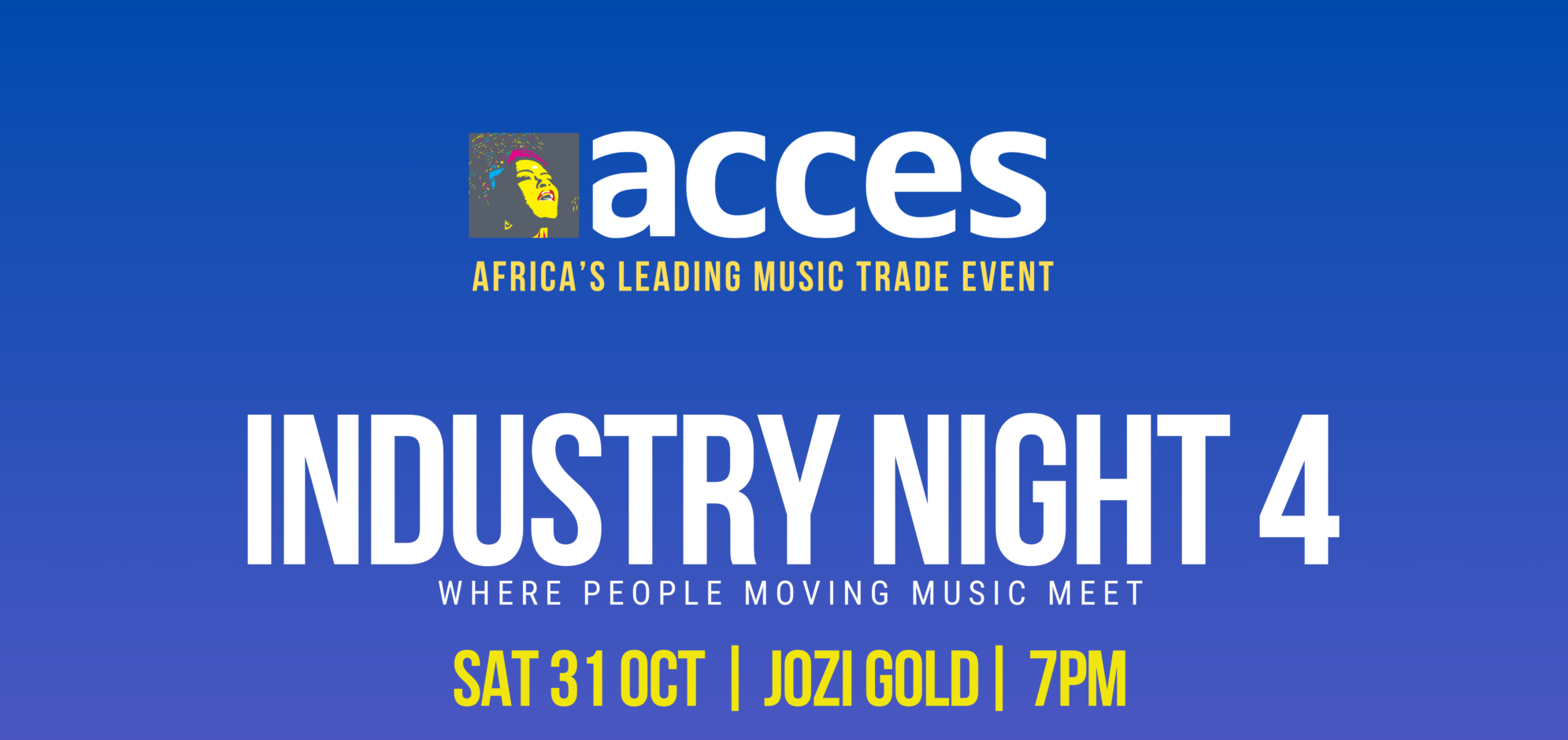
ACCES Conference and Showcase Festival is Africa's leading music industry gathering, bringing together the people shaping the future of the continent's music business. Artists, entrepreneurs, executives, investors, policymakers and cultural leaders from across Africa and around the world come to ACCES to build partnerships, exchange ideas, discover talent and create new business opportunities. Since its launch in 2017, ACCES has become the continent's premier platform for professional exchange and music market development. Combining a high-level conference with a curated showcase festival, networking, exhibitions and industry programmes, ACCES offers a unique space where creativity meets business and where African music connects with the global industry.

Gender@Work
Gender@Work

Music In Africa Gender @ Work is a three-year training programme aimed at upskilling and increasing the participation of female professionals in the African music sector. Launched by the Music In Africa Foundation (MIAF) in April 2019, the programme is connected to the MIAF’s ACCES music conference – a pan-African event held in a different African country every year. This connection enables the programme to reach new participants in a different African country every year. The programme marks the beginning of a more concerted effort by the Foundation to support the participation and inclusion of women in all facets of its programmes and the music sector in Africa as a whole. Over the three years, the programme will aim to address gender imbalances in the sector through training, lobbying, facilitating knowledge exchange and dialogues that foster the interest of women. The broader objectives of the programme are to: Provide industry training for women on critical music industry skills, focusing on: Stage management Electronic music production and recording Music business management Technical knowledge Provide an opportunity for both professional and aspiring women to benefit from the Music In Africa network and its broad range of activities in 2019, 2020 and 2021. Provide a solution-based platform in the form of a round table at ACCES with a view to identify challenges, discuss opportunities and lobby for the interests of female practitioners. Offer participants the opportunity to benefit from programmes offered by MIAF’s partners. Increase access to educational materials. Integrate participants in the broader ACCES programme to maximise experience and exposure to the industry. Record and present training materials on the www.musicinafrica.net, including but not limited to tutorials, templates and other best-practice materials. Communicate women-based themes that support the initiatives and messages of the programme. MAIN TRAINING ACTIVITIES Training in first country (Ghana): In the first year, participants will be trained on all aspects of stage management by a team of experienced stage managers from 10 to 17 November 2019. The programme will offer robust classroom training as well as practical, hands-on training in which participants will also be given the opportunity to manage various aspects of the ACCES performance programme. Training in second country: The second training iteration will take place at ACCES 2020 when the programme will diversify its course to include music production lessons and training on other music business topics. A round-table platform will also be introduced to coincide with the ACCES programme. Training in third country: The third training iteration will take place at ACCES 2021 in a different country, offering an advanced course. HOW DO YOU GET INVOLVED?  As a participant, facilitator or trainer: The programme enrolls up to 12 trainees every year. All opportunities are advertised publicly on this website, and will be added to this page. Please keep checking this page for new calls (below under UPDATES & CURRENT OPPORTUNITIES). As a partner Please contact Claire Metais at [email protected]. APPLY The call for applications for 2020 will be announced soon. The Music In Africa Gender @ Work programme is made possible with the support of the Prince Claus Fund, Siemens Stiftung and Goethe-Institut.

Sound Connects Fund
Sound Connects Fund

For cultural and creative practitioners and organisations operating in southern Africa, access to funding remains a major challenge. The COVID-19 pandemic has also had a massive impact on government policy, spending and the economy in general, and has seen spending on culture being moved further down the list of priorities. Further, the cultural and creative industries repeatedly cite four main areas where investment is needed for growth, which are increased visibility, mobility including access to new markets, finance and support structures.

Instrument Building And Repair Project

Experience the Vibrations African Instruments Exhibition online in 3D

banner image

Les DJs, ces nouveaux leaders de la musique congolaise moderne

Home/Non classé/Les DJs, ces nouveaux leaders de la musique congolaise moderne

Si hier, vers les années 90, de célèbres noms tels que Richard Kabala, MC Tshecksa, Djo K ont passé toutes leurs vies entre les murs de boites de nuit en train d’animer et de commenter des chants pour certains, d’autres par contre se sont transformés en régisseurs dans les radios kinoises. Actuellement cette tendance s’est développée et les DJs sont devenus des artistes complets, créateurs de sons, danseurs, chanteurs et voire même leaders de groupes.

Les DJs locaux à la mode tels que Dj Amaroula, Dj Abdoul, Dj Fantôme, Dj Kent, DJ 112, DJ Herady, DJ Flex, DJ C’est le Moment, DJ Benji ont transcendé les quatre murs de leurs night clubs respectifs pour présenter des spectacles dans de grands show et festivals. Ils connaissent une visibilité sans pareille dans les médias traditionnels et les réseaux sociaux en offrant des tubes et des clips vidéo où la musique et la danse sont mises en exergue teintés parfois de textes qui laissent à désirer. Les DJs sont également des références en matière de promotion de nouveaux sons car ils sont à la page concernant les dernières sorties et tendances musicales locales et internationales. Les musiciens du pays et ceux de l’étranger voulant conquérir Kinshasa et ses nuits passent chez eux pour conquérir l’audience kinoise.

DJ, un métier à plusieurs facettes

Les DJs ont un avantage sur les autres artistes de rumba tels que Werrason, JB Mpiana, Papa Wemba, Nyoka Longo, Felix Wazekwa car ils surfent sur plusieurs styles à la fois tels que le coupé décalé, la RnB, le ndombolo, l’afrobeat, la musique traditionnelle et ils peuvent ainsi conquérir un public plus large et divers. Devenu un métier intégral, être un Dj est aussi rentable qu’être musicien. D’ailleurs, en 2014, Fally Ipupa a fait de DJ Virus, son Dj officiel en l’amenant aux MTV Africa Music Awards (MAMA) en Afrique du sud pour un show.

Koffi Olomide, qui multiplie les stratégies pour ne pas perdre son aura, s’est récemment substitué en DJ question de faire peau neuve aux yeux de ses fans en affichant sur les banderoles dans la ville pour ses prochains concerts « DJ Mopao », « DJ Quadra ». De plus, il recourt régulièrement aux DJs pour lui confectionner des sons pour ses intros. Des titres comme  « Eyadema », « On est tous ensemble », ainsi que son album 13ème Apôtre illustrent bien cette nouvelle vague.

Il faut noter que les DJs congolais ont refait surface grâce à l’attraction de leurs collègues ivoiriens. En effet dans les années 2000, les DJs ivoiriens sont devenus populaires en mixant certains sons des chansons congolaises et locales en y ajoutant quelques paroles. Ceci a fait d’eux des artistes musiciens à part entière et leur a donné une grande influence sur toute l’Afrique subsaharienne, particulièrement le Congo. C’est cette touche de plus à la musique africaine qui a permis au style coupé décalé d’étouffer pendant un moment le ndombolo et donnant de ce fait une place de choix aux DJs musiciens.

Quelques noms parmi les DJs populaires locaux

Pour le moment il est difficile de désigner un DJ plus populaire que les autres. Chacun se bat pour son gagne-pain afin de s’établir sur la scène locale. Mais avec  « la banane » de DJ Amaroula et « Ma doda » de Dj Abdoul ces derniers peuvent être considérés comme les leaders d’un secteur en pleine propension dans tous les coins et recoins de la capitale congolaise. La domination de ces derniers se confirme par le nombre de shows qu’ils ont par semaine ou par mois, mais également les deux noms sont à la base de plusieurs polémiques dans les séances  « Parlement débout » [Note: le parlement debout évoque les conversations animées de badauds dans les rues de Kinshasa].

[video:https://www.youtube.com/watch?v=hqwBh-0SvsE autoplay:0]

A l’instar des rivalités populaires qui opposent les musiciens comme Tabu Ley à Franco Luambo, Tshala Mwana à Mbilia Bel, Papa Wemba à Koffi Olomide,  JB Mpiana  à Werrason, Fally Ipupa à Ferré Gola  ; les deux DJs (Amaroula et Abdoul) se titillent mutuellement dans leur mixtape. Dans les Night-clubs et les médias audiovisuels où ils prestent, les fans de l’un ou l’autre s’arrangent pour ne pas le fréquenter ni le suivre. DJ Abdoul a proposé, lors de ses passages à la télévision, un regroupement de tous les DJs afin de créer une plateforme pour promouvoir les artistes musiciens congolais. Puisque, regrette-t-il, il leur est reproché de faire souvent la promotion des musiques étrangères et être à la base de la dépravation des mœurs. Cet appel est resté sans suite.

La relève et le droit d’auteur en question

Les fréquentations et passages dans des boites de nuit tels que le Klubb, le Fiesta Club et le K12 club ont fait de Dj Virus un bon challenger qui se taille une place de choix dans le métier. Une autre  figure qui peut assurer la relève de cette génération de DJs, c’est DJ Kent. La vingtaine révolue, ce jeune homme mérite considération puisque le célèbre rappeur français d’origine congolaise Youssoupha, l’a félicité après qu’il l’ait accompagné lors de sa prestation à la finale de la télé réalité Best of the best, un concours musical très populaire  à Kinshasa. Le rappeur a déclaré à l’un de ses proches que DJ Kent est une grande star de la platine et a de l’avenir dans le domaine pourvu qu’il garde son sens du travail. Chaque jour qui passe, un nouveau son inventé par un DJ devient populaire à Kinshasa. Le moment est venu pour la Société congolaise des droits d’Auteur et des droits voisins (Socoda) prenne en considération cette nouvelle catégorie d’artistes afin que ces derniers bénéficient de leurs droits.


Références
Intervention de Dj Virus sur la télévision Rtvs1
Kin Event Magazine, P6
Voir les banderoles du Concert de Koffi Olomide du 30 aout 2015
Le ndombolo se coupé-décalise, www.arts243.skyrock.com
Entretien avec DJ Adboul au Dream Island
Entretien avec un membre de l’équipe Boma Yé kinshasa après best of the best
newsletter banner

Subscribe to our monthly Newsletter

Follow us on social media