



















































« Kora Awards 2016 » : Coumba Gawlo et Adiouza nominées
Coumba Gawlo Seck est nominée dans la catégorie ” Award d’honneur”. C’est l’une des plus prestigieuses distinctions des Koras. Elles sont décernées à des personnalités de hauts rangs, de grands artistes qui ont marqué leur époque et qui ont su participer au développement de leur continent à travers la musique, les légendes de la musique Africaine. Dans cette catégorie Coumba Gawlo Seck sera en compétition avec Yvonne Chaka Chaka de l’Afrique du Sud, P-square du Nigéria, Werrason de la RDC entre autres. Le gagnant empochera une somme de 50 000$ USD.
Rappelons que ce prix a été remporté par Myriam Makéba, Youssou N’Dour, Cesária Évora…
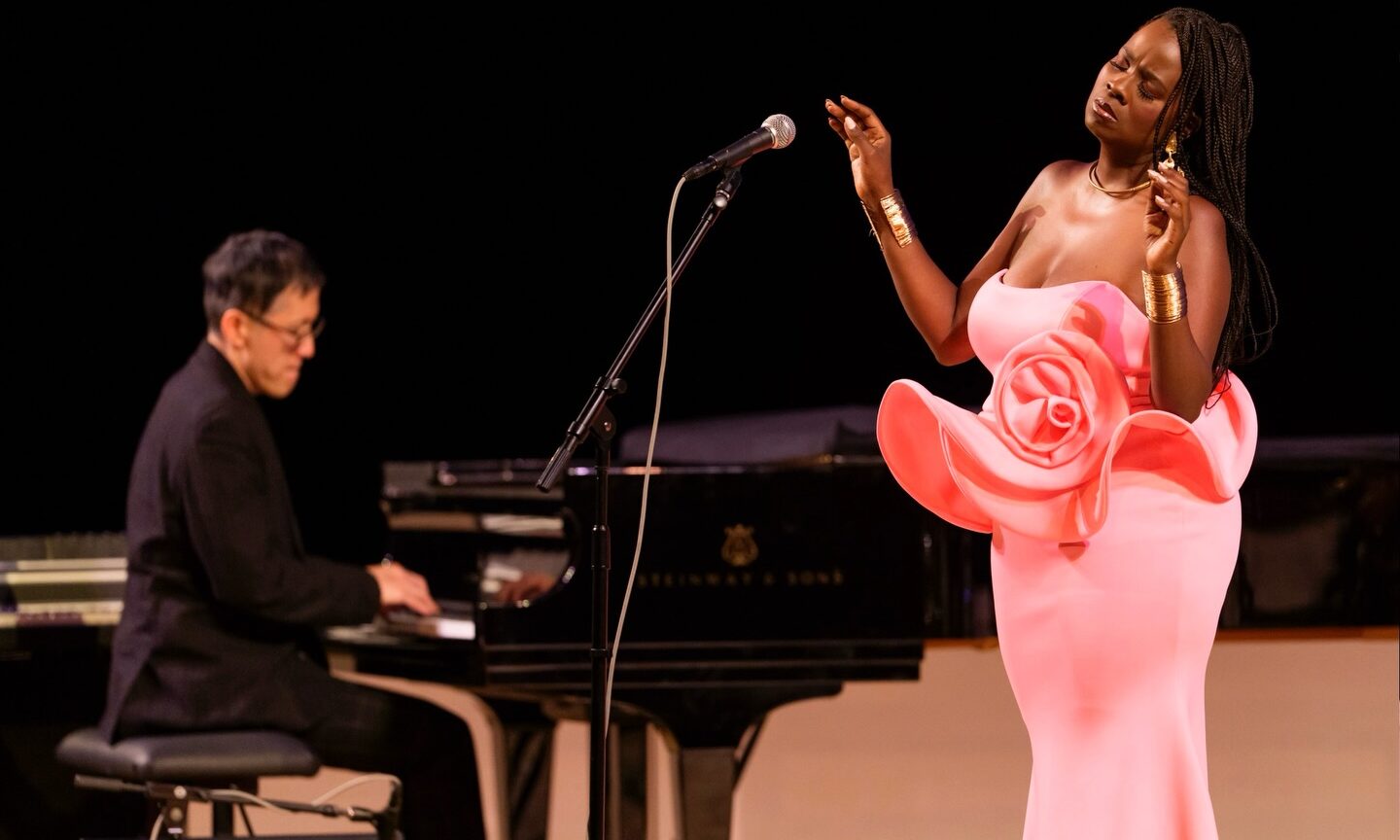
Adiouza, elle, est nominée dans la catégorie “Meilleur artiste féminin- Afrique de l’Ouest” avec son titre “Daddy”, elle sera en compétition avec la nigériane Tiwa Savage, la ghanéenne Efya, la capverdienne Suzanna Lubrano, la béninoise Sessimè, et la burkinabé Sissao. La lauréate empochera là aussi, une somme de 50 000$ USD en plus du trophée. Pour mémoire, Coumba Gawlo a remporté ce prix en 2001.
La cérémonie des Kora Awards est l’un des événements les plus suivis après la Coupe du Monde de football grâce à une télédiffusion qui touche près de 700 millions de téléspectateurs dans 82 pays à travers le monde. La remise des prix est prévue au Windhoek Country Club en Namibie, le 20 Mars 2016.
Voici la liste complète des nominés :
Meilleur espoir masculin
- Reekado Banks (Nigeria)
- Chem Edine Boudra (Algérie)
- Numerica (Cameroun)
- Odyai (Madagascar)
- J Rio (Gabon)
- Yamoto Band (Tanzanie)
Meilleur espoir Féminin
- Bading M (Gabon)
- Yemi Alade (Nigeria)
- Nélida Karr (Guinée équatoriale)
- Daphe (Cameroun)
- Naima Kay (Afrique du Sud)
- Kaaki (Ghana)
Meilleur artiste masculin – Afrique de l’Ouest
- Flavour (Nigéria)
- Serge Beynaud (Côte d’Ivoire)
- Bisa Kdei (Ghana)
- Nelson Freitas (Cap-Vert)
- Atumpan (Ghana)
- Davido (Nigeria)
Meilleur artiste féminin – Afrique de l’Ouest
- Tiwa Savage (Nigeria)
- Adiouza (Sénégal)
- Efya (Ghana)
- Sessime (Bénin)
- Sissao (Burkina Faso)
Meilleur artiste masculin – Afrique de l’Est
- Jose Chameleone (Ouganda)
- Eddy Kenzo (Ouganda)
- Diamant Platnumz (Tanzanie)
- Emmanuel Jal (Sud-Soudan)
- Sat-B (Burundi)
- Tendros Erinias (Érythrée)
- Awaleh Adan (Djibouti)
Meilleur artiste féminin – Afrique de l’Est
- Irene Ntale (Ouganda)
- Victoria Kimani (Kenya)
- Vanessa MDEE (Tanzanie)
- Juliana Kanyomozi (Ouganda)
- Knowless Butera (Rwanda)
- Avril Nyambura (Kenya)
Meilleur artiste masculin – Afrique Centrale
- Cano (Guinée équatoriale)
- Ferre Gola (RDC)
- Tresor Mvoula (Congo)
- Frédéric Gassita (Gabon)
- Mawndoe Celestine (Tchad)
- Calema (Sao Tomé et Principe)
Meilleur artiste féminin – Afrique Centrale
- Charlotte Dipanda (Cameroun)
- Cindy Le Coeur (RDC)
- Syssi Mananga (Congo)
- Reine Koumb (Gabon)
- Mani Bella (Cameroun)
- Bussine Mbadinga (Gabon)
Meilleur artiste masculin – Afrique Australe
- C4 Pedro (Angola)
- AKA (Afrique du Sud)
- Gazza (Namibie)
- Coreon Du (Angola)
- Petersen (Zambie)
- Piksy (Malawi)
Meilleur artiste féminin – Afrique Australe
- Moneoa (Afrique du Sud)
- Elize Detlinger (Namibie)
- Bruna Tatiana (Angola)
- Lusha James (Mozambique)
- Pah Chihera (Zimbabwe)
- Busiswa (Afrique du Sud)
Meilleur artiste masculin – Afrique du Nord
- Tamer Hosny (Egypte)
- Lochi DK (Algérie)
- Ahmed Soultan (Maroc)
- Saber Houari (Algérie)
- Kafon (Tunisie)
- Ayman Al Atar (Libye)
Meilleur artiste féminin – Afrique du Nord
- Samira Said (Maroc)
- Sherine Abdel Wahab (Egypte)
- Zina Daoudia (Maroc)
- Sarah Ayoub (Maroc)
- Amani Souissi (Tunisie)
- Latifa (Tunisie)
Meilleur groupe africain
- Support (Nigeria)
- Double Bangz (Sierra Leone)
- Sauti Sol (Kenya)
- Toofan (Togo)
- X-Maleya (Cameroun)
- Bana C4 (RDC)
Meilleur artiste masculin – Spiritual Music
- D-Naff (Namibua)
- Hatim Ammor (Maroc)
- Kabelo Eric (Botswana)
- Kidum (Burundi)
- Eugen Ablodevi (Togo)
- Eddy Kamoso (Burundi)
Meilleur artiste féminin – Spiritual Music
- Rebecca Malope (Afrique du Sud)
- Gloria Muliro (Kenya)
- Lara Georges (Nigeria)
- Kanvee G Adams (Libéria)
- Sarah Hagos (Érythrée)
- Samira Adzabe (Gabon)
Meilleur groupe – Spiritual Music
- Simplement Chrysolite (Afrique du Sud)
- VM Six (Namibie)
- BNG (Nigeria)
- 24 aînés (Kenya)
- Eden (Côte d’Ivoire)
- Penuel Cantorum (Bénin)
Meilleur artiste masculin – Musique traditionnelle
- Mathias Walukaga (Ouganda)
- Mrisho Mpoto (Tanzanie)
- Stanlux (Togo)
- N’Dulo Kitoxi (Angola)
- Kandla Kora (Guinée)
- Demba Tandla (Mauritanie)
Meilleur artiste féminin – Musique traditionnelle
- Cécile Kayirebwa (Rwanda)
- Dobet Gnahoré (Côte d’Ivoire)
- Sham Geshu (Érythrée)
- Abey Lakew (Ethipia)
- Erna Shimu (Namibie)
- Hope Masike (Zimbabwe)
Meilleur groupe de musique traditionnelle de l’Afrique
- Ensemble culturel Makwakwa (Botswana)
- Trio Teriba (Bénin)
- Groupe Kiltir (Réunion)
- Babylone (Algérie)
- Bayuda du Congo (RDC)
- Les Espoirs de Coronthie (Guinée)
Meilleur artiste de la diaspora africaine
- Maître Gims (RDC / France)
- Teeyah (Côte d’Ivoire / France)
- Mokobe (Mali / France)
- Singulier (CAR / France)
- Martin Hod (Bénin / France)
- Jessica Dorsey (Caraïbes / France)
Meilleure vidéo de l’Année
- Eddy Kenzo – « Zigido » (Ouganda)
- Tiwa Savage – « My Darling » (Nigeria)
- Saveur – « Golibe » (Nigeria)
- Cano – « African Baby » (Guinée équatoriale)
- Jose Chameleone – « Wale Wale » (Ouganda)
- Korede Belo – « God Win » (Nigeria)
Meilleure collaboration de l’année
- « Adaobi » – Don Jazzy, Reekado Banks, Di’Ja & Korede Bello
- « Mantsayadch » – Ahmed Soultan, Dizzy Dros, Dj Van, Manal BK, musulmane et Shayfeen
- « Mayday SOS » – JJK & Support
- « Adonal» – Sarkodie et CASPRO
- « Afrique Baby » – Cano, Wizzboyy, Mafikizolo & The Dogg
- « Tusimame » – Emanuel Jal, Vanessa MDEE, Juliana et Syssi Mananga
Meilleur album de l’année
- Bebe Cool – Go Mama (Ouganda)
- Suzana Lebrano – Vitoria (Cap-Vert)
- Le sol – Nostalgic Moments (Afrique du Sud)
- SEE – Authentic Rebel (Namibie)
- Tinariwen – Emmaar (Mali)
- Jovi – Mboko God (Cameroun)
Award d’honneur
- Amr Diab (Egypte)
- Yvonne Chaka Chaka (Afrique du Sud)
- Teddy Afro (Ethiopie)
- Werrason (RDC)
- P-Square (Nigeria)
- Coumba Gawlo (Sénégal)
Meilleur artiste Hip-Hop
- Sarkodie (Ghana)
- Hamzaoul Med Amine (Tunisie)
- K.O (Afrique du Sud)
- Stanley Enow (Cameroun)
- Kiff No Beat (Côte d’Ivoire)
- Wakazi (Tanzanie)
Meilleur artiste Urban Music
- Mi Casa (Afrique du Sud)
- MzVee (Ghana)
- DJ Arafat (Côte d’Ivoire)
- Dama Do Bling (Mozambique)
- Fanicko (Bénin)
- Sally patron Madame (Namibie)
Pour plus de détails visitez le site des Kora Awards ou regardez la vidéo ci-dessous.



