



































NEFCISA
NEFCISA

The Music In Africa Foundation (MIAF) is proud of its partnership with the Industrial Development Corporation (IDC) as a Strategic Implementing Partner (SIP) for its Social Employment Fund (SEF). Through this collaboration, MIAF is running a national programme that is creating jobs, addressing skills gaps, and strengthening South Africa's creative industries — in line with the SEF's overarching goal to generate work for the common good and build community value through employment, social contribution, and inclusive economic participation. Operating under the banner NEFCISA (National Employment Facility for Creative Industries in South Africa), the initiative is recruiting and training participants, matching them with host organisations, and has already placed 1 500 workers across the country — surpassing its original target of 1 000. NEFCISA is delivered through a network of 20 host organisations spanning five provinces, who are actively hosting participants and contributing to work for the common good across South Africa's creative and cultural industries. Key Objectives: Support employment and entrepreneurship in the creative industries. Offer skills development and training programmes. Foster partnerships between public and private creative sectors. Promote South African creativity at both provincial and national levels Foster community development through social contribution.

ACCES
ACCES

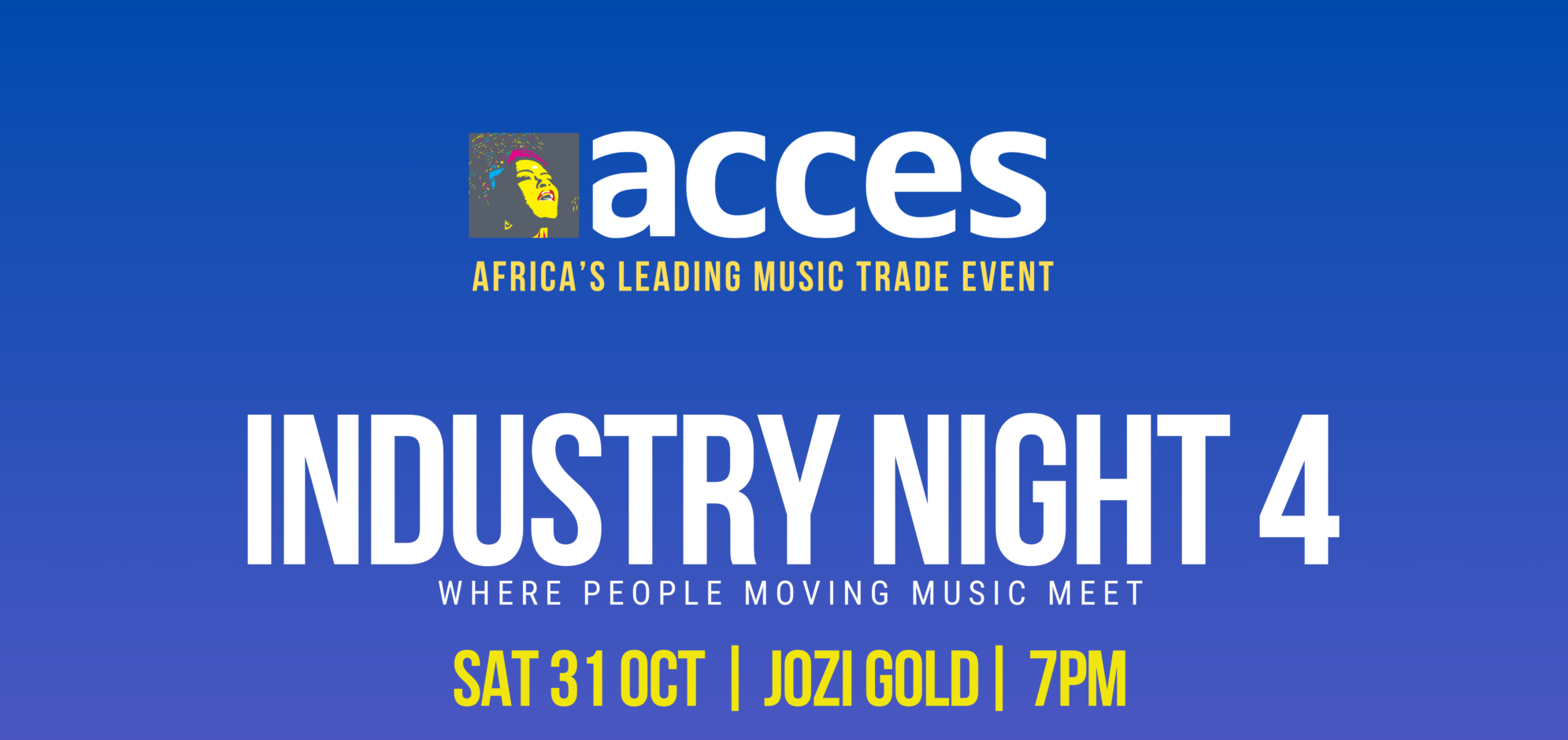
ACCES Conference and Showcase Festival is Africa's leading music industry gathering, bringing together the people shaping the future of the continent's music business. Artists, entrepreneurs, executives, investors, policymakers and cultural leaders from across Africa and around the world come to ACCES to build partnerships, exchange ideas, discover talent and create new business opportunities. Since its launch in 2017, ACCES has become the continent's premier platform for professional exchange and music market development. Combining a high-level conference with a curated showcase festival, networking, exhibitions and industry programmes, ACCES offers a unique space where creativity meets business and where African music connects with the global industry.

Gender@Work
Gender@Work

Music In Africa Gender @ Work is a three-year training programme aimed at upskilling and increasing the participation of female professionals in the African music sector. Launched by the Music In Africa Foundation (MIAF) in April 2019, the programme is connected to the MIAF’s ACCES music conference – a pan-African event held in a different African country every year. This connection enables the programme to reach new participants in a different African country every year. The programme marks the beginning of a more concerted effort by the Foundation to support the participation and inclusion of women in all facets of its programmes and the music sector in Africa as a whole. Over the three years, the programme will aim to address gender imbalances in the sector through training, lobbying, facilitating knowledge exchange and dialogues that foster the interest of women. The broader objectives of the programme are to: Provide industry training for women on critical music industry skills, focusing on: Stage management Electronic music production and recording Music business management Technical knowledge Provide an opportunity for both professional and aspiring women to benefit from the Music In Africa network and its broad range of activities in 2019, 2020 and 2021. Provide a solution-based platform in the form of a round table at ACCES with a view to identify challenges, discuss opportunities and lobby for the interests of female practitioners. Offer participants the opportunity to benefit from programmes offered by MIAF’s partners. Increase access to educational materials. Integrate participants in the broader ACCES programme to maximise experience and exposure to the industry. Record and present training materials on the www.musicinafrica.net, including but not limited to tutorials, templates and other best-practice materials. Communicate women-based themes that support the initiatives and messages of the programme. MAIN TRAINING ACTIVITIES Training in first country (Ghana): In the first year, participants will be trained on all aspects of stage management by a team of experienced stage managers from 10 to 17 November 2019. The programme will offer robust classroom training as well as practical, hands-on training in which participants will also be given the opportunity to manage various aspects of the ACCES performance programme. Training in second country: The second training iteration will take place at ACCES 2020 when the programme will diversify its course to include music production lessons and training on other music business topics. A round-table platform will also be introduced to coincide with the ACCES programme. Training in third country: The third training iteration will take place at ACCES 2021 in a different country, offering an advanced course. HOW DO YOU GET INVOLVED?  As a participant, facilitator or trainer: The programme enrolls up to 12 trainees every year. All opportunities are advertised publicly on this website, and will be added to this page. Please keep checking this page for new calls (below under UPDATES & CURRENT OPPORTUNITIES). As a partner Please contact Claire Metais at [email protected]. APPLY The call for applications for 2020 will be announced soon. The Music In Africa Gender @ Work programme is made possible with the support of the Prince Claus Fund, Siemens Stiftung and Goethe-Institut.

Sound Connects Fund
Sound Connects Fund

For cultural and creative practitioners and organisations operating in southern Africa, access to funding remains a major challenge. The COVID-19 pandemic has also had a massive impact on government policy, spending and the economy in general, and has seen spending on culture being moved further down the list of priorities. Further, the cultural and creative industries repeatedly cite four main areas where investment is needed for growth, which are increased visibility, mobility including access to new markets, finance and support structures.

Instrument Building And Repair Project

Experience the Vibrations African Instruments Exhibition online in 3D

banner image

5 vidéos qui ont marqué l'ascension de Soraia Ramos

Home/Non classé/5 vidéos qui ont marqué l’ascension de Soraia Ramos

« Um pouco de mim »

Née au Portugal où elle a grandi, Soraia a passé la plus grande partie de sa vie en Europe, notamment en France et en Suisse où elle est établie. Même si elle est issue d’une famille musicienne, se lancer en tant que professionnelle dans le 4e art n’a pas été une sinécure. Elle est passée par de nombreux concours de chant, notamment le Diaspora Voices Suisse qu’elle a remporté en 2010, et elle a dû relever de nombreux défis pour s’imposer peu à peu, d’abord avec des covers de Rihanna et Pedro C4, puis avec sa première production solo, le EP A Bit of Me.

Dans « Um poco de mim » (une peu de moi), un des premiers tubes de sa carrière produit par L’Beatz, elle explique que sa mère lui demandait de se focaliser sur ses études au lieu de s’adonner à la musique ; mais elle a préféré suivre sa passion…

[video:https://www.youtube.com/watch?v=yPQLzVNKRmE width:850 height:480 autoplay:0]

 « Diz-me »

Malgré la distance qui la sépare de sa terre d’origine, le Cap-Vert, Soraia a su s’enraciner dans les cultures du pays. Praticienne du kizomba, genre musical et danse originaire de l’Angola très populaire en Afrique lusophone, elle use du créole (langue parlée au Cap-Vert)  sur « Diz-me » (dis moi) pour parler de dépit amoureux.

En effet, dans ce single qui a été réalisé chez AfroDigital et qui a largement contribué à développer sa notoriété, elle demande à son amoureux volage d’avouer son infidélité.

[video:https://www.youtube.com/watch?v=z3Qv6OnfXn4 width:850 height:480 autoplay:0]

« Meu marido »

Vous l’aurez constaté, le leitmotiv des créations de Soraia, c’est l’amour ! Il faut dire que ce sentiment a toujours nourri la verve des créateurs capverdiens les plus illustres, notamment la diva aux pieds nus, Cesaria Evora.

Dans « Meu Marido » (mon époux) qui est distribué par EauxG et Klasszik, Soraia chante la beauté de l’amour, le bonheur de toujours marcher à deux et de regarder vers le même horizon.

[video:https://www.youtube.com/watch?v=LGxj_XKwgBI width:850 height:480 autoplay:0]

« Bai »

Quand elle ne pousse pas la romance, Soraia dépeint l’autre visage de l’amour, celui qui blesse et qui laisse l’homme dans le chagrin. Dans « Bai », elle exprime le ras-le-bol d’une femme qui désire sortir d’une relation toxique dans laquelle elle ne s’épanouit plus.

Pour porter son message plus haut, Soraia a enregistré une reprise de la chanson avec son petit frère Lisandro Cuxi, lauréat du célèbre show The Voice France en 2017. Les deux versions comptent plus de 15 millions de vues chacune sur YouTube.

[video:https://www.youtube.com/watch?v=4ITdgqJJZiU width:850 height:480 autoplay:0]

« O nosso amor » – featuring Calema

Soraia a très vite réussi à se faire des fans au Cap-Vert, mais pour aller à l’assaut du public lusophone africain, il lui fallait collaborer avec des artistes d’autres horizons. C’est sur Calema, le duo aux origines santoméennes, qu’elle a jeté son dévolu – pour cause, le groupe est un des plus respectés sur le continent et à travers le monde.

Leur collaboration sur « O nosso amor » (notre amour), qui parle d’une vie sentimentale compliquée, à la fois jonchée de moments fastes et de difficultés, a totalisé 14 millions de vues entre septembre 2020 et janvier 2021. Le morceau est distribué par Klasszik.

[video:https://www.youtube.com/watch?v=UYVs8M21HTk width:850 height:480 autoplay:0]

newsletter banner

Subscribe to our monthly Newsletter

Follow us on social media