




































NEFCISA
NEFCISA

The Music In Africa Foundation (MIAF) is proud of its partnership with the Industrial Development Corporation (IDC) as a Strategic Implementing Partner (SIP) for its Social Employment Fund (SEF). Through this collaboration, MIAF is running a national programme that is creating jobs, addressing skills gaps, and strengthening South Africa's creative industries — in line with the SEF's overarching goal to generate work for the common good and build community value through employment, social contribution, and inclusive economic participation. Operating under the banner NEFCISA (National Employment Facility for Creative Industries in South Africa), the initiative is recruiting and training participants, matching them with host organisations, and has already placed 1 500 workers across the country — surpassing its original target of 1 000. NEFCISA is delivered through a network of 20 host organisations spanning five provinces, who are actively hosting participants and contributing to work for the common good across South Africa's creative and cultural industries. Key Objectives: Support employment and entrepreneurship in the creative industries. Offer skills development and training programmes. Foster partnerships between public and private creative sectors. Promote South African creativity at both provincial and national levels Foster community development through social contribution.

ACCES
ACCES

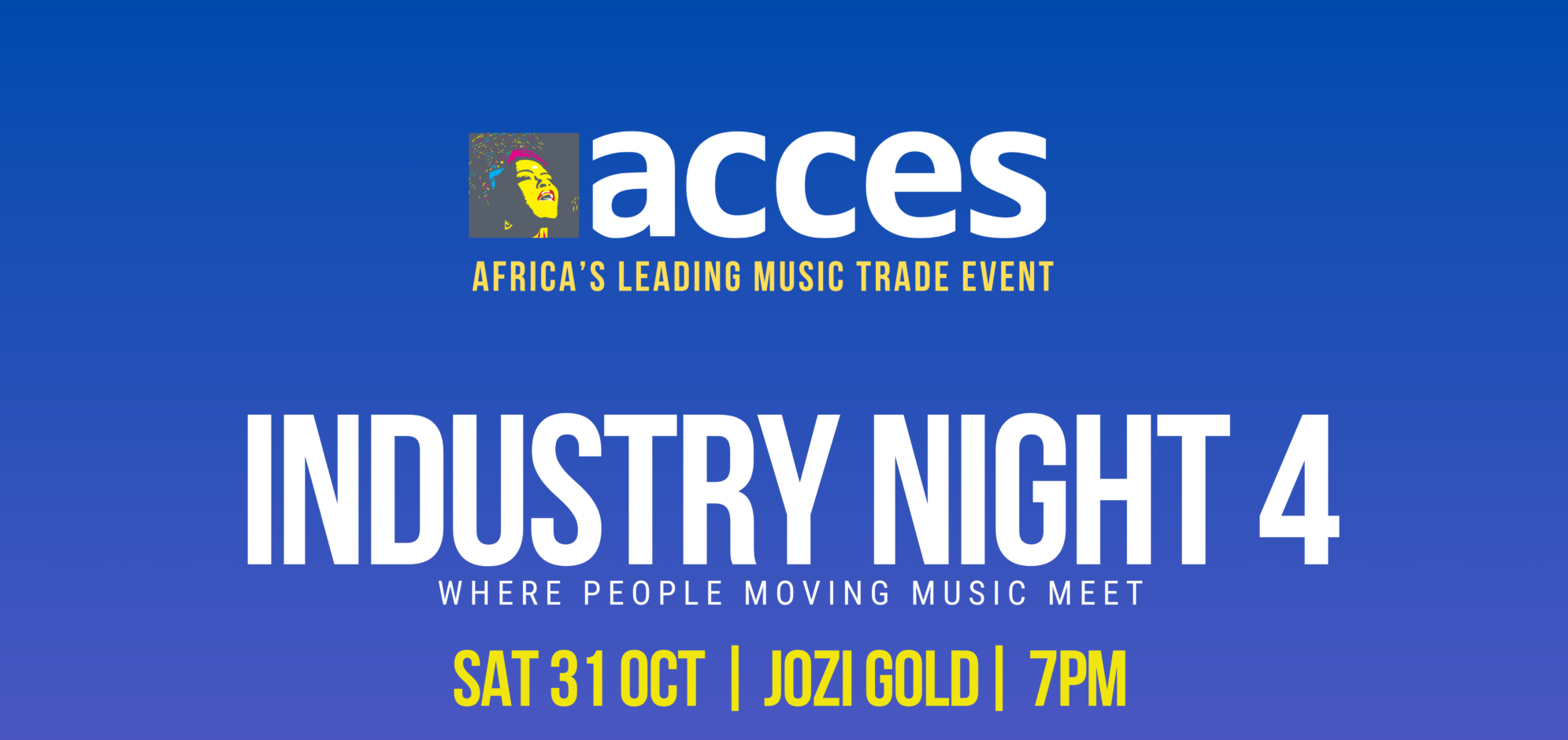
ACCES Conference and Showcase Festival is Africa's leading music industry gathering, bringing together the people shaping the future of the continent's music business. Artists, entrepreneurs, executives, investors, policymakers and cultural leaders from across Africa and around the world come to ACCES to build partnerships, exchange ideas, discover talent and create new business opportunities. Since its launch in 2017, ACCES has become the continent's premier platform for professional exchange and music market development. Combining a high-level conference with a curated showcase festival, networking, exhibitions and industry programmes, ACCES offers a unique space where creativity meets business and where African music connects with the global industry.

Gender@Work
Gender@Work

Music In Africa Gender @ Work is a three-year training programme aimed at upskilling and increasing the participation of female professionals in the African music sector. Launched by the Music In Africa Foundation (MIAF) in April 2019, the programme is connected to the MIAF’s ACCES music conference – a pan-African event held in a different African country every year. This connection enables the programme to reach new participants in a different African country every year. The programme marks the beginning of a more concerted effort by the Foundation to support the participation and inclusion of women in all facets of its programmes and the music sector in Africa as a whole. Over the three years, the programme will aim to address gender imbalances in the sector through training, lobbying, facilitating knowledge exchange and dialogues that foster the interest of women. The broader objectives of the programme are to: Provide industry training for women on critical music industry skills, focusing on: Stage management Electronic music production and recording Music business management Technical knowledge Provide an opportunity for both professional and aspiring women to benefit from the Music In Africa network and its broad range of activities in 2019, 2020 and 2021. Provide a solution-based platform in the form of a round table at ACCES with a view to identify challenges, discuss opportunities and lobby for the interests of female practitioners. Offer participants the opportunity to benefit from programmes offered by MIAF’s partners. Increase access to educational materials. Integrate participants in the broader ACCES programme to maximise experience and exposure to the industry. Record and present training materials on the www.musicinafrica.net, including but not limited to tutorials, templates and other best-practice materials. Communicate women-based themes that support the initiatives and messages of the programme. MAIN TRAINING ACTIVITIES Training in first country (Ghana): In the first year, participants will be trained on all aspects of stage management by a team of experienced stage managers from 10 to 17 November 2019. The programme will offer robust classroom training as well as practical, hands-on training in which participants will also be given the opportunity to manage various aspects of the ACCES performance programme. Training in second country: The second training iteration will take place at ACCES 2020 when the programme will diversify its course to include music production lessons and training on other music business topics. A round-table platform will also be introduced to coincide with the ACCES programme. Training in third country: The third training iteration will take place at ACCES 2021 in a different country, offering an advanced course. HOW DO YOU GET INVOLVED?  As a participant, facilitator or trainer: The programme enrolls up to 12 trainees every year. All opportunities are advertised publicly on this website, and will be added to this page. Please keep checking this page for new calls (below under UPDATES & CURRENT OPPORTUNITIES). As a partner Please contact Claire Metais at [email protected]. APPLY The call for applications for 2020 will be announced soon. The Music In Africa Gender @ Work programme is made possible with the support of the Prince Claus Fund, Siemens Stiftung and Goethe-Institut.

Sound Connects Fund
Sound Connects Fund

For cultural and creative practitioners and organisations operating in southern Africa, access to funding remains a major challenge. The COVID-19 pandemic has also had a massive impact on government policy, spending and the economy in general, and has seen spending on culture being moved further down the list of priorities. Further, the cultural and creative industries repeatedly cite four main areas where investment is needed for growth, which are increased visibility, mobility including access to new markets, finance and support structures.

Instrument Building And Repair Project

Experience the Vibrations African Instruments Exhibition online in 3D

banner image

Telle une étoile filante... Ablaye Mbaye (1981-2017)

Home/Non classé/Telle une étoile filante… Ablaye Mbaye (1981-2017)

Né en 1981 à la Médina, quartier populaire de Dakar, Abdoulaye Mbaye (son vrai nom) séjourne à l’école des aveugles de Thiès où il apprend à lire et à écrire en braille.

Garçon doué et précoce, il est curieux, s’intéresse à tout et ne se donne aucune limite.Le chant l’intéresse particulièrement. En 1986, il fait une apparition dans l’émission « Kaddu Xaleyi » (La Voix des Enfants) et marque déjà les esprits.

Quelques années plus tard, il accompagne le chanteur feu Demba Dia avant que Youssou N’Dour ne le prenne sous son aile. Ce dernier l’aide à sortir son premier album Nila Démé en 1995. Le succès est immédiat. Les Sénégalais découvrent alors une voix ressemblant à bien des égards à celle de Youssou N’Dour.

Les mélomanes l’adoubent et l’encensent. Dans la foulée, son nouveau mentor l’invite à prendre part  à l’enregistrement de l’album The Guide qui comportera des morceaux cultes comme « 7 Seconds ».

Pendant 7 ans, il accompagnera Youssou N’Dour en tournée à travers le monde. Yaye Balma son second album solo rencontrera le même succès. Nous sommes au début des années 2000 et Ablaye Mbaye s’installe Paris.

Durant son séjour parisien, Ablaye collabore avec des artistes comme Disiz (Serigne Mbaye), Passi et Kerry James avec lequel il participe à l’album disque d’or du Mafia K’Fry. Ablaye Mbaye démontre qu’il est à l’aise autant dans les sonorités africaines que celles venues d’ailleurs. Hip-Hop, Jazz, Soul, Mbalax, Reggae, il surfe sur tous ces styles.) Après ses deux albums studios, Ablaye sortira Xaléyi en 1998, Agnès en 2001 et Maag na (J’ai grandi en wolof)  en 2005.

Malgré son jeune âge, Ablaye a chanté outre Youssou N’Dour, avec Salif Keïta Omar péne ou Yoro N’Diaye. Il a partagé la scène avec Ismaël Lô, Viviane N’Dour ou encore Baaba Maal dont il était proche également.

Dans ses textes Ablaye chantait la fraternité, l’amitié, le devoir des enfants envers leurs parents, la lutte contre les discriminations, l’excision notamment. Il s’est engagé auprès des faibles, soutenu des causes nobles et contrairement à beaucoup de ses compères artistes sénégalais, Ablaye a très peu chanté les louanges de gens fortunés pour se remplir les poches.

Il avait ses amis de quartier, ceux avec qui il aimait prendre le thé, loin des paillettes du show-biz, il y avait aussi ses amis et proches rencontraient tout au long de son parcours et  qu’il aimait fréquenter non pas pour en tirer un quelconque profit financier mais seulement pour tisser des relations humaines. Lui le non-voyant, n’a jamais tendu la main comme le rappelait l’acteur culturel Guissé Pène en commentant le décès de son neveu et ami sur SudFM (Radio privée) . Son attitude et son existence auront été des leçons de vie.

D’une empathie rarement égalée, toujours taquin et d’une humilité déconcertante, Ablaye malgré un talent immense, n’a jamais pris la grosse la tête. Au contraire, on pourrait même lui reprocher d’être trop resté dans sa coquille.

Comme s’il avait entendu ces critiques, Ablaye avait décidé ces derniers temps, de se faire un peu violence pour revendiquer son statut et prendre la place qu’il lui revenait. Surtout qu’après Youssou N’Dour, Baaba Maal, Omar Pène et autres, très peu de vrai talent frappent à la porte pour reprendre le flambeau. C’est dans cette optique qu’il préparait un retour qui aurait pu être celui de l’enfant prodigue.

Malheureusement, le destin en a décidé autrement. Trop tôt parti ! Fatalistes, certains rappellent cet adage bien sénégalais : « Yoonu Ndaw du Gaw » en gros « Un succès fulgurant n’est pas bon pour un enfant ». Autrement dit, ils reprocheraient presque à Ablaye Mbaye d’avoir éclos trop tôt. Il avait 12 ans quand il enregistra son premier album à succès.

Prions pour que la terre de Yoff lui soit légère et lançons un appel à tous ses « Sopey » (mes fans, titre d’une de ses chansons) de se ruer vers les bacs à la sortie prochaine de son album posthume pour en faire un disque d’or et soutenir sa famille.

newsletter banner

Subscribe to our monthly Newsletter

Follow us on social media