


































NEFCISA
NEFCISA

The Music In Africa Foundation (MIAF) is proud of its partnership with the Industrial Development Corporation (IDC) as a Strategic Implementing Partner (SIP) for its Social Employment Fund (SEF). Through this collaboration, MIAF is running a national programme that is creating jobs, addressing skills gaps, and strengthening South Africa's creative industries — in line with the SEF's overarching goal to generate work for the common good and build community value through employment, social contribution, and inclusive economic participation. Operating under the banner NEFCISA (National Employment Facility for Creative Industries in South Africa), the initiative is recruiting and training participants, matching them with host organisations, and has already placed 1 500 workers across the country — surpassing its original target of 1 000. NEFCISA is delivered through a network of 20 host organisations spanning five provinces, who are actively hosting participants and contributing to work for the common good across South Africa's creative and cultural industries. Key Objectives: Support employment and entrepreneurship in the creative industries. Offer skills development and training programmes. Foster partnerships between public and private creative sectors. Promote South African creativity at both provincial and national levels Foster community development through social contribution.

ACCES
ACCES

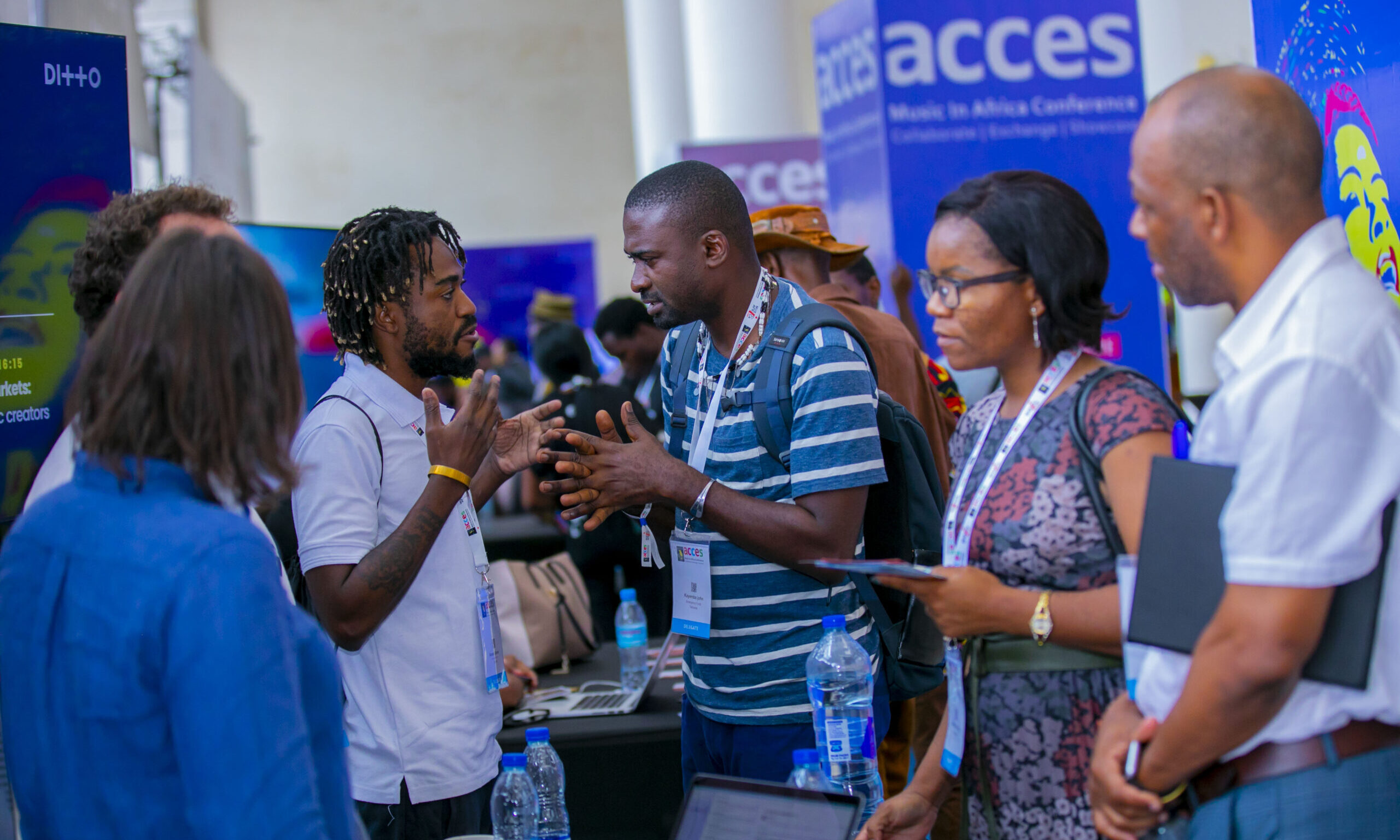
ACCES Conference and Showcase Festival is Africa's leading music industry gathering, bringing together the people shaping the future of the continent's music business. Artists, entrepreneurs, executives, investors, policymakers and cultural leaders from across Africa and around the world come to ACCES to build partnerships, exchange ideas, discover talent and create new business opportunities. Since its launch in 2017, ACCES has become the continent's premier platform for professional exchange and music market development. Combining a high-level conference with a curated showcase festival, networking, exhibitions and industry programmes, ACCES offers a unique space where creativity meets business and where African music connects with the global industry.

Gender@Work
Gender@Work

Music In Africa Gender @ Work is a three-year training programme aimed at upskilling and increasing the participation of female professionals in the African music sector. Launched by the Music In Africa Foundation (MIAF) in April 2019, the programme is connected to the MIAF’s ACCES music conference – a pan-African event held in a different African country every year. This connection enables the programme to reach new participants in a different African country every year. The programme marks the beginning of a more concerted effort by the Foundation to support the participation and inclusion of women in all facets of its programmes and the music sector in Africa as a whole. Over the three years, the programme will aim to address gender imbalances in the sector through training, lobbying, facilitating knowledge exchange and dialogues that foster the interest of women. The broader objectives of the programme are to: Provide industry training for women on critical music industry skills, focusing on: Stage management Electronic music production and recording Music business management Technical knowledge Provide an opportunity for both professional and aspiring women to benefit from the Music In Africa network and its broad range of activities in 2019, 2020 and 2021. Provide a solution-based platform in the form of a round table at ACCES with a view to identify challenges, discuss opportunities and lobby for the interests of female practitioners. Offer participants the opportunity to benefit from programmes offered by MIAF’s partners. Increase access to educational materials. Integrate participants in the broader ACCES programme to maximise experience and exposure to the industry. Record and present training materials on the www.musicinafrica.net, including but not limited to tutorials, templates and other best-practice materials. Communicate women-based themes that support the initiatives and messages of the programme. MAIN TRAINING ACTIVITIES Training in first country (Ghana): In the first year, participants will be trained on all aspects of stage management by a team of experienced stage managers from 10 to 17 November 2019. The programme will offer robust classroom training as well as practical, hands-on training in which participants will also be given the opportunity to manage various aspects of the ACCES performance programme. Training in second country: The second training iteration will take place at ACCES 2020 when the programme will diversify its course to include music production lessons and training on other music business topics. A round-table platform will also be introduced to coincide with the ACCES programme. Training in third country: The third training iteration will take place at ACCES 2021 in a different country, offering an advanced course. HOW DO YOU GET INVOLVED?  As a participant, facilitator or trainer: The programme enrolls up to 12 trainees every year. All opportunities are advertised publicly on this website, and will be added to this page. Please keep checking this page for new calls (below under UPDATES & CURRENT OPPORTUNITIES). As a partner Please contact Claire Metais at [email protected]. APPLY The call for applications for 2020 will be announced soon. The Music In Africa Gender @ Work programme is made possible with the support of the Prince Claus Fund, Siemens Stiftung and Goethe-Institut.

Sound Connects Fund
Sound Connects Fund

For cultural and creative practitioners and organisations operating in southern Africa, access to funding remains a major challenge. The COVID-19 pandemic has also had a massive impact on government policy, spending and the economy in general, and has seen spending on culture being moved further down the list of priorities. Further, the cultural and creative industries repeatedly cite four main areas where investment is needed for growth, which are increased visibility, mobility including access to new markets, finance and support structures.

Instrument Building And Repair Project

Experience the Vibrations African Instruments Exhibition online in 3D

banner image

L'industrie musicale en Guinée

Home/Non classé/L’industrie musicale en Guinée

Sékou Touré, premier président de la Guinée indépendante en 1958 et chantre du mouvement « authenticité », a mis en œuvre une politique culturelle radicale visant à revitaliser les arts guinéens : alors que les groupes jouaient principalement de la musique cubaine et française, Sékou Touré imposa par décret la création d’un style musical guinéen inédit et moderne.

Des musiciens comme Balla Onivogui, Keletigui Traoré, Momo Wandel et Kerfala Papa Diabaté, ont ainsi bénéficié d’un programme d’apprentissage et de la formation de nouveaux orchestres.

Dans le cadre du programme « authenticité », chaque région de Guinée, soit 34 au total, a constitué une troupe artistique avec un orchestre de musique traditionnelle, un chœur et un groupe de théâtre.

Le gouvernement a largement financé cet essor culturel en équipant les musiciens d’instruments, et en les incitant à composer sur les thèmes du nationalisme africain, de l’anticolonialisme et de l’anti-impérialisme.

Au début des années 1960, le programme d’authenticité était en plein essor : les orchestres régionaux, appelés orchestres fédéraux, et les orchestres nationaux de Guinée, ont constitué l’avant-garde de la production musicale en Afrique.

La maison de disques Syliphone a ainsi produit pas moins de 160 vinyles entre 1967 et 1984, avec de grands artistes comme Sékou « Diamond Fingers » Diabaté, Demba Camara, Kouyaté Sory Kandia. C’est aujourd’hui la société Sterns Music qui diffuse ce catalogue, à la richesse culturelle née d’une volonté de politique musicale radicale. 

L’engagement politique en faveur de la musique s’est largement estompé, et les artistes sont aujourd’hui également les principaux acteurs de l’industrie musicale : l’autoproduction domine et maisons de disques et studios guinéens sont souvent issus des investissements des musiciens eux-mêmes. 

Autoproduction et labels étrangers

Dans les années 1990, les rappeurs, porteurs d’une forme d’expression nouvelle, ont ainsi eu recours à leurs propres moyens pour éditer leurs productions. Le groupe Kill Point a fondé la première structure de rap guinéen, Kill Point Production.

De même, Instinct Killers s’est pourvu de la maison Meurs libre Prod, et Lord Kemy a créé le label Leg Def Produkt, en référence à son groupe Leg Def. Cependant, ces sociétés ne sont majoritairement destinées qu’à une production de leurs propres albums.

Nombre d’artistes guinéens sont ainsi signés à l’étranger. Une fois leur renommée installée, ils ont l’opportunité de retourner sur leurs terres pour participer au développement de l’industrie musicale en ouvrant les structures appropriées.

Ainsi, Kandia Kora, fils du directeur artistique de l’Ensemble Symphonique Traditionnel National de la République de Guinée Mbady Kouyaté, a sorti son premier album La Guinée (2009) sous le label du chanteur, guitariste, compositeur et producteur de la scène underground libanaise Zeid Hamdan, Lebanese Underground.

Un paradoxe certain qui a incité l’artiste à fonder le label Kanpony Production en 2014, dont le siège est cependant non en Guinée, mais à Amsterdam.

Fode Baro, auteur du célèbre titre afro-zouk « Yirikikiki », a suivi une trajectoire similaire : signé à ses débuts par le label international de musique du monde Lusafrica du franco-capverdien José da Silva, il a créé en 2014 la société Tabaro Productions, une structure qui travaille en étroite collaboration avec les productions Tidiane World Music, afin de s’assurer un développement de carrière pérenne.

Louis Otorio, plus connu sous son nom d’artiste 36 States, connaît lui aussi cette problématique. Fondateur du label States Productions, il a tenu ouvert un studio dans le quartier Camayenne Pressing à Conakry de 2008 à 2011. Alors qu’il se consacrait à sa propre carrière à l’étranger, il a du le céder pour éviter la faillite.

Après deux ans d’absence, il a repris son label States Productions avec l’ambition de mettre en place une maison de production multi-dimensionnelle pour promouvoir les jeunes artistes des banlieues de Conakry.

Dès son redémarrage, le label a signé l’album reggae dance hall de Sékouba Kolonji et le quatrième volume de Natural Reggae.

Très engagé et porté par la volonté d’exporter la musique urbaine guinéenne, nombre de jeunes talents espèrent avoir leur chance grâce au retour de l’artiste et à son action pour l’industrie musicale de Guinée. Cependant, il n’a pas pu ouvrir de nouveau studio conséquent. 

Urban Style Studio, une initiative privée pour tous

Le rappeur guinéen Tounkara Idrissa, plus connu sous son nom de scène Black Curse, a regagné son pays après avoir passé quatorze ans aux États-Unis. Il y a investi 26 000 dollars afin d’ouvrir un studio d’enregistrement numérique dans le quartier de Camayenne : « Ce studio répond à nos besoins en terme de productions sonores. La cabine d’enregistrement du studio a été élaborée pour une qualité de prise optimale, répondant à la création acoustique à la renommée internationale ».

Avec cet équipement de dernière génération, il a l’ambition de contribuer au développement musical en Guinée et de promouvoir les artistes hors des frontières du pays : « Il y a du talent ici, mais il manque une locomotive. Ce studio va changer la donne en servant de déclic. Il faut produire des sons qui peuvent représenter les couleurs de la Guinée à l’international ».

Un studio dont ont déjà pu profiter les groupes Les Héritiers Du Vieux Coka, Jeunesis & Revolution et Autopsie 2X. 

Tinkisso Record : la référence polyvalente 

Tinkisso Record se distingue par son professionnalisme. Label, studio d’enregistrement numérique, multimédia et audiovisuel, la société opère également au plus près des artistes et développe leur communication, à travers l’organisation de concerts, le booking et le management.

Bien équipé et structuré, Tinkisso Record propose aussi la production et la distribution des œuvres audio et la location de matériels de spectacle, depuis la lumière à la sono.

Queen Adams, Maximum, Général Walabok, Sory Soryba ou encore Kalif Oumar Shakeur sont ainsi passés par cette société guinéenne. 

newsletter banner

Subscribe to our monthly Newsletter

Follow us on social media