





































NEFCISA
NEFCISA

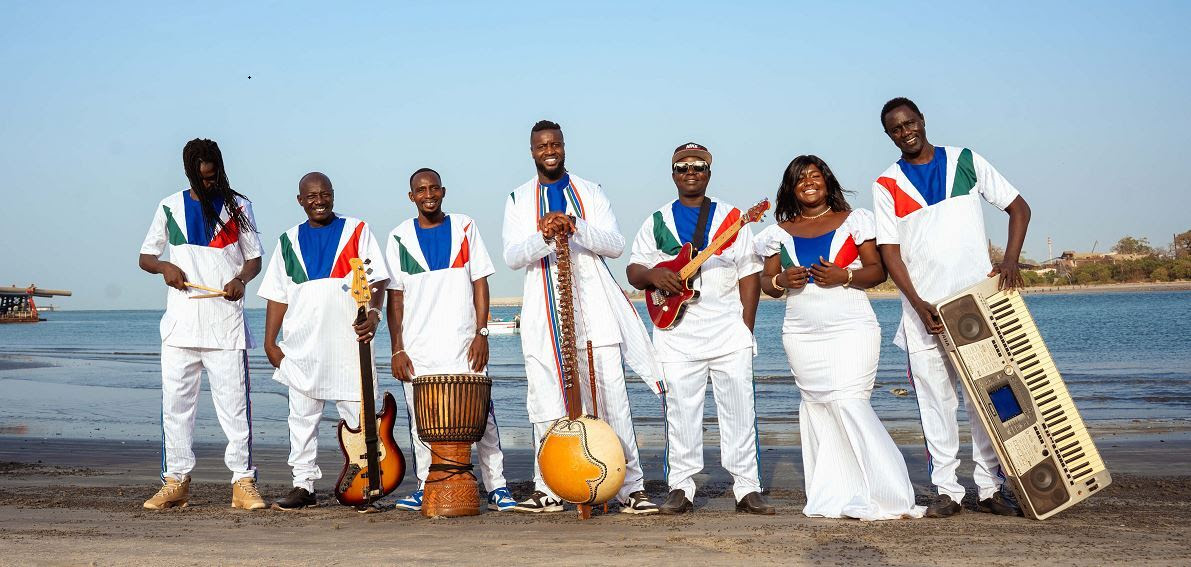
The Music In Africa Foundation (MIAF) is proud of its partnership with the Industrial Development Corporation (IDC) as a Strategic Implementing Partner (SIP) for its Social Employment Fund (SEF). Through this collaboration, MIAF is running a national programme that is creating jobs, addressing skills gaps, and strengthening South Africa's creative industries — in line with the SEF's overarching goal to generate work for the common good and build community value through employment, social contribution, and inclusive economic participation. Operating under the banner NEFCISA (National Employment Facility for Creative Industries in South Africa), the initiative is recruiting and training participants, matching them with host organisations, and has already placed 1 500 workers across the country — surpassing its original target of 1 000. NEFCISA is delivered through a network of 20 host organisations spanning five provinces, who are actively hosting participants and contributing to work for the common good across South Africa's creative and cultural industries. Key Objectives: Support employment and entrepreneurship in the creative industries. Offer skills development and training programmes. Foster partnerships between public and private creative sectors. Promote South African creativity at both provincial and national levels Foster community development through social contribution.

ACCES
ACCES

ACCES Conference and Showcase Festival is Africa's leading music industry gathering, bringing together the people shaping the future of the continent's music business. Artists, entrepreneurs, executives, investors, policymakers and cultural leaders from across Africa and around the world come to ACCES to build partnerships, exchange ideas, discover talent and create new business opportunities. Since its launch in 2017, ACCES has become the continent's premier platform for professional exchange and music market development. Combining a high-level conference with a curated showcase festival, networking, exhibitions and industry programmes, ACCES offers a unique space where creativity meets business and where African music connects with the global industry.

Gender@Work
Gender@Work

Music In Africa Gender @ Work is a three-year training programme aimed at upskilling and increasing the participation of female professionals in the African music sector. Launched by the Music In Africa Foundation (MIAF) in April 2019, the programme is connected to the MIAF’s ACCES music conference – a pan-African event held in a different African country every year. This connection enables the programme to reach new participants in a different African country every year. The programme marks the beginning of a more concerted effort by the Foundation to support the participation and inclusion of women in all facets of its programmes and the music sector in Africa as a whole. Over the three years, the programme will aim to address gender imbalances in the sector through training, lobbying, facilitating knowledge exchange and dialogues that foster the interest of women. The broader objectives of the programme are to: Provide industry training for women on critical music industry skills, focusing on: Stage management Electronic music production and recording Music business management Technical knowledge Provide an opportunity for both professional and aspiring women to benefit from the Music In Africa network and its broad range of activities in 2019, 2020 and 2021. Provide a solution-based platform in the form of a round table at ACCES with a view to identify challenges, discuss opportunities and lobby for the interests of female practitioners. Offer participants the opportunity to benefit from programmes offered by MIAF’s partners. Increase access to educational materials. Integrate participants in the broader ACCES programme to maximise experience and exposure to the industry. Record and present training materials on the www.musicinafrica.net, including but not limited to tutorials, templates and other best-practice materials. Communicate women-based themes that support the initiatives and messages of the programme. MAIN TRAINING ACTIVITIES Training in first country (Ghana): In the first year, participants will be trained on all aspects of stage management by a team of experienced stage managers from 10 to 17 November 2019. The programme will offer robust classroom training as well as practical, hands-on training in which participants will also be given the opportunity to manage various aspects of the ACCES performance programme. Training in second country: The second training iteration will take place at ACCES 2020 when the programme will diversify its course to include music production lessons and training on other music business topics. A round-table platform will also be introduced to coincide with the ACCES programme. Training in third country: The third training iteration will take place at ACCES 2021 in a different country, offering an advanced course. HOW DO YOU GET INVOLVED?  As a participant, facilitator or trainer: The programme enrolls up to 12 trainees every year. All opportunities are advertised publicly on this website, and will be added to this page. Please keep checking this page for new calls (below under UPDATES & CURRENT OPPORTUNITIES). As a partner Please contact Claire Metais at [email protected]. APPLY The call for applications for 2020 will be announced soon. The Music In Africa Gender @ Work programme is made possible with the support of the Prince Claus Fund, Siemens Stiftung and Goethe-Institut.

Sound Connects Fund
Sound Connects Fund

For cultural and creative practitioners and organisations operating in southern Africa, access to funding remains a major challenge. The COVID-19 pandemic has also had a massive impact on government policy, spending and the economy in general, and has seen spending on culture being moved further down the list of priorities. Further, the cultural and creative industries repeatedly cite four main areas where investment is needed for growth, which are increased visibility, mobility including access to new markets, finance and support structures.

Instrument Building And Repair Project

Experience the Vibrations African Instruments Exhibition online in 3D

banner image

Pamela Baketana : « The Voice a changé ma vie ! »

Home/Non classé/Pamela Baketana : « The Voice a changé ma vie ! »

Pamela, vous êtes la gagnante de la première saison du télé-crochet The Voice Afrique Francophone, et si vous nous parliez de cette victoire ? Quels souvenirs gardez-vous de cette aventure ?

Que de beaux souvenirs ! Bien évidemment en tant que gagnante de The Voice Afrique Francophone je suis très heureuse mais remporter ce trophée n’a pas été facile, j’ai beaucoup travaillé pour sortir vainqueur de la compétition. Je ne sais exprimer ma joie car elle est immense.

8 mois déjà se sont  écoulés depuis votre sacre, qu’est-ce que The Voice Afrique Francophone a concrètement changé dans votre vie ?

The Voice a changé toute ma vie ! Aujourd’hui avec cette victoire je suis reconnue. Au pays, et je suppose à travers l’Afrique je suis un modèle et une source d’inspiration pour beaucoup, je sens vraiment le poids de la responsabilité que je porte désormais.

J’ai acquis une nouvelle expérience professionnelle du fait de la proximité avec les coachs que je rêvais de rencontrer et avec qui je désirais tant chanter un jour.

Vous avez décroché un contrat avec la maison de disques Universal Music Group pour la production d’un album, et si vous nous en disiez plus ?

Oui, j’ai gagné la production d’un album avec le label musical Universal Music que je suis en train de préparer. Bientôt je serai en studio à Abidjan (Côte d’Ivoire) pour l’enregistrement.

[video:https://www.youtube.com/watch?v=eS3SCoHAezc width:850 height:480 autoplay:0]

Quels sont vos projets artistiques à court et à long terme ?

À court terme je me focalise sur mon album, j’y travaille énormément. Mais aussi j’ai des projets à long terme dans la musique tout comme dans ma vie sociale et professionnelle.

Sur le plan professionnel, mon ambition est de devenir l’une des meilleurs artistes au monde et surtout partager les scènes avec de grands artistes.

Sur le plan social, je rêve, un jour, de construire une grande salle de spectacle en vue de promouvoir les jeunes talents, mais surtout la création d’une fondation pour venir en aide aux enfants démunis, aux rescapés de guerres, aux réfugiés, aux orphelins et aux personnes en situation de handicap. Bref aux enfants vivant dans des conditions difficiles car je suis moi-même une rescapée de la guerre de Bunia (Ituri) entre 1997 et 2001. Je me suis réfugiée à Beni en 2001, avant de me retrouver à Kinshasa en 2002, où j’ai recommencé ma vie à zéro… [NDLR : Bunia est une ville située dans le nord-est de la République Démocratique du Congo, entre 1997 et 2001, cette région a été le théatre de violents conflits inter-ethniques, qui ont fait plusieurs millions de morts et réfugiés]….. Me voilà aujourd’hui gagnante de the Voice Afrique Francophone !

Votre coach Lokua Kanza qui vous a accompagné durant l’aventure The Voice vous suit-il toujours ?

Nous avons gardé de très bonnes relations. Lokua Kanza est pour moi un conseiller, un coach à vie, un véritable père. Nous sommes souvent en contact car il suit de près mon développement artistique.

Quelle était l’ambiance entre les talents pendant la compétition ? Êtes-vous toujours en contact avec les autres ? Vos coéquipiers de la Team Lokua notamment.

L’ambiance était très chaleureuse avec tous les autres talents. Nous avons formé une famille. Nous étions très tristes à chaque fois que l’un d’entre nous était éliminé. Nous étions très soudés. Nous nous sommes soutenus les uns les autres pendant toute l’aventure. Nous avons également maintenu nos bonnes relations à travers les réseaux sociaux pour certains, et avec d’autres nous continuons de nous côtoyer.

[video:https://www.youtube.com/watch?v=99w0TvB_b3Y width:850 height:480 autoplay:0]

Tout au long de votre parcours dans l’émission vous avez proposé un répertoire varié, allant de Francis Cabrel à Mbilia Bel en passant par Rihanna et Toni Braxton. Pourriez-vous nous dire quelles couleurs aura votre album ? Y-aura-t-il des collaborations avec d’autres artistes ? Un duo avec votre coach peut-être ?

Mon album contiendra des styles et des messages destinés à plusieurs générations. Vous y trouverez de la soul, de la tradi-pop, ou encore du RNB moderne. Chanter avec d’autres artistes de The Voice ou avec mon coach, pourquoi pas… mais rassurez-vous j’ai mis un accent sur la collaboration dans mon album.

Je demande au public d’être patient et surtout de consommer sans modération l’œuvre une fois qu’elle sera réalisée.

Pour finir, quels conseils donneriez-vous aux candidats de la saison 2 de The Voice Afrique Francophone qui devrait démarrer bientôt ?

À tous les candidats de la saison 2 je souhaite bonne chance et je dis surtout courage à chacun. Je leur demande de se focaliser sur leur objectif qui devrait être de remporter la bataille, tout en restant humble et disposé à apprendre. Dans la victoire ou dans l’échec, il faudrait rester soi-même, et rappeler au monde que l’on a quelque chose à démonter. Bref, donnez le meilleur !

newsletter banner

Subscribe to our monthly Newsletter

Follow us on social media