



































NEFCISA
NEFCISA

The Music In Africa Foundation (MIAF) is proud of its partnership with the Industrial Development Corporation (IDC) as a Strategic Implementing Partner (SIP) for its Social Employment Fund (SEF). Through this collaboration, MIAF is running a national programme that is creating jobs, addressing skills gaps, and strengthening South Africa's creative industries — in line with the SEF's overarching goal to generate work for the common good and build community value through employment, social contribution, and inclusive economic participation. Operating under the banner NEFCISA (National Employment Facility for Creative Industries in South Africa), the initiative is recruiting and training participants, matching them with host organisations, and has already placed 1 500 workers across the country — surpassing its original target of 1 000. NEFCISA is delivered through a network of 20 host organisations spanning five provinces, who are actively hosting participants and contributing to work for the common good across South Africa's creative and cultural industries. Key Objectives: Support employment and entrepreneurship in the creative industries. Offer skills development and training programmes. Foster partnerships between public and private creative sectors. Promote South African creativity at both provincial and national levels Foster community development through social contribution.

ACCES
ACCES

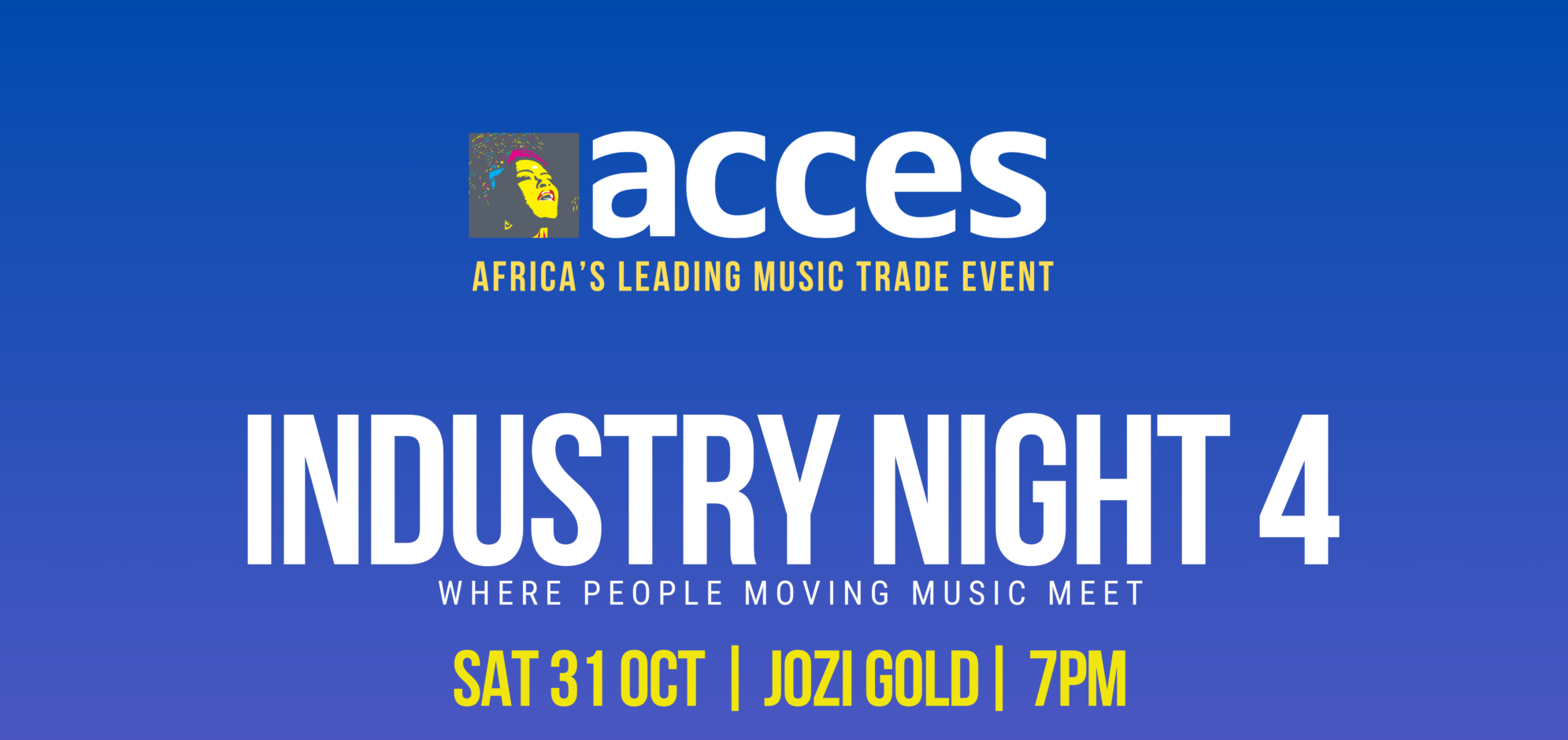
ACCES Conference and Showcase Festival is Africa's leading music industry gathering, bringing together the people shaping the future of the continent's music business. Artists, entrepreneurs, executives, investors, policymakers and cultural leaders from across Africa and around the world come to ACCES to build partnerships, exchange ideas, discover talent and create new business opportunities. Since its launch in 2017, ACCES has become the continent's premier platform for professional exchange and music market development. Combining a high-level conference with a curated showcase festival, networking, exhibitions and industry programmes, ACCES offers a unique space where creativity meets business and where African music connects with the global industry.

Gender@Work
Gender@Work

Music In Africa Gender @ Work is a three-year training programme aimed at upskilling and increasing the participation of female professionals in the African music sector. Launched by the Music In Africa Foundation (MIAF) in April 2019, the programme is connected to the MIAF’s ACCES music conference – a pan-African event held in a different African country every year. This connection enables the programme to reach new participants in a different African country every year. The programme marks the beginning of a more concerted effort by the Foundation to support the participation and inclusion of women in all facets of its programmes and the music sector in Africa as a whole. Over the three years, the programme will aim to address gender imbalances in the sector through training, lobbying, facilitating knowledge exchange and dialogues that foster the interest of women. The broader objectives of the programme are to: Provide industry training for women on critical music industry skills, focusing on: Stage management Electronic music production and recording Music business management Technical knowledge Provide an opportunity for both professional and aspiring women to benefit from the Music In Africa network and its broad range of activities in 2019, 2020 and 2021. Provide a solution-based platform in the form of a round table at ACCES with a view to identify challenges, discuss opportunities and lobby for the interests of female practitioners. Offer participants the opportunity to benefit from programmes offered by MIAF’s partners. Increase access to educational materials. Integrate participants in the broader ACCES programme to maximise experience and exposure to the industry. Record and present training materials on the www.musicinafrica.net, including but not limited to tutorials, templates and other best-practice materials. Communicate women-based themes that support the initiatives and messages of the programme. MAIN TRAINING ACTIVITIES Training in first country (Ghana): In the first year, participants will be trained on all aspects of stage management by a team of experienced stage managers from 10 to 17 November 2019. The programme will offer robust classroom training as well as practical, hands-on training in which participants will also be given the opportunity to manage various aspects of the ACCES performance programme. Training in second country: The second training iteration will take place at ACCES 2020 when the programme will diversify its course to include music production lessons and training on other music business topics. A round-table platform will also be introduced to coincide with the ACCES programme. Training in third country: The third training iteration will take place at ACCES 2021 in a different country, offering an advanced course. HOW DO YOU GET INVOLVED?  As a participant, facilitator or trainer: The programme enrolls up to 12 trainees every year. All opportunities are advertised publicly on this website, and will be added to this page. Please keep checking this page for new calls (below under UPDATES & CURRENT OPPORTUNITIES). As a partner Please contact Claire Metais at [email protected]. APPLY The call for applications for 2020 will be announced soon. The Music In Africa Gender @ Work programme is made possible with the support of the Prince Claus Fund, Siemens Stiftung and Goethe-Institut.

Sound Connects Fund
Sound Connects Fund

For cultural and creative practitioners and organisations operating in southern Africa, access to funding remains a major challenge. The COVID-19 pandemic has also had a massive impact on government policy, spending and the economy in general, and has seen spending on culture being moved further down the list of priorities. Further, the cultural and creative industries repeatedly cite four main areas where investment is needed for growth, which are increased visibility, mobility including access to new markets, finance and support structures.

Instrument Building And Repair Project

Experience the Vibrations African Instruments Exhibition online in 3D

banner image

Boddhi Satva : « chaque mois, depuis mai 2017, je sors un single »

Home/Non classé/Boddhi Satva : « chaque mois, depuis mai 2017, je sors un single »

Bonjour Boddhi Satva. Pourriez-vous nous parler un peu de votre nom d’artiste ? Il est bien original !

Bonjour Jean de Dieu. Je commencerais par rappeler que mon vrai nom est Armani Kombot-Naguemon. Boddhi Satva (inspiré du mot bodhisattva) désigne dans le bouddhisme, l’état d’éveil spirituel du sage, qui a franchi tous les degrés de perfection, sauf le dernier qui fera de lui un bouddha.

Je ne suis certes pas bouddhiste, mais plusieurs aspects de cette religion m’intéressent fortement. J’ai choisi de m’appeler Boddhi Satva, pour que ma musique ait l’effet de la parole du sage, qui voudrait éclairer le monde et changer la vision des gens qui l’entourent.

Vous êtes l’initiateur d’un concept musical baptisé Ancestral Soul. En quoi consiste-t-il exactement ?

S’il faudrait résumer, l’Ancestral Soul est le mixage de toutes mes influences musicales. Ayant vécu à Bria, chef-lieu de la préfecture de la Haute-Kotto (Centrafrique), j’ai durant ma tendre enfance, été bercé par les chansons et percussions traditionnelles. Mais en grandissant, j’ai aussi pris goût à la rumba, au ndombolo, à la house et même au rock.

Tous ces différents styles qui se sont mêlés en moi et qui continuent de faire vibrer mon être, j’ai voulu les communiquer en tant que DJ à mon public, dans un sous-genre à la fois unique et authentique, que j’ai baptisé l’Ancestral Soul.

Justement, si vous nous parliez de votre parcours de Disk-Jockey. Quels ont été vos sources d’inspiration et les obstacles auxquels vous avez été confronté ?

Les choses n’ont jamais été faciles et elles ne le sont toujours pas ! Je ne dirais pas que mon père était contre mon envie de faire carrière dans la musique, mais il privilégiait les études. Son désir était de me voir devenir avocat d’affaires, ce qui je l’avoue, a toujours été un rêve pour moi aussi. J’ai créé avec quelques amis à Bria, un petit groupe de musique dénommé Gbekpa Crew et nous chantions en amateur sur les scènes de la place. Après ma classe de terminale, j’ai reçu à Bruxelles (Belgique) une formation de tailleur de diamant et j’ai même commencé à exercer dans ce métier ; mais j’ai bien vite abandonné tout cela, pour me consacrer à la musique.

Mon père qui était un homme très nanti, s’est du jour au lendemain retrouvé dans de grandes difficultés financières. À ce moment précis, je me suis senti obligé de faire quelque chose pour aider les miens. Inspiré par le livre La folle sagesse de Chögyam Trungpa Rinpoché, que j’ai lu pour la première fois à l’âge de 14 ans, j’ai décidé de vivre pleinement ma passion musicale, qui je le sentais, pouvait m’ouvrir la porte du succès.

En 2005, je fais la rencontre d’Alton Miller, un DJ américain que je suivais et dont j’appréciais énormément le travail. Comme par miracle, il devient mon collocataire en Belgique et il m’initie aux rudiments du métier de DJ. Parallèlement, je me forme en autodidacte à l’art du mixage. Cette première rencontre sera suivie de celle d’Osunlade, une de mes références dans le deejaying, que j’eus le privilège d’interviewer en tant qu’animateur d’une petite émission radio dénommée Urban Grooves.

Bria’s offering est le titre de mon tout premier mix de 8 minutes. Il m’a permis d’être signé dans le label Yoruba Records d’Osunlade, avec une belle avance de 1500 euros, alors que je ne m’y attendais pas. Ce fut le vrai début de ma carrière. J’ai multiplié les collaborations avec des artistes de haut niveau comme Louie Vega pour ne citer que lui. La suite de l’histoire, vous la connaissez…

Vous êtes à Dakar pour animer une soirée d’Electrafrique. Quels sont vos liens avec ce réseau et avec le pays de la Teranga en général ?

Electrafrique est un réseau d’artistes évoluant dans la musique électronique, qui a été fondé par DJ Cortega, un bon ami à moi. Nous nous sommes rencontrés pour la première fois à Naïrobi (Kenya), où j’étais invité pour un show au festival Blankets and Wine. DJ Cortega m’a alors proposé d’animer une de ses soirées Electrafrique, qu’il organisait en ce temps à Nairobi.

Maintenant qu’il s’est établi à Dakar, il y organise les soirées et nous continuons de collaborer. Il a fait appel à moi pour l’animation de la 9e édition en 2017 et pour celle de la 16e édition, pour laquelle je suis à présent ici.

Il faut cependant dire que ma première venue à Dakar remonte à 2014, pour un spectacle que j’avais co-organisé avec DJ Tchoub Tchoub et Gnagna Koné. Aussi, j’ai des liens forts avec le pays de la Teranga, car j’ai de nombreux amis d’enfance qui y vivent.

Vous venez de Bria, une région du cœur de la Centrafrique. Comment vivez-vous les crises que traverse ce pays ?

Avec beaucoup de chagrin ! Notre nation est très riche et elle a une terre généreuse. Mais quelques-uns d’entre nous se sont laissés aveuglés par la soif du pouvoir et l’appât du gain, au point de verser sans remords, le sang de leurs compatriotes.

Beaucoup aussi se laissent embarquer dans ces guerres sans fondement, du seul fait de leur ignorance. Avec toutes les années blanches que le pays a connu, un sérieux souci d’éducation se pose. La conséquence immédiate, c’est que nous avons une importante partie de notre jeunesse qui est non instruite et facilement manipulable.

Mais au fond de moi, je continue de croire que les choses changeront. À mon niveau je me bats comme je peux, pour faire reconnaître le talent de ma nation la République Centrafrique, que j’adore malgré tout.

Pour finir, pouvez-vous nous dire un petit mot sur votre actualité musicale ?

Oui bien sûr ! Chaque mois, depuis mai 2017, je sors un single. J’ai récemment collaboré avec DJ Spilulu et les 2 artistes congolais Kanga Mutu et H Baraka, sur une oeuvre en collectif. J’ai également travaillé sur un mix titré Soulstar, avec l’artiste sud-africain Ivili. Vous reconnaîtrez aussi mon empreinte sur le titre « Mwasi na ngai » de Kaysha et Badi. J’envisage sortir mon 3e album d’ici à la fin de l’année.

newsletter banner

Subscribe to our monthly Newsletter

Follow us on social media