










































NEFCISA
NEFCISA

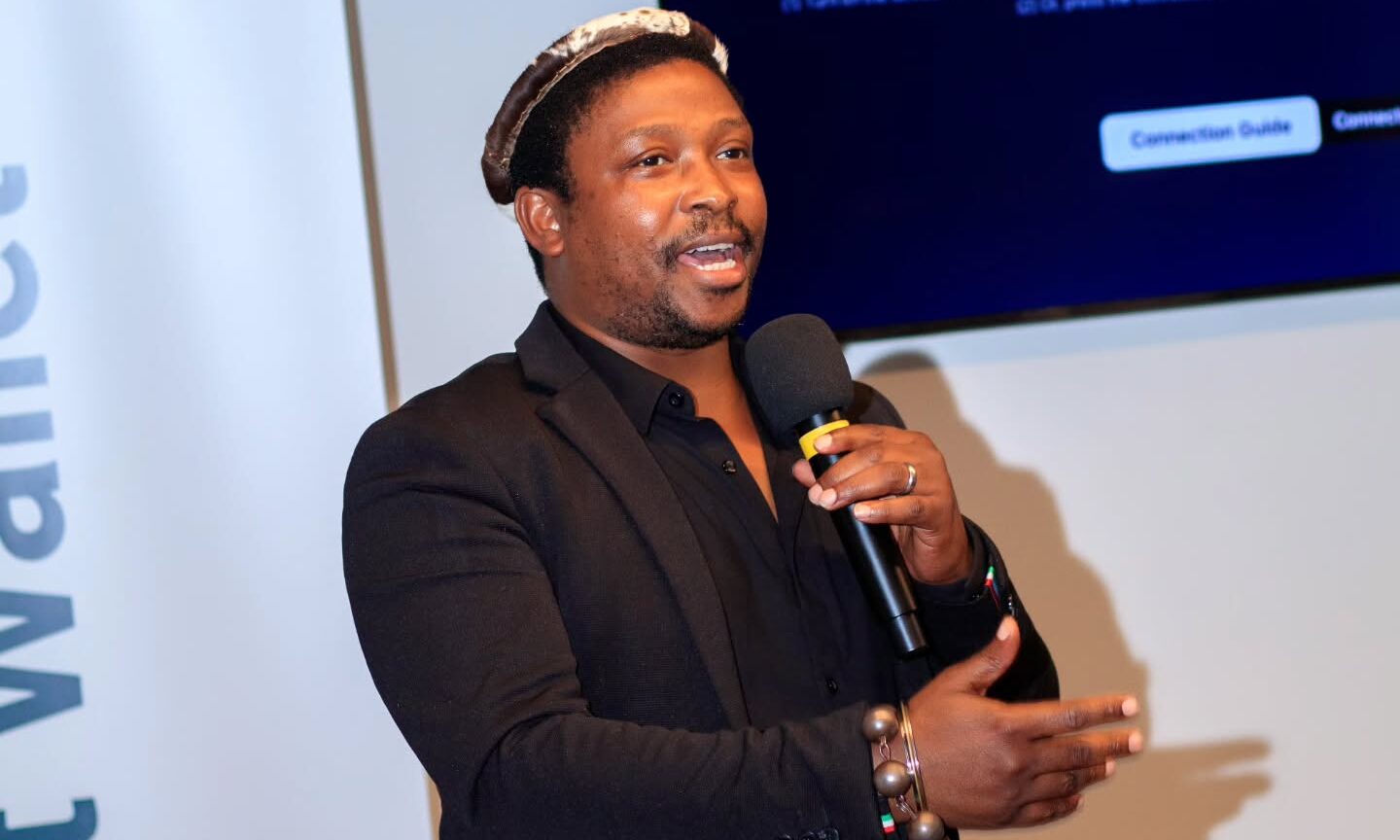
The Music In Africa Foundation (MIAF) is proud of its partnership with the Industrial Development Corporation (IDC) as a Strategic Implementing Partner (SIP) for its Social Employment Fund (SEF). Through this collaboration, MIAF is running a national programme that is creating jobs, addressing skills gaps, and strengthening South Africa's creative industries — in line with the SEF's overarching goal to generate work for the common good and build community value through employment, social contribution, and inclusive economic participation. Operating under the banner NEFCISA (National Employment Facility for Creative Industries in South Africa), the initiative is recruiting and training participants, matching them with host organisations, and has already placed 1 500 workers across the country — surpassing its original target of 1 000. NEFCISA is delivered through a network of 20 host organisations spanning five provinces, who are actively hosting participants and contributing to work for the common good across South Africa's creative and cultural industries. Key Objectives: Support employment and entrepreneurship in the creative industries. Offer skills development and training programmes. Foster partnerships between public and private creative sectors. Promote South African creativity at both provincial and national levels Foster community development through social contribution.

ACCES
ACCES

ACCES Conference and Showcase Festival is Africa's leading music industry gathering, bringing together the people shaping the future of the continent's music business. Artists, entrepreneurs, executives, investors, policymakers and cultural leaders from across Africa and around the world come to ACCES to build partnerships, exchange ideas, discover talent and create new business opportunities. Since its launch in 2017, ACCES has become the continent's premier platform for professional exchange and music market development. Combining a high-level conference with a curated showcase festival, networking, exhibitions and industry programmes, ACCES offers a unique space where creativity meets business and where African music connects with the global industry.

Gender@Work
Gender@Work

Music In Africa Gender @ Work is a three-year training programme aimed at upskilling and increasing the participation of female professionals in the African music sector. Launched by the Music In Africa Foundation (MIAF) in April 2019, the programme is connected to the MIAF’s ACCES music conference – a pan-African event held in a different African country every year. This connection enables the programme to reach new participants in a different African country every year. The programme marks the beginning of a more concerted effort by the Foundation to support the participation and inclusion of women in all facets of its programmes and the music sector in Africa as a whole. Over the three years, the programme will aim to address gender imbalances in the sector through training, lobbying, facilitating knowledge exchange and dialogues that foster the interest of women. The broader objectives of the programme are to: Provide industry training for women on critical music industry skills, focusing on: Stage management Electronic music production and recording Music business management Technical knowledge Provide an opportunity for both professional and aspiring women to benefit from the Music In Africa network and its broad range of activities in 2019, 2020 and 2021. Provide a solution-based platform in the form of a round table at ACCES with a view to identify challenges, discuss opportunities and lobby for the interests of female practitioners. Offer participants the opportunity to benefit from programmes offered by MIAF’s partners. Increase access to educational materials. Integrate participants in the broader ACCES programme to maximise experience and exposure to the industry. Record and present training materials on the www.musicinafrica.net, including but not limited to tutorials, templates and other best-practice materials. Communicate women-based themes that support the initiatives and messages of the programme. MAIN TRAINING ACTIVITIES Training in first country (Ghana): In the first year, participants will be trained on all aspects of stage management by a team of experienced stage managers from 10 to 17 November 2019. The programme will offer robust classroom training as well as practical, hands-on training in which participants will also be given the opportunity to manage various aspects of the ACCES performance programme. Training in second country: The second training iteration will take place at ACCES 2020 when the programme will diversify its course to include music production lessons and training on other music business topics. A round-table platform will also be introduced to coincide with the ACCES programme. Training in third country: The third training iteration will take place at ACCES 2021 in a different country, offering an advanced course. HOW DO YOU GET INVOLVED?  As a participant, facilitator or trainer: The programme enrolls up to 12 trainees every year. All opportunities are advertised publicly on this website, and will be added to this page. Please keep checking this page for new calls (below under UPDATES & CURRENT OPPORTUNITIES). As a partner Please contact Claire Metais at [email protected]. APPLY The call for applications for 2020 will be announced soon. The Music In Africa Gender @ Work programme is made possible with the support of the Prince Claus Fund, Siemens Stiftung and Goethe-Institut.

Sound Connects Fund
Sound Connects Fund

For cultural and creative practitioners and organisations operating in southern Africa, access to funding remains a major challenge. The COVID-19 pandemic has also had a massive impact on government policy, spending and the economy in general, and has seen spending on culture being moved further down the list of priorities. Further, the cultural and creative industries repeatedly cite four main areas where investment is needed for growth, which are increased visibility, mobility including access to new markets, finance and support structures.

Instrument Building And Repair Project

Experience the Vibrations African Instruments Exhibition online in 3D

banner image

Conny Schneider : « Inutile de mixer les musiques africaines pour les rendre plus accessibles »

Home/Non classé/Conny Schneider : « Inutile de mixer les musiques africaines pour les rendre plus accessibles »

Bonjour Conny, pourrais-tu te présenter à nos lecteurs et parler un peu de ta passion pour la musique ?

Bonjour, je suis Conny Schneider, saxophoniste et trapéziste d’origine allemande. Je suis installée au Sénégal depuis trois ans et depuis un an j’évolue avec le groupe Gestu qui est un projet que j’ai moi-même initié avec quelques amis. Nous avons organisé plusieurs spectacles au Goethe Institut, au Djoloff et à l’Institut Français de Dakar. Nous avons eu l’opportunité également de nous produire aussi au Saint-Louis Jazz Festival, qui est un rendez-vous incontournable pour les amoureux du jazz. Nous enregistrons présentement un album, qui est en phase de mixage et de mastering.

J’adore effectivement le jazz, mais je suis très ouverte aux autres styles musicaux. J’écoute aussi de la pop, du rock, des musiques traditionnelles de plusieurs pays et même si je n’ai pas d’idole ou d’icône en musique, j’ai un faible pour beaucoup d’artistes, notamment la chanteuse Liz Wright qui dégage toujours une grande sensibilité quand elle chante.

Tu as récemment aussi joué à l’Émoi du jazz d’Abidjan, pourrais-tu nous en dire quelques mots ?

Oui j’ai joué à Abidjan à la dernière édition du Festival Émoi du Jazz. Le spectacle mêlait trapèze, saxophone et guitare. Je garde un excellent souvenir de ce séjour en Côte d’Ivoire. Le public était très chaleureux, le comité d’organisation du festival formidable et la ville d’Abidjan elle-même très accueillante.

Pourrais-tu nous parler un peu de ton processus de création artistique ?

Je mise beaucoup sur la spontanéité et l’instantanéité. J’aime me lever, sans la moindre raison, prendre mon saxophone ou un piano et écrire des mélodies qui me viennent à l’esprit. Je prends ensuite beaucoup de temps, des mois parfois, à les retravailler et à les arranger.

Quelquefois, une émotion ou un état d’âme peut être la source d’inspiration de ma musique.

Tes oeuvres sont-elles engagées pour la cause des femmes dans le secteur musical ?

Ma musique qui est essentiellement instrumentale et très englobante, n’est pas faite de mots mais uniquement de sons. C’est donc très difficile dans ce genre, de véhiculer un message pour la promotion de la femme.

Par contre, j’admets que les femmes sont encore un peu exclues du milieu musical, c’est pour cela que nous sommes peu nombreuses dans ce secteur. Le droit pour les femmes de pratiquer et de vivre de la musique, je ne le revendique pas à travers mes œuvres, mais dans mon vécu d’artiste que je voudrais inspirant pour d’autres femmes.

[video:https://www.youtube.com/watch?v=ArbwGQeeWWQ width:850 height:480 autoplay:0]

Que penses-tu de la place du Jazz en Afrique ?

Il y a d’excellents musiciens de jazz en Afrique, mais il n’y a pas un grand public pour ce genre musical. Quand il y a des spectacles de jazz, les gens s’en approchent et s’intéressent tout de suite, mais c’est comme s’ils découvrent à peine.

Je pense que les médias (radios et télévisions) devraient d’avantage promouvoir ce style musical et aider à le rendre populaire. Du fait de ses origines africaines, c’est un style qui, promu, devrait intéresser de nombreuses personnes sur le continent africain.

Les musiques africaines sont de plus en plus populaires à travers le monde. Quelle impression cela te laisse ? Que faudrait-il faire selon toi, pour les ouvrir à une audience encore plus large ?

Pour moi, la diversité musicale est une des richesses du globe. De chaque pays et de chaque continent émanent des mélodies, pour le plus grand plaisir des mélomanes. Cela me plaît énormément de voir que les musiques africaines participent elles aussi de cette dynamique et qu’elles sont appréciées sur toute l’étendue du monde.

Je pense qu’il serait inutile de vouloir les mixer à d’autres genres pour prétendument les rendre plus accessibles, comme certains choisissent de faire. Ces musiques sont appréciées pour ce qu’elles sont et pour leur authenticité. Il faudrait juste mettre en place un système plus efficient de distribution, pour que l’Afrique soit d’avantage écouté ailleurs.

Aurais-tu un conseil à délivrer aux artistes de l’Afrique qui te lisent ?

Juste les inviter à prendre un peu plus d’initiatives. Beaucoup se plaignent du fait que les choses stagnent dans leurs carrières, hélas ils n’essaient rien. Ils ne développent pas de nouveaux concepts et finalement ils taisent leur créativité, là où un artiste devrait toujours chercher à innover.

Un petit mot pour la fin ?

Oui, à tous les mélomanes, retrouvez-moi le 11 août avec le Gestu Groupe au Goethe Institut de Dakar ! Je remercie aussi Music in Africa pour ses actions panafricaines, qui mériteraient d’être d’avantage mises en lumières. Dommage, je ne serai pas cette année à la conférence ACCES qu’organise la Fondation, mais je m’y rendrai l’an prochain.

Propos reccueillis par Lamine BA et Jean de Dieu Boukanga

newsletter banner

Subscribe to our monthly Newsletter

Follow us on social media