




































NEFCISA
NEFCISA

The Music In Africa Foundation (MIAF) is proud of its partnership with the Industrial Development Corporation (IDC) as a Strategic Implementing Partner (SIP) for its Social Employment Fund (SEF). Through this collaboration, MIAF is running a national programme that is creating jobs, addressing skills gaps, and strengthening South Africa's creative industries — in line with the SEF's overarching goal to generate work for the common good and build community value through employment, social contribution, and inclusive economic participation. Operating under the banner NEFCISA (National Employment Facility for Creative Industries in South Africa), the initiative is recruiting and training participants, matching them with host organisations, and has already placed 1 500 workers across the country — surpassing its original target of 1 000. NEFCISA is delivered through a network of 20 host organisations spanning five provinces, who are actively hosting participants and contributing to work for the common good across South Africa's creative and cultural industries. Key Objectives: Support employment and entrepreneurship in the creative industries. Offer skills development and training programmes. Foster partnerships between public and private creative sectors. Promote South African creativity at both provincial and national levels Foster community development through social contribution.

ACCES
ACCES

ACCES Conference and Showcase Festival is Africa's leading music industry gathering, bringing together the people shaping the future of the continent's music business. Artists, entrepreneurs, executives, investors, policymakers and cultural leaders from across Africa and around the world come to ACCES to build partnerships, exchange ideas, discover talent and create new business opportunities. Since its launch in 2017, ACCES has become the continent's premier platform for professional exchange and music market development. Combining a high-level conference with a curated showcase festival, networking, exhibitions and industry programmes, ACCES offers a unique space where creativity meets business and where African music connects with the global industry.

Gender@Work
Gender@Work

Music In Africa Gender @ Work is a three-year training programme aimed at upskilling and increasing the participation of female professionals in the African music sector. Launched by the Music In Africa Foundation (MIAF) in April 2019, the programme is connected to the MIAF’s ACCES music conference – a pan-African event held in a different African country every year. This connection enables the programme to reach new participants in a different African country every year. The programme marks the beginning of a more concerted effort by the Foundation to support the participation and inclusion of women in all facets of its programmes and the music sector in Africa as a whole. Over the three years, the programme will aim to address gender imbalances in the sector through training, lobbying, facilitating knowledge exchange and dialogues that foster the interest of women. The broader objectives of the programme are to: Provide industry training for women on critical music industry skills, focusing on: Stage management Electronic music production and recording Music business management Technical knowledge Provide an opportunity for both professional and aspiring women to benefit from the Music In Africa network and its broad range of activities in 2019, 2020 and 2021. Provide a solution-based platform in the form of a round table at ACCES with a view to identify challenges, discuss opportunities and lobby for the interests of female practitioners. Offer participants the opportunity to benefit from programmes offered by MIAF’s partners. Increase access to educational materials. Integrate participants in the broader ACCES programme to maximise experience and exposure to the industry. Record and present training materials on the www.musicinafrica.net, including but not limited to tutorials, templates and other best-practice materials. Communicate women-based themes that support the initiatives and messages of the programme. MAIN TRAINING ACTIVITIES Training in first country (Ghana): In the first year, participants will be trained on all aspects of stage management by a team of experienced stage managers from 10 to 17 November 2019. The programme will offer robust classroom training as well as practical, hands-on training in which participants will also be given the opportunity to manage various aspects of the ACCES performance programme. Training in second country: The second training iteration will take place at ACCES 2020 when the programme will diversify its course to include music production lessons and training on other music business topics. A round-table platform will also be introduced to coincide with the ACCES programme. Training in third country: The third training iteration will take place at ACCES 2021 in a different country, offering an advanced course. HOW DO YOU GET INVOLVED?  As a participant, facilitator or trainer: The programme enrolls up to 12 trainees every year. All opportunities are advertised publicly on this website, and will be added to this page. Please keep checking this page for new calls (below under UPDATES & CURRENT OPPORTUNITIES). As a partner Please contact Claire Metais at [email protected]. APPLY The call for applications for 2020 will be announced soon. The Music In Africa Gender @ Work programme is made possible with the support of the Prince Claus Fund, Siemens Stiftung and Goethe-Institut.

Sound Connects Fund
Sound Connects Fund

For cultural and creative practitioners and organisations operating in southern Africa, access to funding remains a major challenge. The COVID-19 pandemic has also had a massive impact on government policy, spending and the economy in general, and has seen spending on culture being moved further down the list of priorities. Further, the cultural and creative industries repeatedly cite four main areas where investment is needed for growth, which are increased visibility, mobility including access to new markets, finance and support structures.

Instrument Building And Repair Project

Experience the Vibrations African Instruments Exhibition online in 3D

Home / Artists & Industry / Ablaye Cissoko
flag-img

Senegal

In operation since:

1980

Contact person:

Ablaye Cissoko

BIO

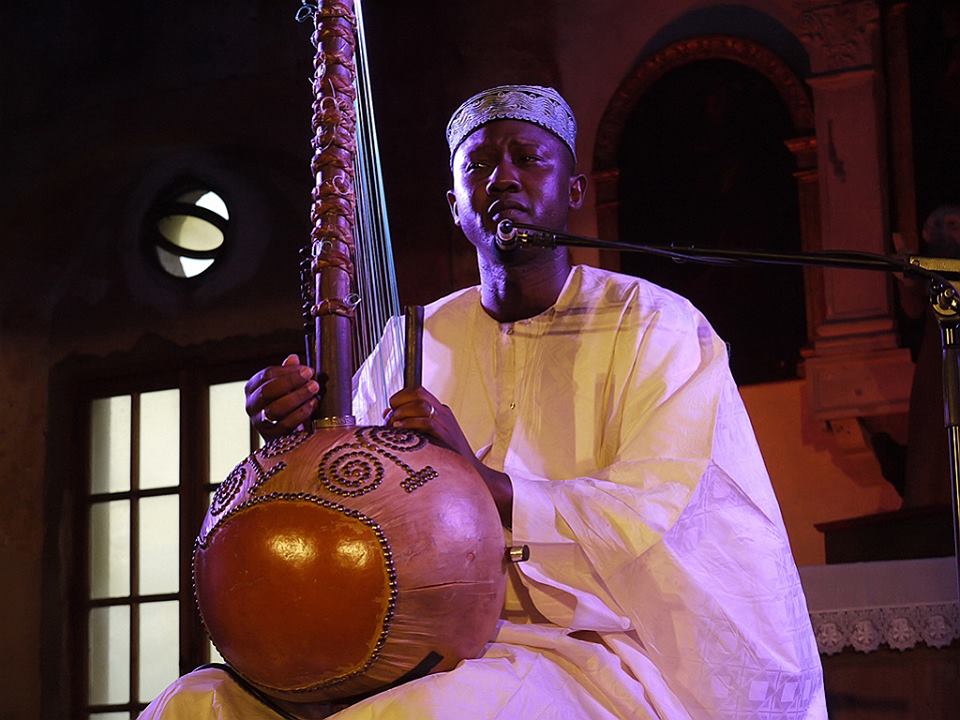
Ablaye Cissoko est né à Kolda en 1970, il est le descendant d’une famille de Griot. Il commence à jouer de la Kora à l’âge de 8 ans et mène son premier concert à 12 ans. Il s’inscrit au conservatoire de Musique de Dakar et monte un groupe de 10 choristes avec ses frères et sœurs. En 1986 il fait sa première représentation internationale en Norvège à Oslo. Puis il se rend à Saint Louis du Sénégal et tombe amoureux de cette ville. Il y forme le groupe Ninki-Nanka qui se produit régulièrement dans tout le pays. En 1996 Cissoko rencontre pour un concert Jacques Higelin. Il participe ensuite au Printemps des cordes au CCF de Dakar et au festival de Kora à Sédiou en Casamance. En 2000 le Jazz rentre dans la vie de Cissoko, il joue avec le groupe « African Project » accompagné de Phillipe Sélam saxophone Linley Marthe basse Gille Renne guitare Aziz Diop batterie Ali Keita Balafon pour le festival « Saint Louis Jazz ».

En 2001 et 2002 il se produit de nouveau au festival Saint Louis Jazz sous la direction de François Jeanneau avec le groupe « Saint Louis Jazz Orchestra » (orchestre Eurafricain de Jazz) accompagné de Kiki Bocandé basse (sénégal) / Andréa Esperti trombone (Italie) / Volker Goetze trompette (Allemagne) / Stéphane Kerecki contrebasse (France) etc...En juin 2001 il enregistre un CD avec la Bande Marco Jazz et part en tournée au Kazakhstang et Kirghizistan. Ablaye Cissoko attend 2003 pour enregistrer ses propres compositions avec Diam sur le label Ma Case Records. Ablaye Cissoko s'empare ensuite d'une légende ouest-africaine du XIIème siècle, celle de Kimintang le Griot rouge. L'album Le Griot Rouge, toujours chez Ma Case Records, permet à Ablaye Cissoko de se faire un nom reconnu internationalement en 2005. De sa rencontre avec le trompettiste allemand établi à New York Volker Goetze naît en 2009 l'album Sira. Les deux hommes y confrontent modernité et tradition, jazz et musique africaine, dans un album d'une grande pureté. Ablaye Cissoko dont le but au-delà de la musique est "d'apaiser le cœur des hommes" se nourrit en 2011 d'une nouvelle rencontre avec le multi-instrumentiste marocain Majid Bekkas. Cette fois, c'est sans surprise une rencontre toujours bienvenue entre jazz, musique arabe et orientale et musique africaine qui a lieu avec Mabrouk. En 2012 Ablaye Cissoko retrouve Volker Goetze pour Amanké Dionti.

Photos

Music

No tracks available

--:--

Videos

Coming soon

Social Networks and Websites

Disclaimer: Music In Africa provides a platform for musicians and contributors to embed music and videos solely for promotional purposes. If any track or video embedded on this platform violates any copyrights please inform us immediately and we will take it down. Please read our Terms of Use for more.

newsletter banner

Subscribe to our monthly Newsletter

Follow us on social media