




















































Sauti za Busara: From place of execution to top African festival

14 Feb 2017 - 15:37


The island of Zanzibar was once again the setting of the annual Sauti za Busara music festival, an eclectic gathering of live acts from across the African continent. Held under the theme #AfricaUnited, the festival and its organisers brought together African artists and fans from around the globe in the face of a divided world where right-leaning politicos are increasingly looking inwards.
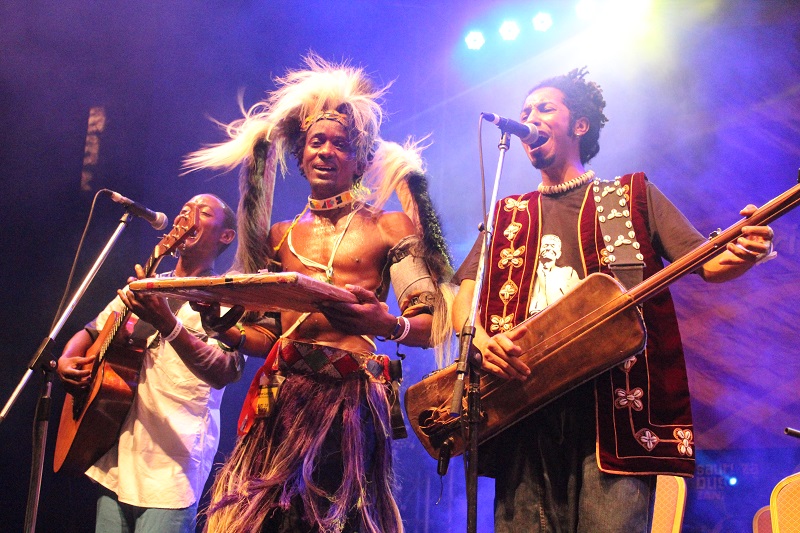
And it was a pan-African collaboration on Thursday that provided arguably the most kaleidoscopic sound of the entire four-day festival, with musicians from Tanzania, Zanzibar and Morocco sharing the stage under the name Swahili Encounters. Just a few days prior to their joint performance, the promoters had worked in collaboration with Zanzibar’s Dhow Countries Music Academy to make it possible for the musicians to coalesce their respective sounds. The result? A completely original composition of styles comprising traditional and contemporary instruments, including the guembri, ghaita, ribab, oud, violin, marimba, zeze, guitar, qanun, drums and percussion. Add to that the distinct vocal flairs of the three regions and you got something heard never before.
Opening night, Thursday, also saw Seychellois singer-bassist Grace Barbé bring her own mix of Creole sounds fused with Afrobeat and pop, and although she managed to choreograph the crowd to dance in synch almost like at an American barn dance, her three-piece outfit couldn’t compete with the manymulti-layered ensembles on display. One such example was Kithara, led by the well-known Zanzibari qanun player, Rajab Suleiman, who had the international crowd in awe of his masterful hold of the multi-stringed instrument.
Ethiopia’s Sami Dan & Zewd Band was one of the most energetic groups at the festival and brought fans to a static gallop with mercurial reggae compositions. The band’s stage show is energy-laden and appealed directly to the younger festivalgoers, many of whom had come from as far as Australia, Spain and the US.
Sauti za Busara, meaning ‘Sounds of Wisdom’, is held inside Stone Town’s Old Fort, which was built by Busaidi Omani Arabs in the late 1600s and later used as a prison and place of execution until the British transformed its main courtyard into a ladies’ tennis club in 1949. “You can imagine what went on here before. But the idea now is to create a new story for this space, one away from atrocities and division. It’s up to us to change things,” one of the festival’s organisers said during the festival.
Friday’s entertainment drew in the biggest crowd of the four days and it was Moroccan band Bob Maghrib’s performance that stood out on the night. The members of the band, which largely renders Bob Marley songs through a North African prism, were seen with the Swahili Encounters project the night before and had evidently turned many heads to be hailed as one of Friday’s best acts. A rendition of Marley’s ‘Africa Unite’ was particularly apt considering the theme of the festival.
Although Friday’s headliner Sarabi was expected to be a cut above the rest, the band failed to sell a cohesive sound. Fans and journalists have wrongly branded the Kenyan act as an Afro-fusion band. Rather, it’s a band that plays songs of various African genres. It sends a scrambled message to the more cultivated listener; even its ‘hip’ image is at odds with the live sound it produces. Perhaps all that this band needs is an apt musical director. With plenty of talent to go around, a tweak here and there could see Sarabi reach new heights.
Saturday night was owned by Ghanaian Afrobeat and highlife, with up-and-coming guitarist and singer Kyekyeku providing a solid set that few other artists could outshine. Kyekyeku released his debut album ‘Higher Life on Palm Wine’ just last year and there’s much to be expected from this talented, young artist. Watch this space.
Ghanaian legend Pat Thomas closed the night with another highly animated set out of West Africa. Now in his late 60s, the bandleader is showing no sign of slowing down. His stage presence is unrivalled and his group of young musicians, collectively known as Kwashibu Area Band, kept the crowd going as the legend periodically disappeared offstage to give them a chance to showcase their instrumental clout.
Cameroonian guitarist Roland Tchakounté provided the blues element on Sunday, considerably slowing down the general tempo of Sauti za Busara. It was then that the waning crowd realised that fatigue was setting in; a four-day festival can deplete the mind of serotonin, and one could see a longing for slumber in the eyes of the diehard festivalgoers. Later that night, Mozambique’s live hip hop act Simba & Milton Gulli continued with the down-tempo vibe and could be credited for providing the most modern sound at the festival, although their set became monotonous at times. Headliner Rocky Dawuni closed Sauti za Busara but the Grammy-nominated Ghanaian reggae star wasn’t playing with his own band and had employed the services of a contingency Kenyan group to accompany him. Although his performance was good, it would have been more compelling to see Dawuni playing with his own band.
As the organisers begin to plan for the 2018 festival, there is no doubt that Sauti za Busara is growing from strength to strength. Perhaps the fest should be reduced to three days and fewer artists, but this one definitely makes it on the list of Africa’s top musical celebrations.


Most popular

Top amapiano songs of 2026
16 Feb 2026

Call for applications: ACCES 2026 Emerging Artist Spotlight Competition
01 Oct 2026

Top Naija songs of 2026
31 Mar 2026
Open call: 2026 Gender@Work music industry training in Johannesburg
03 Oct 2026

Top Afrobeats songs of 2026
19 Mar 2026
AFRIMA 2026: All the winners
12 Jan 2026
Disclaimer: Music In Africa provides a platform for musicians and contributors to embed music and videos solely for promotional purposes. If any track or video embedded on this platform violates any copyrights please inform us immediately and we will take it down. Please read our Terms of Use for more.

Subscribe to our monthly Newsletter
Follow us on social media


Please log in to post a comment.