





















































Active music institutions and organizations in Tanzania
03 Mar 2015 - 10:03


By Mandolin Kahindi
The music industry in Tanzania has experienced many changes in the past 10 years, with influences from other countries impacting on local musical traditions. Musicians in Tanzania have also been affected, and some have become the best artists in East Africa. This achievement is as a result of the great work by some institutions and organizations that are dedicated to help build the music industry.
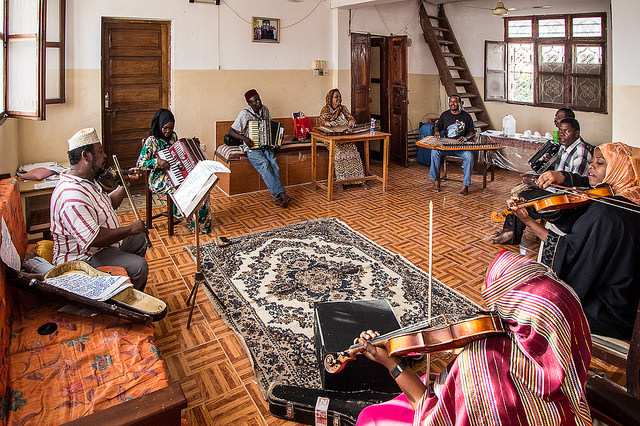
The establishment of institutions and organizations in Tanzania has been growing over time. Despite their intentions, however, these organizations are sometimes failing to reach their targeted goals due to various reasons, including a lack of government support and cultural policies, unsustainable projects, a lack of accountability, deficient organizational and management skills and a shortage of funds.
This is an overview of the active music institutions or organizations that are engaged in the music scene in Tanzania, including governmental, non-governmental and private institutions, as well as the media.
Governmental bodies
The National Arts Council of Tanzania (BASATA)[i] is a government institution for the revival, promotion and development of the arts in Tanzania. It strives to nurture an artistically conscious and active Tanzanian who is motivated to fully participate in the production and consumption of good art. BASATA has been the main registrar of all artists (including musicians) and arts organizations. It provides licenses and facilitates the production and consumption of artworks and services by developing an authentic Tanzanian art tradition and upholding professionalism, excellence, creativity and innovation in the arts. It has branches in every district of the country, where local ethnic groups are registered.
The toughest challenge to the music scene in Tanzania today is piracy, which has a major and destructive effect on recording companies, composers and performers, whose works are effectively stolen. The Copyright Society of Tanzania (COSOTA)[ii], working under the Ministry of Industry and Trade[iii], have been given the mandate to combat piracy. However, its operations seem to face numerous limitations and potential conflicts. For example, local distribution companies have been accused of being part of the problem.
Though COSOTA is an associate member of the World Intellectual Property Organization (WIPO)[iv], the International Confederation of Societies of Authors and Composers (CISAC)[v], the African Regional Industrial Property Organization (ARIPO)[vi] and the Southern and Eastern Africa Copyright Network (SEACONET)[vii] and has signed reciprocal agreements with numerous affiliated societies, it has not managed to end piracy in any way.
The separation of these two organs (BASATA and COSOTA) complicates the process of protecting the rights of the musicians, as the former only registers artists, while the latter oversees the fight against piracy. Each organ falls under a different government ministry, with a different action plan, mission and vision. The government should put these two institutions under a single ministry so as to facilitate the more effective coordination and implementation of their activities.
Colleges and Universities
Tanzania is fortunate to have numerous colleges and universities that provide training, research and consultancy services in arts and culture. These institutions aim to produce skilled artists, arts administrators, researchers and consultants, to raise artistic standards, promote cultural awareness and use the arts for development.
In addition to that, institutes such as the University of Dar es Salaam[viii], University of Dodoma[ix] and Tumaini University Makumira[x] in Arusha have established platforms for musicians of all backgrounds to participate in local festivals and music events in order to strengthen their skills. For instance, the Sanaa Festival of the TaSuBa[xi], the ethnomusicology symposium of the University of Dar es Salaam, and the Gogo Festival of the University of Dodoma, all reflect the efforts by these institutions to promote the music and culture of Tanzania and Africa in general. The events and festivals also provide opportunity for local scholars doing research in African music to present their musical findings and to network with individuals and institutions in Tanzania and neighboring countries.
Questions have been raised on the usefulness of musical and cultural research findings. Many institutions hold a number of research reports on their office or library shelves, which are useless if not read and implemented by the relevant music institutions and stakeholders. A major challenge facing Tanzanian music therefore lies not on the availability of talented musicians or music institutions, but in the lack of coordination by stakeholders, financial resources, as well as the security of artists. The way forward to strengthen the music industry is to enhance networking between musicians and stakeholders from across the continent.
NGOs and Private Institutions
In supporting the efforts of state-run universities, for example, private institutions have been established with the purpose of facilitating music education, legal assistance and arts management training to musicians and music practitioners. Most of these institutions are more focused on issues like copyright education and disseminating information about artists and events. For instance, Action Music Tanzania[xii], the Swahili Performing Arts Center of Zanzibar (Swahili Center)[xiii], Sauti za Busara[xiv], the House of Culture[xv], the Dhow Countries Music Academy[xvi] and many others play a great role by organizing workshops, festivals and seminars for musicians from Tanzania and beyond, to promote and strengthen skills in songwriting, sight-reading and live performance, for example. These institutions’ activities target musicians, media professionals, arts managers, technicians and cultural workers from the region. The exchange of knowledge is vital to the health and development of all musical styles in Tanzania and therefore artistic and technical workshops and seminars have been a key element.
There are few local institutions that fund musical activities, one of them being the Tanzania Culture Trust Fund[xvii], which aims at promoting and strengthening the Tanzanian cultural sector. Foreign institutions have traditionally been more active in this regard, and funds often coming from the embassies of countries such as Germany, the USA, Russian, Norway, Finland and Denmark, for example. Other international institutions including foreign cultural centers like the Goethe-Institut[xviii] and Alliance Francaise[xix]. Through these organ, foreign governments fund cultural activities in Tanzania by working with various actors and stakeholders in the cultural sector. However, these funds seldom reach rural areas, where music practitioners are also in need of assistance.
To support the efforts of musicians, private companies like Tanzania Breweries through its brand Kilimanjaro Premium Lager have sponsored industry events like the Kilimanjaro Tanzania Music Awards (also known as the Kili Music Awards), where fans vote for their favorite artists and the winners in each category win prizes that encourage them to work hard and focus on their careers.
The media
Tanzania has over 100 newspapers and magazine. Most of them (both government-owned and private, Swahili and English) have arts, culture and entertainment pages that are published at least twice a week. These include The Business Times, Majira and Spoti Starehe[xx], The Guardian and Nipashe[xxi], Mwanaspoti and Mwananchi[xxii], The Citizen[xxiii], Daily News[xxiv], Sunday News, Habari Leo[xxv], Tanzania Daima[xxvi], Mtanzania[xxvii] and many more.
Blogs are also growing in their popularity and influence. Sites such as Michuzi[xxviii], DJ Choka Music[xxix] and Bongo Flava Link[xxx] publish music-related stories and photos and provide a platform for music fans keep up to date with their favourite artists.
Audiences choose what radio and TV stations they listen to depending on what type of music they play, among other factors. The government-owned Tanzania Broadcasting Corporation (TBC)[xxxi] runs TBC FM and TV channels like TBC1 and TBC2. Other popular radio stations include: Choice FM, Country FM, Magic FM, Ebony FM, Pride FM, Info Radio, Times FM, Radio Maria, Radio One, Radio Free Africa (RFA), Metro FM and Radio Ukweli. Radio and TV contributes to the development of music in Tanzania for example through conducting interviews with musicians and providing information on events.
According to the Broadcasting Services Act of 1993[xxxii], all Tanzanian radio and television stations have to play at least 70% locally-based content, including music. However, many of them ignore this rule and keep on playing as much as 90% of music from the US and other western countries. These stations are very active in music, but without taking care of the type of music they play, they are letting local artists down. Another challenging aspect is promotion, where musicians are required to pay money to get airplay. ‘Payola’ is illegal but condoned by many DJs, although if you ask them about it, no one will admit to it.
In conclusion, the development of music in Tanzania depends largely on the active music institutions and organizations, both private and public, as they reach to a large number of audience. While challenges do exist, these institutions need to continue to work towards the promotion of Tanzanian music and its traditions for the benefit of future generations.


Most popular

Call for applications: ACCES 2026 Emerging Artist Spotlight Competition
01 Oct 2026

Top amapiano songs of 2026
16 Feb 2026
Open call: 2026 Gender@Work music industry training in Johannesburg
03 Oct 2026

Top Naija songs of 2026
31 Mar 2026

Top Afrobeats songs of 2026
19 Mar 2026

AFRIMA 2026: All the winners
12 Jan 2026
Disclaimer: Music In Africa provides a platform for musicians and contributors to embed music and videos solely for promotional purposes. If any track or video embedded on this platform violates any copyrights please inform us immediately and we will take it down. Please read our Terms of Use for more.

Subscribe to our monthly Newsletter
Follow us on social media


Please log in to post a comment.