





















































Africa opening up to new sounds as K-pop popularity rises

19 Dec 2022 - 10:09

For a long time, outside of a few outliers, the only music that enjoyed global status of reach and popularity was Western music. This was particularly true for American pop, which dominated the global music scene, but also extended to music genres like hip hop, R&B and even rock.
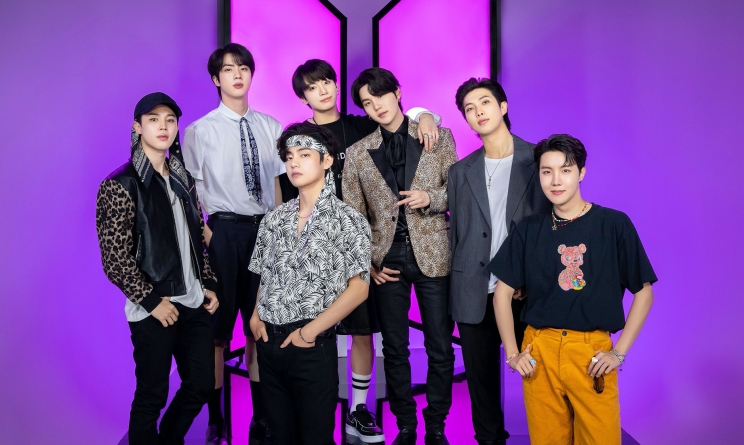
Today, Western music no longer holds that singular dominance. We’re now seeing music from new corners of the world gaining that same global popularity. The latest to follow in this trend of globalisation is South Korean pop music, known as K-pop. Partly driven by the popularisation of South Korean culture through TV dramas, and boosted by the virality of South Korean artist PSY’s smash hit ‘Gangnam Style’, K-pop is on a meteoric rise.
This year, the K-pop boy band BTS made history by becoming the first Korean act to be nominated at the Grammy Awards for a fifth time, in as many consecutive years.
What’s pleasantly surprising is that while Africa makes its musical presence known to the world, Korean culture and music have steadily permeated into the continent – and its popularity continues to grow.
According to Spotify’s head of music for sub-Saharan Africa, Phiona Okumu, in 2022 there was a 93% year-on-year increase in K-pop streams in sub-Saharan Africa, accounted for by more than 3 billion hours of streaming. It’s clear from this data that K-pop is not just a passing phase, but has a devoted and growing African fan base.
Key markets contributing to this increase are Nigeria, where there was a 267% increase in K-pop streams, as well as Ghana (236%) and Kenya (140%).
So what exactly is propelling this rising interest in K-pop on the continent?
Some, like National Geographic, attribute the global rise of K-pop to the COVID-19 pandemic, which inadvertently focused the world’s attention on this East Asian cultural powerhouse. Around the globe, millions made use of their time and binge-watched K-dramas like Squid Game, and simultaneously discovered multiple facets of Korean culture.
While this may also be true for the African continent, other factors like increased internet access may also be a factor. With a population that is young and online, it makes sense that Africa is a strong emerging market for K-pop, which itself enjoys mass youth appeal. A recent survey that polled 400 000 BTS fans around the world determined that approximately 50% of the band’s fans are under the age of 18, with a further 42% aged 18 to 29. Spotify’s Wrapped data for Africa paints a similar picture, with a combined 88% of K-pop music streams coming from people under the age of 29.
“In an increasingly connected world, on-demand streaming services like Spotify have certainly made it easier than ever to tap into another country’s music,” Okumu says. “Streaming has become instrumental in not only enabling the discovery of African music abroad but also in exposing African listeners to new and unexpected sounds.”
What’s capturing the hearts of this new audience, however, is the diverse sounds that K-pop has to offer. Although called ‘Korean pop music’, K-pop actually ranges across a vast number of music genres such as pop, hip hop, R&B, rock, jazz, reggae, disco, and even traditional and folk Korean musical stylings. K-pop is essentially not really a music genre, but simply music from Korean artists known colloquially as idols.
Whether it is seen as adoption or appropriation, there is no denying the hip hop and R&B influences in K-Pop-genres, which have historically had massive support across Africa. And increasingly, African inspiration is emerging in K-pop.
BTS, which occupies the top spot for K-pop artists streamed in sub-Saharan Africa and dominates the list of most streamed tracks, covers nearly every music genre in their discography, including South African gqom. The band’s hit ‘IDOL’, features gqom-style beats while the video tips its hat to the continent in the band’s dance moves and their African print suits. Girl band BS, or Black Swan, made history in 2020 when they introduced the first ever African K-Pop idol, Senegalese model Fatou Samba.
On top of this range of musicality, K-pop idols are also known for their extremely tight and extravagant choreography, high-value stage and music video productions, and the distinctive style and concept of each group – not to mention the polished good looks and fashion of these immensely talented artists.
“This year, K-pop showcased its staying power in sub-Saharan Africa with millions of streams in countries like South Africa, Kenya and Nigeria – the top three for K-pop consumption on the continent respectively. Other countries that made it into the top 10 K-pop markets in the SSA included Mauritius, Ghana, Uganda, Namibia, Tanzania, Zambia and Botswana,” Okumu said of the data uncovered about K-pop consumption on the continent.
“K-Pop stars have also increasingly targeted global audiences through collaborations with acts from the West. In Africa, this appears to have real appeal. The No 1 streamed K-Pop track is ‘My Universe’, a collaboration between BTS and Coldplay, with the second spot occupied by ‘Left and Right’, another collabo between Charlie Puth and Jung Kook of BTS fame.”
Africa’s love of K-pop paints a picture of a world without creative boundaries, in which music can be discovered, shared and enjoyed, no matter where it’s made, or what language it’s in.
This article was supplied to Music In Africa by Spotify. Additional editing by Peter Choge.


Most popular

Call for applications: ACCES 2026 Emerging Artist Spotlight Competition
01 Oct 2026

Top amapiano songs of 2026
16 Feb 2026

Top Naija songs of 2026
31 Mar 2026
Open call: 2026 Gender@Work music industry training in Johannesburg
03 Oct 2026

Top Afrobeats songs of 2026
19 Mar 2026

AFRIMA 2026: All the winners
12 Jan 2026
Disclaimer: Music In Africa provides a platform for musicians and contributors to embed music and videos solely for promotional purposes. If any track or video embedded on this platform violates any copyrights please inform us immediately and we will take it down. Please read our Terms of Use for more.

Subscribe to our monthly Newsletter
Follow us on social media


Please log in to post a comment.