





























NEFCISA
NEFCISA

The Music In Africa Foundation (MIAF) is proud of its partnership with the Industrial Development Corporation (IDC) as a Strategic Implementing Partner (SIP) for its Social Employment Fund (SEF). Through this collaboration, MIAF is running a national programme that is creating jobs, addressing skills gaps, and strengthening South Africa's creative industries — in line with the SEF's overarching goal to generate work for the common good and build community value through employment, social contribution, and inclusive economic participation. Operating under the banner NEFCISA (National Employment Facility for Creative Industries in South Africa), the initiative is recruiting and training participants, matching them with host organisations, and has already placed 1 500 workers across the country — surpassing its original target of 1 000. NEFCISA is delivered through a network of 20 host organisations spanning five provinces, who are actively hosting participants and contributing to work for the common good across South Africa's creative and cultural industries. Key Objectives: Support employment and entrepreneurship in the creative industries. Offer skills development and training programmes. Foster partnerships between public and private creative sectors. Promote South African creativity at both provincial and national levels Foster community development through social contribution.

ACCES
ACCES

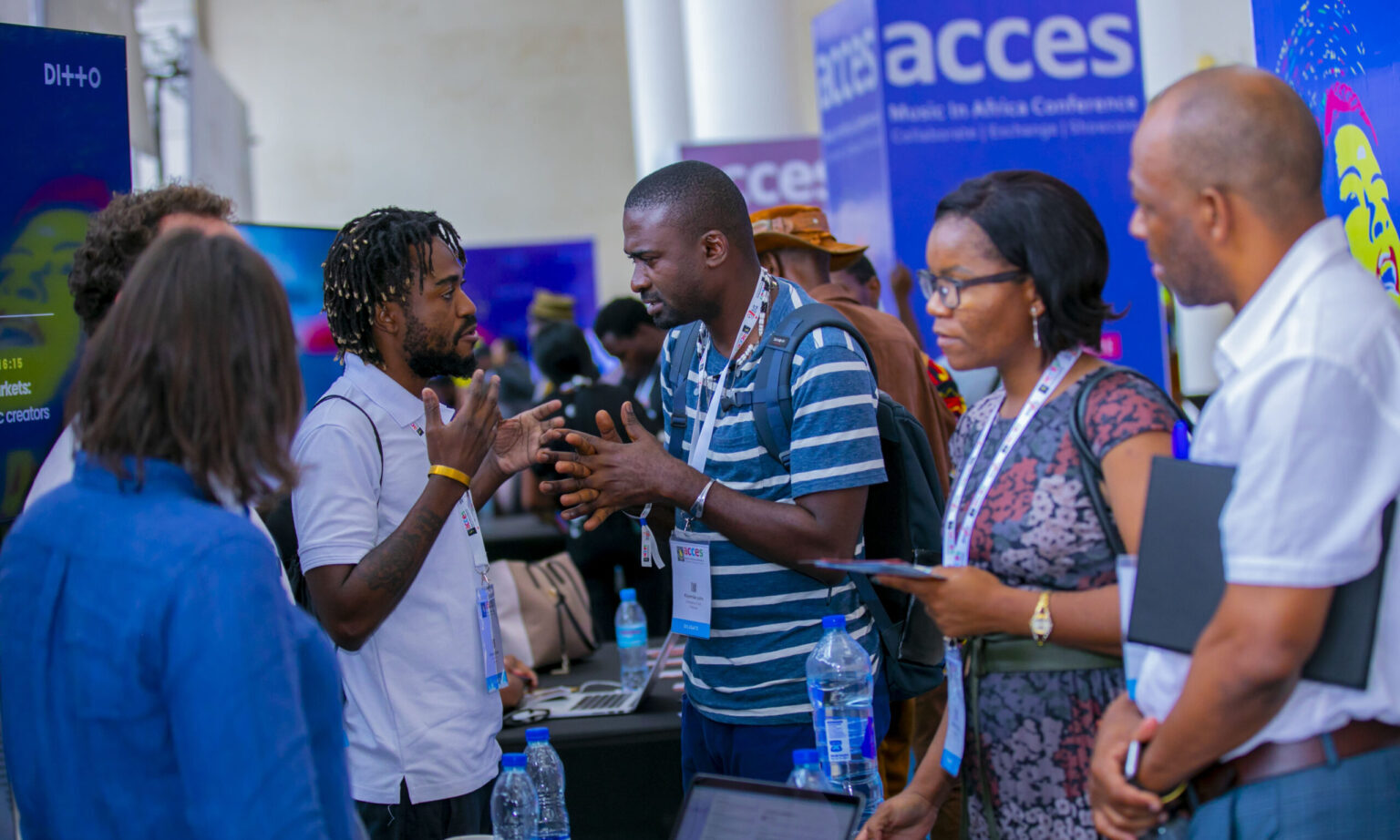
ACCES Conference and Showcase Festival is Africa's leading music industry gathering, bringing together the people shaping the future of the continent's music business. Artists, entrepreneurs, executives, investors, policymakers and cultural leaders from across Africa and around the world come to ACCES to build partnerships, exchange ideas, discover talent and create new business opportunities. Since its launch in 2017, ACCES has become the continent's premier platform for professional exchange and music market development. Combining a high-level conference with a curated showcase festival, networking, exhibitions and industry programmes, ACCES offers a unique space where creativity meets business and where African music connects with the global industry.

Gender@Work
Gender@Work

Music In Africa Gender @ Work is a three-year training programme aimed at upskilling and increasing the participation of female professionals in the African music sector. Launched by the Music In Africa Foundation (MIAF) in April 2019, the programme is connected to the MIAF’s ACCES music conference – a pan-African event held in a different African country every year. This connection enables the programme to reach new participants in a different African country every year. The programme marks the beginning of a more concerted effort by the Foundation to support the participation and inclusion of women in all facets of its programmes and the music sector in Africa as a whole. Over the three years, the programme will aim to address gender imbalances in the sector through training, lobbying, facilitating knowledge exchange and dialogues that foster the interest of women. The broader objectives of the programme are to: Provide industry training for women on critical music industry skills, focusing on: Stage management Electronic music production and recording Music business management Technical knowledge Provide an opportunity for both professional and aspiring women to benefit from the Music In Africa network and its broad range of activities in 2019, 2020 and 2021. Provide a solution-based platform in the form of a round table at ACCES with a view to identify challenges, discuss opportunities and lobby for the interests of female practitioners. Offer participants the opportunity to benefit from programmes offered by MIAF’s partners. Increase access to educational materials. Integrate participants in the broader ACCES programme to maximise experience and exposure to the industry. Record and present training materials on the www.musicinafrica.net, including but not limited to tutorials, templates and other best-practice materials. Communicate women-based themes that support the initiatives and messages of the programme. MAIN TRAINING ACTIVITIES Training in first country (Ghana): In the first year, participants will be trained on all aspects of stage management by a team of experienced stage managers from 10 to 17 November 2019. The programme will offer robust classroom training as well as practical, hands-on training in which participants will also be given the opportunity to manage various aspects of the ACCES performance programme. Training in second country: The second training iteration will take place at ACCES 2020 when the programme will diversify its course to include music production lessons and training on other music business topics. A round-table platform will also be introduced to coincide with the ACCES programme. Training in third country: The third training iteration will take place at ACCES 2021 in a different country, offering an advanced course. HOW DO YOU GET INVOLVED?  As a participant, facilitator or trainer: The programme enrolls up to 12 trainees every year. All opportunities are advertised publicly on this website, and will be added to this page. Please keep checking this page for new calls (below under UPDATES & CURRENT OPPORTUNITIES). As a partner Please contact Claire Metais at [email protected]. APPLY The call for applications for 2020 will be announced soon. The Music In Africa Gender @ Work programme is made possible with the support of the Prince Claus Fund, Siemens Stiftung and Goethe-Institut.

Sound Connects Fund
Sound Connects Fund

For cultural and creative practitioners and organisations operating in southern Africa, access to funding remains a major challenge. The COVID-19 pandemic has also had a massive impact on government policy, spending and the economy in general, and has seen spending on culture being moved further down the list of priorities. Further, the cultural and creative industries repeatedly cite four main areas where investment is needed for growth, which are increased visibility, mobility including access to new markets, finance and support structures.

Instrument Building And Repair Project

Experience the Vibrations African Instruments Exhibition online in 3D

Features

African artists rush to cover Adele’s hit ‘Hello’
12 Jan 2016 - 07:21

cc-img flag-img

Cover versions of popular songs have been popular in the music world since the early days of rock 'n roll in the 1950s. Traditionally, covers have carried a negative connotation. For some, they are viewed as a less talented and successful act “stealing” the superior work of the composer to make quick money. Currently, however, cover versions are seen as one artist paying tribute to another in a show of admiration.
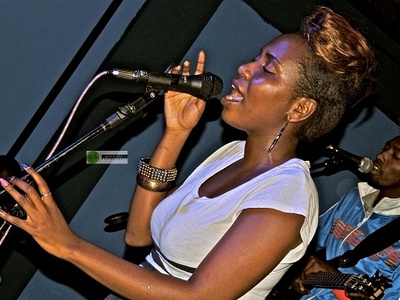
Kenyan artist Dela Maranga. Photo: www.kenyabuzz.com

British artist Adele’s single ‘Hello’, released in October 2015, has seen artists the world over do cover versions of the hit song - and African artists have not been left out. Numerous Kenyan artists, including Dela Maranga, Jimmy Gait, Titus Wainaina and Wambui (aka Poetic B), have recorded their own cover versions of the song, showing how the hit can be redone in indigenous Kenyan languages - some to much acclaim, others to some ridicule. Just like in Kenya, Nigeria has witnessed more artists releasing their own covers of the songm with other the likes of Praiz, Omawumi and Ruby Gyang also doing their own versions. In Southern Africa too, Zimbabwean acts Taps Mugadza and Buffalo Souljah have also released covers and videos of the track, finding plenty of success.

With the promise of instant recognition without the hassle of having to actually write an original song, covering 'Hello' has proven to be a relatively sure-fire way for African artists to boost their careers. In Nigeria, as in Kenya, where audiences have been waiting to see who makes the next version of the song, one fan was even prompted to ask Davido when he would be releasing his cover version. Whether or not the Nigerian superstar delivers remains questionable, but judging by the endless stream of artists all over the world covering the song, it seems clear that more artists are set to follow suit.


Taps Mugadza (Zimbabwe)
YouTube plays: 3 million+
Zimbabwean singer Taps Mugadza put out this soulful, guitar-driven version on the song soon after the the release of the original. It's already garnered over 3 million hits on YouTube.

[video:https://www.youtube.com/embed/I3dOhbkcvWQ autoplay:0]


Praiz (Nigeria)
YouTube plays: 125 000+
Praiz's version did not receive much buzz as he would have wished, prompting him to go ahead and release a video.

[video:https://www.youtube.com/embed/mkX8LonuGME autoplay:0]


Dela (Kenya)
YouTube plays: 400 000+
The first Kenyan cover, a Swahili rendition by Afropop musician Dela Maranga, got rave reviews. It keeps the word “hello” in English, but translates the rest of the lyrics into Swahili. The rhythm and musicality of the song translate effortlessly, and an emphasis on a little added percussion giving the song a fresh feeling.

[video:https://www.youtube.com/embed/yScs35vwEhc autoplay:0]


Jimmy Gait (Kenya)
YouTube plays: 20 000+
The public reception was not quite as warm when gospel singer Jimmy Gait released a Christian rendition of the soulful ballad. Gait takes on the persona of God, speaking to a ‘prodigal child’ about changing their ways. From drinking too much and forgetting their faith, Gait serenades a lost believer “from the other side” atop an upbeat groove. Conservative Kenyans on social media would have none of it. Despite the criticism, the audio version of the track (released in December 2015) has garnered over 150 000 plays, while his video of the track, released a few days later, has been watched over 20 000 times.

[video:https://www.youtube.com/embed/KUha55sUBGQ autoplay:0]


Alex Boyé (UK/Nigeria)
YouTube plays: 940 000+
Garnering close to one million hits on Youtube in under a month, American-based singer Alex Boyé - born in the UK to Nigerian parents - tapped into another global pop culture trend at the moment, the latest Star Wars movie - for this 'African Tribal Star Wars Cover', complete with Talking Drum accompaniment.

[video:https://www.youtube.com/embed/-evuKPEp3KE autoplay:0]


Titus Wainaina and Wambui aka Poetic B (Kenya)
YouTube plays: 47 000+
‘Hello’ has also been covered in the local Kenyan dialect of Kikuyu. Sang as a duet by singers Titus Wainaina and Wambui (aka Poetic B), the duo recently performed it live on Kenyan TV. Just like Dela's Swahili version, this one was well-received by listeners, who found it breathtaking.

[video:https://www.youtube.com/embed/RqakJvNNjwg autoplay:0]


Buffalo Souljah (Zimbabwe)
YouTube plays: 30 000+
Less successful than his compatriot Taps was Zim-Dancehall artist Buffalo Souljah's easy-skanking version of the same track.

[video:https://www.youtube.com/embed/12ArvcBX8fQ autoplay:0]


Ruby Gyang (Nigeria)
YouTube plays: 3 800+
Also getting in on the act is Chocolate City singer Ruby Gyang, whose own rendition shows off her powerhouse vocals but fails to stray far from the original.

[video:https://www.youtube.com/embed/FyCQ0UTdl1I autoplay:0]


Omawumi (Nigeria)
YouTube plays: 1 800+
Omawumi’s version-that incorporates reggae beats has been met with high praise, albeit relatively low Youtube plays so far.

[video:https://www.youtube.com/embed/GVqXmG7R96c autoplay:0]


Ola Dips (Nigeria)
YouTube plays: 1 500+
Nigerian MC Ola Dips broke ground by releasing the first rap version of the song. While the rapper’s cover maintains the same melancholic aura as the original track, his expressive rhymes - rapped mostly in Yoruba and Pidgin - give the song a memorable hip-hop twist.

[video:https://www.youtube.com/embed/I5sC6aLn-OU autoplay:0]


The genesis of cover versions

While everyone talks about cover versions in the present day, online publication Askmetafilter says the word “cover” is now used by music writers and music fans incorrectly. According to the site, “They use it to describe any attempt by an artist to perform old songs or previously recorded material. The use of this term gives them a bit of authority since it makes them sound like they are in the music business. They are in fact ignorant of what a cover version of a song really is.”

The word “cover” dates back to the invention of the radio and the widespread of racism that the USA was built on. During the 1920s and 1930s, there were no radio stations catering specifically to black audiences. Radio stations were owned and run by white executives and as such catered to white audiences. As the American music scene changed, music made by black artists attracted growing interest. However, because of the racist infrastructure in place, white radio executives refused to play songs by black artists on their stations. So record executives would recruit a white band to come to the studio and record the exact same song so it could be played on the white station.

For much of the 1950s and 1960s, “covering” became an easy way for white artists to “cover” up the first release with a white radio-friendly version, which would often become the more popular version. Elvis Presley’s ‘Hound Dog’ is an example of a cover that became popular. Originally recorded by Willie Mae 'Big Mama' Thornton in 1953, the 1956 version of the song by Presley became a chart-topping best seller.

Today, even though people might feel otherwise about cover versions, it remains a great way for artists to present songs to audiences who might have not been able to listen to the original because of the genre or the language.

Please log in to post a comment.

Most popular

Disclaimer: Music In Africa provides a platform for musicians and contributors to embed music and videos solely for promotional purposes. If any track or video embedded on this platform violates any copyrights please inform us immediately and we will take it down. Please read our Terms of Use for more.

newsletter banner

Subscribe to our monthly Newsletter

Follow us on social media