























































AI in music: A powerful tool, but who really owns the song?
04 Dec 2025 - 07:19


Artificial intelligence is quietly, and sometimes loudly, changing the way music is made. With platforms like SUNO and Udio, it now takes seconds to generate melodies, lyrics and even complete songs. What once required studio time, musicians and long creative sessions can now happen with a few well-chosen prompts.
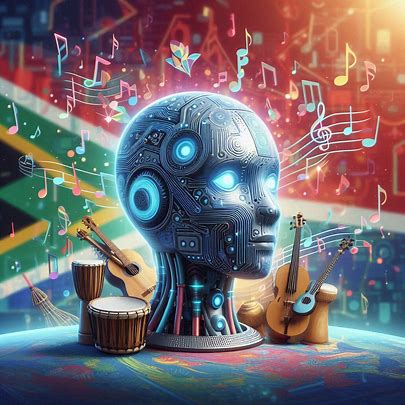
For South African artists, this is both exciting and unsettling. On one hand, it opens up new creative frontiers. On the other, it raises awkward questions: if a machine helps write a song, who owns it? And what happens when the law hasn’t quite caught up with the technology?
Let’s break it down.
AI as a creative partner, not a replacement
There is no doubt that AI can speed up the creative process. It can help with chord progressions, melody ideas and even lyrical structure. For independent musicians especially, it can feel like having an extra collaborator in the room, one that never gets tired.
But AI isn’t “creating” in the human sense. It analyses existing music, identifies patterns and then generates material based on that data. What it lacks is lived experience, emotion, cultural memory and intention. In other words, it can propose ideas, but it cannot tell your story.
That is where human creativity still matters most.
Where South African copyright law stands
South Africa’s Copyright Act of 1978 protects original works such as lyrics, compositions and sound recordings. The catch is that the law is built on the assumption that a human being is behind the creation.
There is a provision for “computer-generated works”, where the author is defined as the person who “made the necessary arrangements” for the work to be created. In the past, this referred to programmers or system operators. Today, it is increasingly relevant to artists who guide AI tools.
However, the most important requirement remains originality. Under South African law, originality flows from human skill, judgement and creative input. A machine working alone does not meet that standard.
This leaves purely AI-generated music in a grey area.
When you use AI as part of your process
If you are using AI like a tool, writing prompts, choosing what works, editing lyrics, adjusting structure, adding your own vocals or instruments, then you are still considered the author of the final work.
In practical terms, this means, your song can qualify for copyright protection, you can register it with bodies such as SAMRO or SAMPRA and retain both moral and economic rights.
In this scenario, AI is no different from a synthesiser, sample pack or production plugin. It supports the process, but it doesn’t replace the creator. For many musicians, this is the ideal balance: efficiency without losing ownership.
What if the song is created entirely by AI?
This is where the situation becomes complicated. If a track is generated entirely by AI with no meaningful human creative involvement, the following risks arise: The work may not qualify for copyright because it lacks human originality, the AI cannot be considered an author under current law, you may not be able to claim legal ownership, even if you initiated the process, collecting royalties could become impossible, others may be free to copy or distribute the music and the output could unknowingly resemble an existing song, exposing you to infringement claims.
In simple terms, pressing “generate” does not automatically make you the owner. At the moment, purely AI-generated music sits in a legal and ethical grey zone, waiting for clearer legal direction.
Practical tips for South African artists using AI
If you are going to use AI in your creative process, and many artists will, a few smart habits can make all the difference:
- Treat AI output as a draft, not a final product
- Always add your own creative input
- Rewrite, rearrange or personalise what the AI produces
- Add your own vocals or instrumentation
- Keep records of your prompts and revisions
These steps help prove that the music is the result of your creative decision-making, not just a machine’s output. That proof matters.
South Africa is not alone in trying to catch up with this issue. In the United States, completely AI-generated works cannot be copyrighted. The UK and EU are still debating where to draw the line between human and machine authorship. Asian markets are experimenting with new frameworks, but even there, the rules remain fluid.
What is clear is that the world is still trying to define how AI fits into traditional creative systems.
Will AI replace musicians?
Probably not.
What it will do is change the way musicians work. It will help break creative blocks, widen access to production and allow artists in remote areas to experiment with complex sounds. But it cannot replicate human experience, culture or emotion. It does not grow up in townships, on dance floors, in choirs, or in church halls. It does not fall in love, feel loss, or celebrate victory.
Music is more than sound. It is story, identity and memory. And for now, those still belong to human beings.
Final thoughts
AI is here to stay. The question is not whether artists should use it, but how they use it. For South African musicians, the message is simple:
- AI-assisted music can be protected if there is genuine human creativity involved.
- Fully AI-generated music may not belong to anyone.
- The safest path is to use AI as a tool, not as the creator.
In the end, technology may change the method, but the soul of music will always come from people.


Most popular

Top Naija songs of 2026
31 Mar 2026
Ghana: Mr Eazi and MOLIY’s ‘Comfort’ earns Urban Music Awards nomination
21 Oct 2026

Top Afrobeats songs of 2026
19 Mar 2026

Top amapiano songs of 2026
16 Feb 2026
Open call: CANEX Music Business Lab and Songwriting Camp
15 Oct 2026
Nigeria: CANEX WKND unveils 2026 programme
21 Oct 2026
Disclaimer: Music In Africa provides a platform for musicians and contributors to embed music and videos solely for promotional purposes. If any track or video embedded on this platform violates any copyrights please inform us immediately and we will take it down. Please read our Terms of Use for more.

Subscribe to our monthly Newsletter
Follow us on social media


Please log in to post a comment.