




























































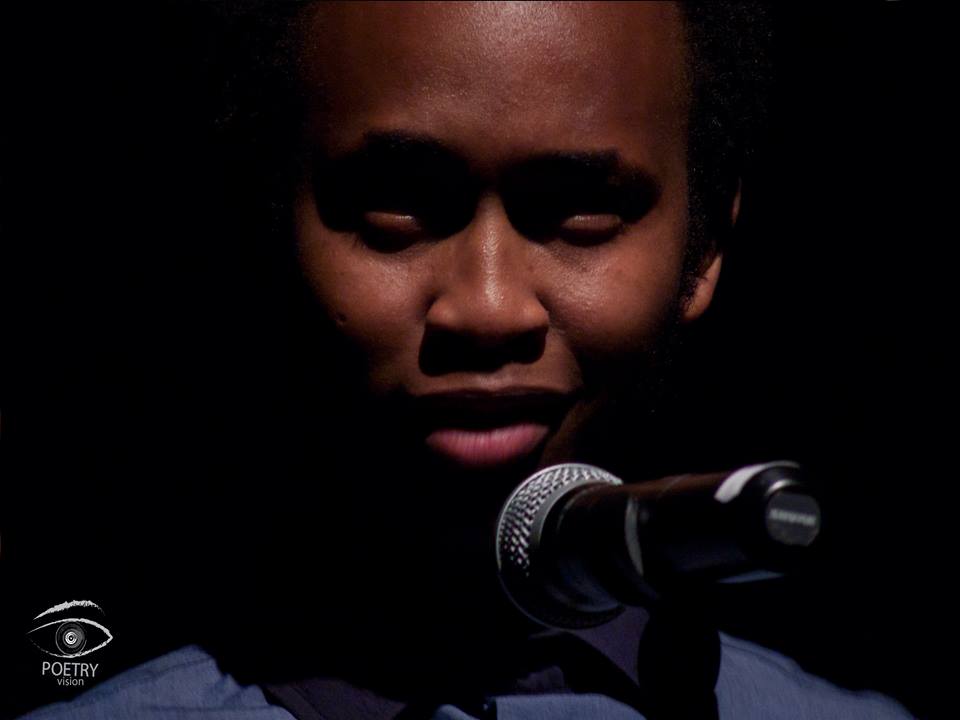


South African rapper Gigi Lamayne dropped the VI EP about a month ago, her first project with Ambitiouz Entertainment since she left the controversial Mabala Noise last year.
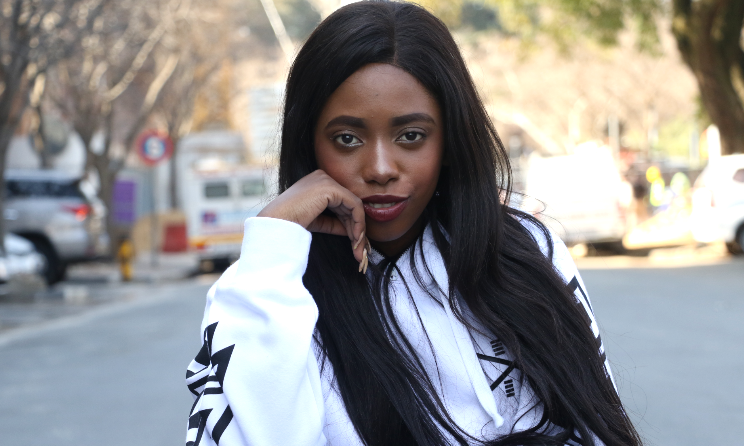
Born Genesis Gabriella Tina Manney, Gigi Lamayne is known for lyrical abilities that could rival your top 5 rappers. She is a four-time South African Hip Hop Awards winner and in 2013 alone she walked away with Best Female, Best Newcomer and Best Mixtape awards. She won the Best Female Award again a year later. She was also the only female to take part in the Sprite Uncontainable Hip Hop Festival in 2013, where she was the runner-up.
To the observant eye, it is easy to see that through her music Gigi Lamayne reconciles rap with academic knowledge; she has the ability to switch between complex punchlines and feel-good trap.
When I first heard the rapper during my high-school days, I was sceptical about the hype around her. People say the definition of insanity is doing the same thing over and over again and expecting different results. I listened to her music repeatedly and I was eventually convinced that she was as good as they came. They also say that the best music takes time to make sense to the listener.
I had a chance to sit down with ‘Ice Cream’ hitmaker to talk about her VI EP and pick her brain about her relationship with hip hop, politics and history.
MUSIC IN AFRICA: The EP is titled VI and features 6 songs. What is your relationship with the number 6?
GIGI LAMAYNE: Six is a religious number. It represents obligation and responsibility. I felt as a hip hop artists that I had an obligation and responsibility to put out something that was beneficial to my audience, something that reminded them of the first listen they had and something that evoked a particular message. That’s why the number 6. And obviously roman numerals is one of the oldest counting systems in history. I could have done the 6 normally but decided to go for VI.
When you say you want to remind your audience of their first listen, is it you trying to take them back to the years when you did the ‘Umbrella’ remix?
[Laughs] You know about that? That’s old. Yes that phase, the ‘Work Hard Play Hard’ remixes, ‘Umbrella’. That was the kind of nostalgic element I wanted to go for, well beyond ‘Ice Cream’.
The EP is ideological in the way it came into being. What was the inspiration behind it, seeing that you show different sides of Gigi Lamayne on it?
It was a very personalised in the sense that I had to really look for myself and find myself, away from the visual branding of an artist, away from the way an artist is supposed to be perceived. The template Nicki Minaj vs Da Brat, where do I fall into everything? I love my indigenous languages. How did I put together all those things without feeling like I’m just going with the trend? I think that’s why in the beginning I had the freestyle, which is completely timeless and I requested for the producer to make it like a timeless beat so that people can listen to it for years to come and still feel it.
There is also ‘Stimela’ where I'm trapping, ‘Iphupho’ where I’m singing and there’s 'Twinkle' [featuring Londile London] that is inspirational. You also find ‘Roll’ that is completely Gigi, with the bounce, rapping and just playing around. The different languages come through there as well.
I think we should appreciate that the definition of culture is something that’s done repetitively – rituals – and I believe that trap is an important sub-tradition of hip hop. It would be completely ignorant of you not to recognise trap as being a part of hip hop and rap. And if I’m going to be a good player on the sports field, it’s important for me to understand all of the drills. In hip hop it’s important for me to be able to cypher, freestyle and trap and use auto-tune. That just makes you a better player in the field of hip hop if you can do those things.
I believe that if you're to solidify longevity in the hip hop mainstream, it’s important to get out of your comfort zone and try new things. And that’s exactly what the EP did for me.
Is this how you reconcile academics with what you bring to music?
Yes it is. Everybody is trying to make history and nobody is trying to record it. I think that’s where the 6's responsibility and obligation comes through. I know I sat in an anthropology class and deciphered and decoded a 2Pac song. You’re hoping that someday somebody will do that with your music and deconstruct all those different elements that I’ve just spoken about. I think that’s where it comes in for me. It’s no longer just about making music, it’s also teaching something and recording something in its prime. I believe that right now music is in its prime. And I heard that ‘Stimela’ is a favourite right now.
What’s your take on the excessive use of auto-tune?
Each to their own. I believe there are people who use it amazingly well. Some careers were built on auto-tune and I believe it's a skill. Some people really know how to use auto-tune well. I think it’s an instrument. Some people use it well and others just fail dismally. It just depends on the risk you’re willing to take
Do you think you’ll find yourself in a position where you make an entire album with auto-tune?
No, never. Songs yes but not an album. But auto-tune is amazing. Kanye used it, T-Pain used it and Lil Wayne used it. Some of the greatest artists of all time used it. And I think that it’s something that hip hop should claim eventually. We are prominent right now. Ragga music used it but we made it cool.
Would you say that over the years you have grown as a lyricists and musician?
I’ve grown as a musician. I believe that the lyricist always has growth, there’s always enough room to better yourself as an artist. I decided to make the transition from not just being a rapper to just being a rapper again, and then to a musician. I had a conversation with somebody about the mainstream vs the underground and how I started off in the underground. And the underground cats like Gini Grindith, a lot of them would say, ‘Gigi’s fallen off’ or ‘Gigi’s gone soft’. But I think when you believe that your purpose is greater than making bedroom music for yourself and friends you’ll levitate to becoming this artist that is mainstream.
Many hip hop artists get to a point where they call themselves musicians and not rappers. Is this where you are at currently?
I believe that every rapper is somebody who wasn’t vocally inclined and decided to do spoken word instead. In actual fact there is this deep dark side of you that wanted to sing but you couldn’t, so now with all the technology and nice engineers you are able to that and still rap. And that’s like a one-up for us over the singers. That’s what happened with me, I really wanted to sing but it didn’t work out. Nowadays, people can go for vocal training and with the right producers you can do what you wanna do.
Read part 2 of the big Gigi Lamayne interview here.


Most popular

Top Naija songs of 2026
31 Mar 2026

Ghana: Mr Eazi and MOLIY’s ‘Comfort’ earns Urban Music Awards nomination
21 Oct 2026

Top Afrobeats songs of 2026
19 Mar 2026

Top amapiano songs of 2026
16 Feb 2026

Open call: CANEX Music Business Lab and Songwriting Camp
15 Oct 2026

Nigeria: CANEX WKND unveils 2026 programme
21 Oct 2026
Disclaimer: Music In Africa provides a platform for musicians and contributors to embed music and videos solely for promotional purposes. If any track or video embedded on this platform violates any copyrights please inform us immediately and we will take it down. Please read our Terms of Use for more.

Subscribe to our monthly Newsletter
Follow us on social media


Please log in to post a comment.