





















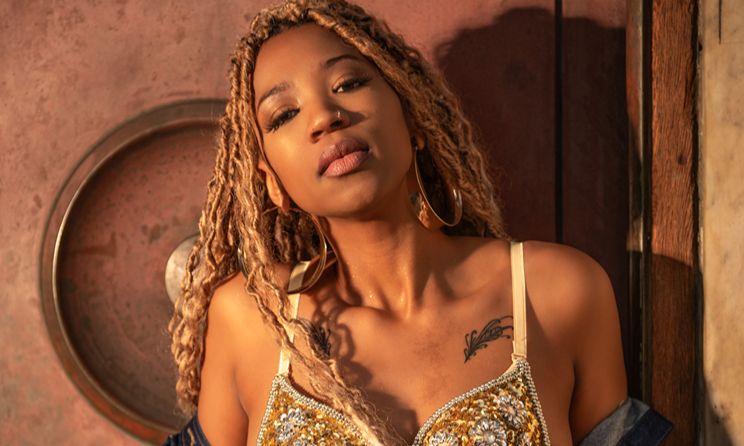


































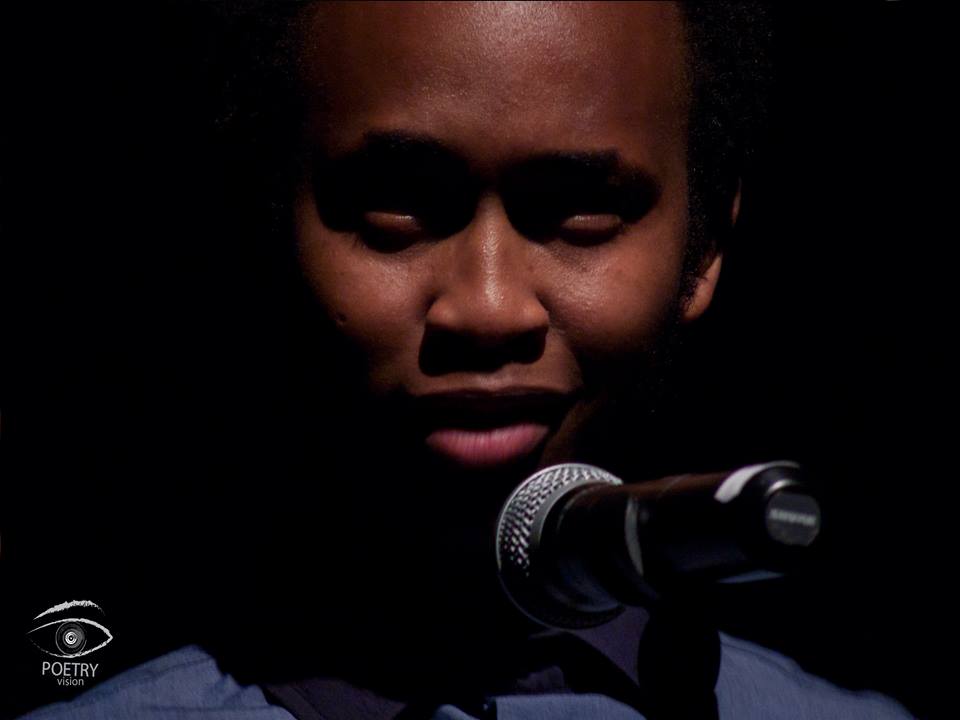


This is part 2 of an interview with South African rapper Gigi Lamayne. Read part 1 here.
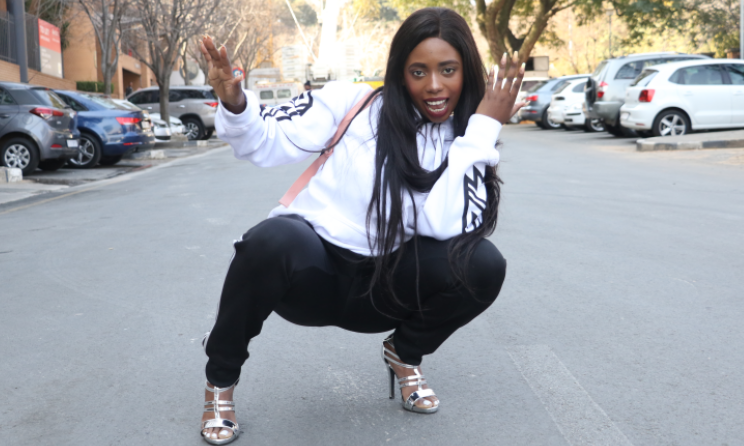
One of the lines that caught my ear on ‘Stimela’ was 'I’m Gautrain, you’re Shosholoza, bitch'...
[Laughs] Wow, of all the things that caught your ear it was that line?
I put it in contrast with what you said in ‘Nu Age Nudes’: 'More wisdom than the Wits archives, my guy / My exorcism counter verses when I spit my rhymes.'
Woah. That’s from a while ago. That was from when I was still underground. Like I was a bar lady.
What I want to get to is the video for ‘Nu Age Nudes’. There's is an interesting way in which you play around with high art or the concept of history. In that video you had people with white face paint and Ultra Mel custard dripping on a white pineapple. It’s not a common format, especially for South African videos. In the video for ‘Iphupho’ you contrast Victorian fashion with African tradition and you have a woman speaking in sign language.
For people who know my history, I am a girl who grew up in a township and went to a model C school [white school]. So the African queen represents the Afrocentric side of me and obviously the 1800s theme represents my schooling: the school of thought that I was brought up in. So that’s not a coincidence. The last scene with the bandana and fur, that’s what happened when my two sides merged. That’s what they created, that’s Gigi right now. So that’s where we’re trying to go with that. And the part where I'm naked on the leaves, is a nod to Eve, the first woman on Earth.
It's an interesting narrative that shows you going back to the genesis. Is this a rebirth for you, considering that you left Mabala Noise last year and joined Ambitiouz?
The EP felt like a cleansing, and people are still gonna get my best music yet. The other day I was in studio. It’s amazing what’s going on in my head and I don’t wanna sleep on it right now. It felt like I could start again. If I could change my name I would.
What would you change it to?
I don’t know, Genesis or something.
Why didn’t you name yourself Genesis from the get-go?
I couldn’t. There’s a rock band named Genesis. And when you Google genesis, the book of Genesis comes up. But when you google Gigi, Gigi Lamayne comes up.
What's the idea of the lion in ‘Iphupho’? It felt contrived and superficial.
The idea was that I'm vulnerable but I can still control this beast that is so close to me. So it was to create the questions, 'How is it not pouncing on her? What kind of powers does she have that it decided to just sit there?'
Aside from music you are also an activist.
I try to do what’s right.
You released ‘Fees Will Fall’ at the height of the Fees Must Fall protests, and it seems like the song was slept on. What do you think about how politically involved South African hip hop is?
South African hip hop is not politically involved at all. You’re told not to speak about certain things. The Fees Must Fall situation was individualised to me because I was at Wits at the time. My mom is a single parent and she struggled to pay my fees. I was there during the protests, I took part in the protests, I was one of the students causing problems, I would speak at gatherings. It was something very close to me. I think when something is specific to you, it’s easy for you to speak about it. Sadly, if it doesn’t speak to you on a personal level, you won’t speak about it. And unfortunately, because SA hip hop is so isolated to what’s happening to the kids on the ground, people won’t speak about it.
How did you feel about the reception of the song?
It was amazing. For me it wasn’t slept on. I think it got to the right ears. People such as the EFF [Economic Freedom Fighters] retweeted. They were behind it. People who weren’t meant to jump on it jumped on it. But it got to the right people: the students, Mbuyiseni Ndlozi, the Sisulus. And ever since then I’ve had a good standing politically in the country.
I did receive help, obviously not financially, but just getting past a lot of hurdles after that, just in terms of my fees situation. So the song did serve a purpose in the long run. And I’m glad that the song is for the books. Stogie T also spoke about it, saying that song was done for history and that the song will never be erased. I mean, even in archives where they speak about those protests, the song is always featured. And it’s great because you always have situations like the apartheid regime where Brenda Fassie's 'Black President' became a song that everybody speaks about. I’m glad I was able to capture and record it and not just be at the forefront of it.
You were one the few voices that spoke about it through music.
I was the only voice. I mean, a few celebrities came out to the streets to give us water but didn’t speak about it. No artist wanted to be involved with it. But they gave us water and we needed more than that. Again, if something doesn’t affect you directly, you won’t have the need to voice your opinion.
Will we see you release another social commentary project in the future?
Definitely. One features an upcoming musician called Vocalistic with whom we spoke about melanin and the issue of colourism in black communities. The second was with a gay rapper whose name is Mr All Of It, where we spoke about the LGBTQ community. It's something that’s one the cards, but when I do it I just want to do it mad creatively and take my time with it.
When is your full-length album coming out and what should people expect?
I’m super nervous because post the listening session everybody felt like the EP was too hot, like ‘What are you gonna give us on the album 'cause if this is how everything is sounding, then this is scary’. I kept my cool but to be honest the pressure is on. I need to make sure that this is the greatest album of all time for the female voice in South Africa. It has to be one for the books for South African female rap. It needs to see the pinnacle that male artists are reaching. History is what we need now for the feminine voices. It’s great that we have nice cars and wear Gucci but now is the time to record history and break down the barriers that male artist are breaking down.
Read part 1 here.


Most popular

Top Naija songs of 2026
31 Mar 2026
Ghana: Mr Eazi and MOLIY’s ‘Comfort’ earns Urban Music Awards nomination
21 Oct 2026

Top Afrobeats songs of 2026
19 Mar 2026

Top amapiano songs of 2026
16 Feb 2026
Open call: CANEX Music Business Lab and Songwriting Camp
15 Oct 2026
Nigeria: CANEX WKND unveils 2026 programme
21 Oct 2026
Disclaimer: Music In Africa provides a platform for musicians and contributors to embed music and videos solely for promotional purposes. If any track or video embedded on this platform violates any copyrights please inform us immediately and we will take it down. Please read our Terms of Use for more.

Subscribe to our monthly Newsletter
Follow us on social media


Please log in to post a comment.