
























































Nakhane Touré is just Nakhane now and living in the UK. Last year he dropped the Malian-inspired Touré from his stage name. He also abandoned Christianity, a theme that featured prominently in his life until 2013, the same year he released his SAMA-winning sophomore album Brave Confusion. Much has happened since Brave Confusion, but it’s the past two years that have seen the multitalented artist riding on the crest of a wave that doesn’t look like breaking anytime soon.
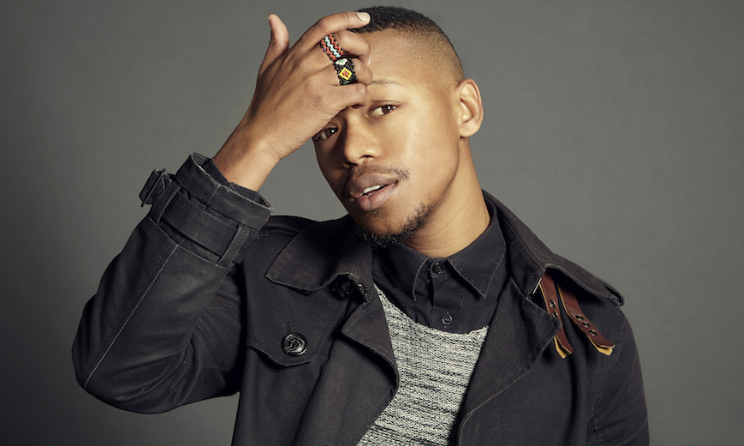
Starring in the controversial film Inxeba (The Wound) has made Nakhane an enemy of many Xhosas and traditionalists around the country. He's received death threats and the same old homophobic treatment that fuels extreme acts like gay bashing and corrective rape. But Nakhane isn’t fazed or surprised by the backwardness of his fellow South Africans and says he fully expected the vitriol directed at him and the filmmakers of Inxeba.
Whether he wants to admit it or not, by living abroad Nakhane has made a clean break from the constant reminder that his sexuality will always be incompatible with Xhosa culture and perception of masculinity. He's a free-thinking iconoclast who's extended a middle finger at those who prefer intolerance as a departure point. Instead of floundering in the easily attainable habit of resentment that afflicts millions of young people in South Africa, the creative polymath (singer, multi-instrumentalist, author and actor) has chosen creativity and hard work as a means to escape. He's no dewdropper and he'll never be one.
His latest album You Will Not Die is one of the few important musical contributions coming from a South African musician in years. Whether it garners the massive international appeal it deserves is still to be seen. But one thing is certain: the singer is making the kind of music that won't date easily. It's possible that your children's children will know the lyrics to his songs. It's possible they'll ask, "Grandpa, Grandma, did you ever see Nakhane live?"
The 30-year-old Nakhane is back in Johannesburg on May 26 for Bassline Fest, where audiences can expect him and his new band to play songs from his acclaimed album. There is also word on the street that he'll join Salif Keita and Yemi Alede onstage to perform a collaborative song.
I spoke to Nakhane at length recently. Self-indulgently, I steered the conversation towards politics, religion, his convictions about this life, the plight of young South Africans, and many other things. I thought I'd write a narrative interwoven with Nakhane quotes. That would kill the flow of the conversation, I thought. So here goes.
MUSIC IN AFRICA: Will you be in the UK for good?
NAKHANE: Indefinitely, for as long as I need to for my work, so I’m not setting any dates on it. I came to live here because of work and because I needed to move easier and in a less expensive way through Europe and the UK.
You seem to be doing better now than ever. How are you coping with all the fame?
I was talking to friend of mine this morning and I was telling her that I’m so happy that it’s happening to me at a time when I’m older. I think when you’re older you have some perspective. Number one, because it took you so long to get here, and number two, because it’s a lot of hard work. You also know these opportunities don’t come around every day, so when you get them you work hard and you don’t f*ck around.
I’ve created art and now and I’m having a little bit of fun. With live shows, for example, it’s about making connections with people. It’s really exciting for me, it’s what I’ve always wanted to do my entire life and I’m doing it. I’m coping because I still can’t believe it’s happening, so at times I feel like I’m living in a dream world. Sometimes when my agent or manager calls me to tell me something is happening, I go: “How is this thing happening?” It’s strange. When something really great happens, the feeling is a little bit more muted than you thought it would be. Maybe I expect some sort of big feeling. I always thought that signing a big international deal would mean that there would be something in me that is moved or changed. But at the end you just continue like you did the day before. You just have to be willing to do the work. That’s another part that many people don’t understand. It’s an incredible amount of work…
It’s a kind of insanity, isn’t it?
Oh yeah. It’s completely unnatural. When I look at my friends who have ‘normal' jobs, and they think I have it so easy, I say: ‘You guys underestimate the power of structure.’ I may be off for three days, but on the other four days that I do work, it’s completely insane, because I’m travelling and as soon as I get to that place we’re offloading, we do soundcheck, and then I have 40 minutes to warm up before I perform. By the time I get to my hotel room at 11pm, I can’t sleep because I’m buzzing from adrenalin. I fall asleep at 2am, wake up at 8 and we’re travelling again to the next gig. I’m getting used to it, but I love it.
I’ve always wondered about the amount of time and energy that goes into preparing a live show of 45 minutes. Do those 45 minutes sometime feel like three minutes – like time seizes to exist while you’re onstage?
Yes. It’s so strange. That happens especially when a show is going really well. I was watching this interview with someone else who said it takes a lot of work for it to look like magic. That’s so true. You spend four or five months rehearsing and then you get on stage for 45 minutes and it just flies by.
Then there’s the element of repetition. Do you sometimes get tired of your own music by having to play it over and over again, and do you end up playing your song differently because of the repetitive nature of live music?
You can’t help but make it novel and interesting for yourself. You have to. But I also think that audiences don’t always realise how much they matter in a show. Their energy really influences how the show unfolds. You also find ways to make the show interesting for yourself, based on the space, the crowd and the way you feel that day. You have to go with that day’s feeling. You can’t just fake it. At the same time you have to give a good show because people have paid to be there. It’s a tightrope.
It’s been crazy with Inxeba in South Africa and you’ve probably said everything you needed to say in the many interviews before this one. What interest me mostly is what you want to be known for. Do you want to be known as an actor, musician, writer? And could starring in the film have defined your real-life character in both positive and negative ways?
I want to be known as an artist in general. I’ve never wanted to be known for one thing. Even in school, I never did just one thing. I was acting, I was doing fashion shows, I was singing, I played in an orchestra. But there has always been something visceral and spiritual about singing, which I can’t explain. I guess it’s because I can’t disassociate with it, it’s part of my body. With acting you’re someone else but with singing it’s all you, it’s all your feelings. It’s my lingua franca.
In terms of whether the film has done me favours or disfavours, I don’t think of it that way. I don’t spend time worrying about that. I do projects that matter to me. When I signed on to do the film, I never in a million years thought that it would be what it became. And I’m not just saying that. I knew that it would be somewhat contentious with some people but I didn’t think it would be such a great volume of people, and so global in terms of availability. I’ve always been very adaptable as a person, and whatever happened I just adapted to it and I moved on. This is an argument I always have with my friends: ‘If only I could have…’ I’m like, 'Well, you didn’t! Make do with what you have now.' That’s how I live my life, this is where I am right now.
A friend of mine once asked me about the whole idea of being a queer artist. ‘Do you want to be known as a queer artist?’ And I said: ‘No one asks straight people if they want to be known as straight artists.’ It doesn’t matter and it shouldn’t matter. No one should ask you the question whether you want to be known as a queer artist or not. It’s inherently homophobic. Why are you othering me, why are you putting me in some ghetto of art?
Your content is about religion, sexuality and so on...
And James Joyce’s content was about Ireland but no one goes on about that. People just go on about the fact that his books were good. Zakes Mda said that we have only one story and we find different ways to tell it. I don’t disagree with that. We have experiences in our formative years that form us as human beings and we can’t run away from those things.
Read part 2 of the big Nakhane interview here.


Most popular

Top Naija songs of 2026
31 Mar 2026
Ghana: Mr Eazi and MOLIY’s ‘Comfort’ earns Urban Music Awards nomination
21 Oct 2026

Top Afrobeats songs of 2026
19 Mar 2026

Top amapiano songs of 2026
16 Feb 2026
Open call: CANEX Music Business Lab and Songwriting Camp
15 Oct 2026
Nigeria: CANEX WKND unveils 2026 programme
21 Oct 2026
Disclaimer: Music In Africa provides a platform for musicians and contributors to embed music and videos solely for promotional purposes. If any track or video embedded on this platform violates any copyrights please inform us immediately and we will take it down. Please read our Terms of Use for more.

Subscribe to our monthly Newsletter
Follow us on social media


Please log in to post a comment.