













































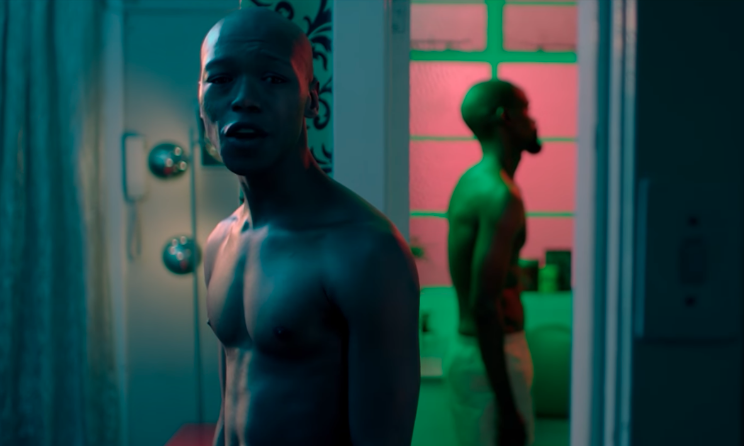
Has the movie's release exposed the true extent of homophobia in South Africa through the discourse that's happened in the past few months? Did we show our true colours in this country?
Maybe for people who aren’t on the receiving end of it every day. I wasn’t surprised. My reaction was, 'Oh here they are again.' They’ve been doing this to me since I was four years old. I guess the effort was surprising – the effort to make sure that we know we’re pieces of s*it. It’s one thing when I’m walking down the street, slightly effeminate, and there’s a remark by someone. That’s different than making the effort to make sure we know that we’re hated, and that we’re hated by everyone, which is not true. It surprises me that someone has the thought, picks up their phone, logs on, finds my name, writes a message and presses send. There are so many steps to do that that it’s absurd. I don’t know where that comes from. I never had the desire to tell someone I hated them. So yes, on some level the country showed itself, but on another, the education system showed itself as well.
So where does this 'devil' that urges people from the inside to go through a cognitive step-by-step process to show their hatred come from? You say its education but it can’t be only that.
It can’t only be that. People are angry and sad. They were left behind, you know? Post-1994 people were filled with such disappointment and sadness. And it’s interesting to me that we waited for Winnie Mandela to die to tell her that she mattered to us. Why weren’t all these wonderful things about her said when she was alive, why were we so quiet? South Africa before democracy is a mess but there’s this whole idea of hope, and for the majority of black people it didn’t happen.
So you connect the resentment and sadness of a disappointed people to homophobia?
Homophobia in this context because that’s what the film was about. But we see the same kind of thing with xenophobia, misogyny and so on. Disempowered people will find someone who’s lower in the food chain to make them think like they matter, like they have power. Women, children, queer people are seen as fodder. They end up being oppressed the most, because men feel powerful.
What needs to happen for horrific incidents like corrective rape to stop? You don’t really get the same kind of brutality in most places around the world. I put it down to individuality. It’s like you can’t be an individual here and you must always be part of some group. I’m not saying that people aren’t individuals, but that they are often not permitted to be individuals. Saying that, as a white guy I can’t pretend to know what it’s like in black communities.
We have to look at why black communities are the way they are. I did an interview in Rotterdam that really irritated me. I was in a really beautiful church. Sometimes when I’m in Europe I can’t help but be livid at the fact that all of this grandeur was at the expense of my people. It’s all great, and congratulations, but you took everything and you left us with nothing. You left broken people. Not beyond repair, but the repair is going to take as long as you took to make sure of their destruction, which is 350 years. So the kind of work that colonialism did to make sure black people were the scum of the world is going to take the same kind of consistency to make sure we realise we’re not that. When we look at thigs like homophobia we can’t forget that, linguistically, that world didn’t exist for us. That came with the Bible, it came with the Europeans. Our language doesn’t even have gender. And I’m not saying we were innocents. I’m not. But there’s an element of us forgetting why people are the way they are. It’s traumatic, it’s messy.
You’re a Christian, correct?
No [laughs]. Not any more.
I was one of the first to review your first album and I remember there was this massive Christian element there. That was five years ago?
Yes, it was 2013.
So that’s gone now.
Yeah, and that’s big part of the new album: me leaving Christianity. Well, I was also excommunicated after I had decided to leave. The act was neither here nor there.
Why did you leave Christianity? Was it an incompatibility with who you were?
I was talking to my boyfriend last night after watching this film called Come Sunday. It’s about this bishop in America who was reading the Bible in a different way and he was excommunicated for heresy. My boyfriend was asking me how I identify now. When I’m filling out forms, what do I tick? I tick ‘other’ and I write ‘Xhosa’. To my friends I call myself a ‘Xhosa-indebted agnostic’. But I’m still trying to understand what it is I believe in. Christianity was a such a big part of who I was and of what made me, especially with the first album. But around the time the album came out, my life sort of crumbled. It fell apart. I was left to my own devices with no friends around or people from church to tell me to read the Bible. I had become much more black-conscious.
Yes, I was tired of the internal warfare that was happening about my sexuality, about my blackness, about things I couldn’t say in church, at least about church members at my church saying things like the Soweto Uprising was a sin. There were certain things in the Bible that I couldn’t gloss over anymore; they were too clear for me to ignore. I had a choice: continue the way I lived or leave it. It was a no-brainer – I had to leave it. But that didn’t mean my life was easier. Leaving a religion doesn’t make life easier. If anything, it complicates it even further. I guess I was willing to dive head-first into the complication that is being alive.
The name of your album is You Will Not Die. We will die, won’t we?
Of course we will. It’s a hopeful title. I’ve had this title for eight or nine years. The first time it made itself aware to me was at a Bible study. It’s from an excerpt from Proverbs where Solomon says: ‘Withhold not punishment from the child for if you beat him with a rod he will not die.’ I remember taking this out of the context of the Bible, recontextualising it and personalising it. I remember thinking, outside of the context of discipline: 'As difficult and painful as life can get, you're going to get up tomorrow morning and you're going to have to continue.' The world spins forward and it doesn’t wait for you. I realised that I had no time to be faffing about in this only life that I have.
There seems to be a worldwide trend of people wallowing in resentment and self-pity – the American cliché of the 40 year old living in his parents' basement, hating the world that's out there. You album's positive message – to get a move on and work hard – is what we need from more artist, don't you think?
That's the point of art, isn’t it? That's what I get from it at least. It may not be a new persepctive, but it makes me feel less alone, it makes me feel heard in my private world. When I'm reading a book it's just me and that author -- whether that author is from a different generation, gender, race, sex. It reduces everything and you realise that we all want the same things [laughs]. That may be simplifying it, but all we want is to be happy and life not to be difficult. Well, life is difficult and it always will be.
This is also connected to creativity. If life wasn’t difficult we wouldn’t have to find creative ways to reduce the pain.
Exactly. That's entertainment. Maybe entertainment has gone a little bit overboard by numbing people. People are extremists by nature. One spoon of sugar is never enough. We want more and more and more. That's why we're also dangerous to the planet. We have no cap, we don't know how to stop. But looking at it positively, look at how unifying something like Beyoncé performing at Coachella is. You may not like the music or Beyoncé, but looking at it from an anthropological point of view, you go, 'Wow, people are unified by this one act of entertainment where they can forget about all the bullsh*t for two hours and they can just enjoy life.' And there's a lot to be enjoyed. It's just that good news don't sell newspapers. No one wants to read about the good things. We like tragedy.
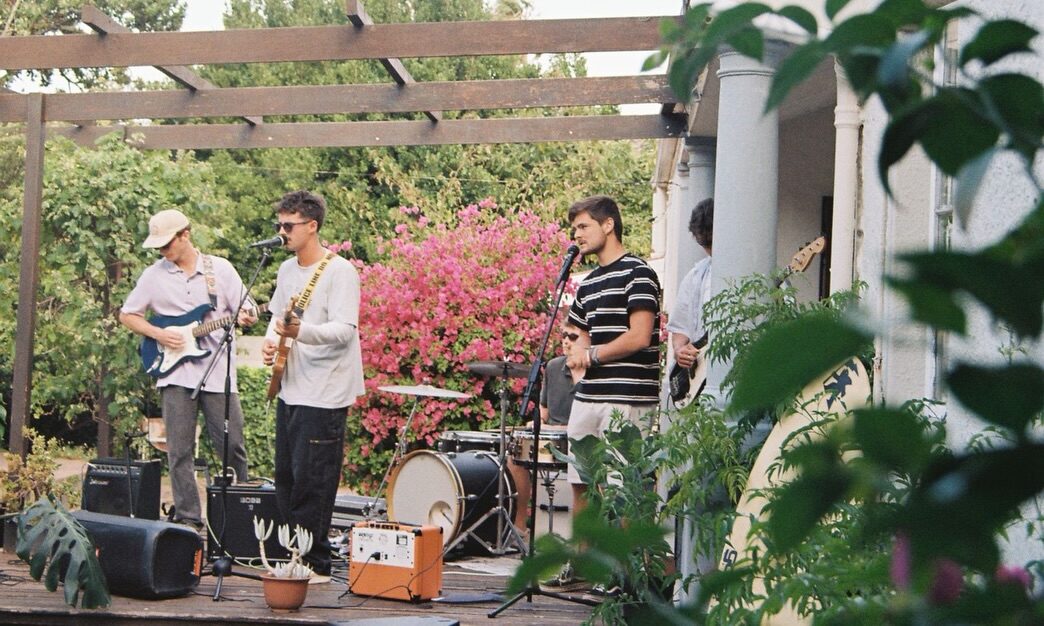
You'll be unifying people at Bassline Fest in Johannesburg on 26 May. You now have a full band. For many years you were doing one-man shows with a backtrack. How is it now that you're playing with other musicians on stage? People can be difficult.
You know, I never thought I would enjoy playing with a band because of exactly of what you say: people are so difficult. I tried with the EP to have a brass section and it was just so difficult to get people to rehearse, or they would be two hours late. I was like, 'This does not work for me, I'm going back to my solo stuff.' But I found two people who are so amazing. We became really close really quickly, a sort of gang of people who you start to shorthand with. I also wanted a band because the songs were more complex and I wasn’t confident that I could pull them off solo. The new band has made me less nervous and freer to perform.
Your new album has a lot going on. Are you able to translate all of it live?
I did want to make something ornate and maximalist. It's fun translating it live, it's fun finding ways to do things differently to the album, or the same to the album. A lot of things you hear on the album are accidents that could never be redone. I'm not going to pretend that some of those things can be done live. Some of those sounds are coming from a track, but 80% of it played by us. It's so much fun!
I hear you'll perform a song with Yemi Alade and Selif Keita...
This stuff scares me. I always think, 'Oh my god, I'm gonna f*ck it up [laughs].' But it also excites me. I would be really cool. Those guys are legends, man. Imagine being on the same stage with Selif Keita. It'll be insane!
You do know that Salif Keita will sing right over you, right?
He's an incredible singer. But I don't care. I wouldn’t be bothered. I'll just stand there and be in awe.
Bassline Fest also falls under the Nelson Mandela centenary celebrations that are running throughout 2018. I've heard you have your reservations of Mandela. Others say you think he's a sellout.
No. I always make sure that when I talk about Mandela I mention that it's complicated and that we should complicate his legacy. Legacy is a complicated thing. There are people who say he's a sellout and on some level he did sell out. The pass-over from apartheid to democracy was f*ck*d up. You can't not see that, that black people got the raw end of the deal. But on the other hand people want to see his legacy as just that, as if 'you're only as good as your last show' [laughs]. But what about the fact that he was arrested for carrying weapons back to South Africa to f*ck sh*t up? uMkhonto we Sizwe, that kind of stuff. You can’t ignore that legacy. It's complicated, he's a human being, he's flawed.
Well, he's become a propaganda figure. Winnie was also flawed...
Why do we only want to see Mandela as some sort of angel and then we'll call Winnie flawed? Everyone's talking about reconciliation, which actually didn’t happen. At the expense of whom? The racial stuff is coming to a head, again. We're all lying to ourselves. We knew it. The aggressions might have been less macro and more micro, but us as the generation that was the buffer generation between our parents and today's younger generation, we knew exactly the microaggressions that were going on in schools. There's no reconciliation. Black people were just taught to be more white and more loving. White people didn’t have to do any of the work. We were told not to talk Xhosa in school whereas Afrikaans kids and teachers were speaking Afrikaans left, right and centre. Those microaggressions were happening all the time and we bottled them up for so long, and now we can't do it anymore. Nothing is changing for these people and they're getting mad. We cannot absolve Nelson Mandela and his team for that.
Buy tickets to Bassline Fest here.


Most popular
Call For Applications : ACCES seeks a UK-based performer
10 Sep 2026

Top amapiano songs of 2026
16 Feb 2026

Top Afrobeats songs of 2026
19 Mar 2026
Open call: Goethe-Institut grants for Southern African creatives
08 Sep 2026
AFRIMA 2026: All the winners
12 Jan 2026
Open call: Ernst von Siemens Music Foundation 2026 funding programmes
04 Sep 2026
Open call: FAME Week Africa, Pressure Cooker Studios songwriting camp
09 Sep 2026
Disclaimer: Music In Africa provides a platform for musicians and contributors to embed music and videos solely for promotional purposes. If any track or video embedded on this platform violates any copyrights please inform us immediately and we will take it down. Please read our Terms of Use for more.

Subscribe to our monthly Newsletter
Follow us on social media


Please log in to post a comment.