




























































Bleak future for Ugandan traditional music, say musicians

25 Jun 2018 - 15:37


In October last year, James Ssewakiryanga was awarded a Utility Model Certificate by the African Regional Intellectual Property Organisation (ARIPO) in Zimbabwe and the Uganda Registration Services Bureau (URSB) after he invented the 22-stringed janzi instrument, which is based on the adungu, a Ugandan bow harp. His efforts to collaborate with the Ugandan government to introduce the new instrument in schools have borne no fruit.
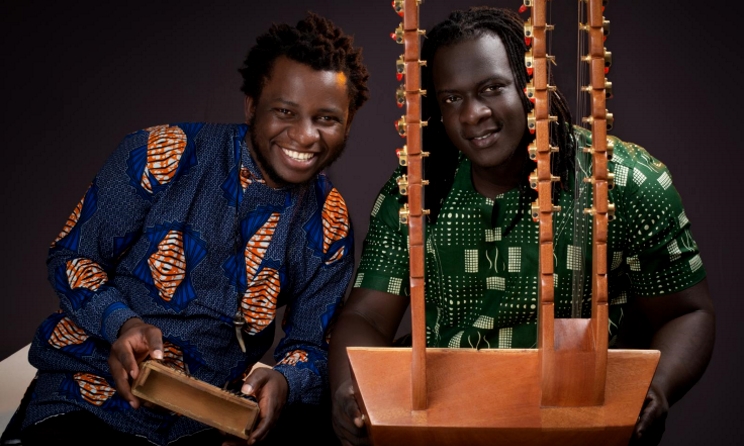
Many say that the government and the corporate sector refrain from promoting traditional musicians. Instead, they fund popular musicians who can turn a profit. Music In Africa spoke to musicians Giovanni Kiyingi, Price Love and Ssewakiryanga about the outlook of traditional music in Uganda.
MUSIC IN AFRICA: Does traditional folk music have a future in Uganda?
JAMES SSEWAKIRYANGA: At the moment I personally don't think this music has survival space because they’re very few young musicians taking it up. Many of the artists have embraced modern instruments and are more inclined to modern sounds, most of which are not our own. But despite that, the few of us believe that we can influence a few upcoming artists to embrace this genre.
GIOVANNI KIYINGI: From where I stand this music has no future because it is yet to receive the necessary support to help it grow. The ministries of culture and education are more bent on promoting urban music and to some extent particular musicians whose music is more westernised than Ugandan.
Why are most Ugandan artists not showing interest in folk music?
PRICE LOVE: Our traditional music is not getting the attention of younger artists because, growing up, most of them were not in touch with their traditions. They were taught to believe that anything foreign is way better than our own. But for others like myself, our parents introduced us to our cultural music and traditions, hence the interest.
GIOVANNI KIYINGI: That is very true. Traditional musicians in Uganda are considered outdated and are always undermined and devalued at all fronts in the music industry – from festivals to awards. In fact, someone playing the guitar is given more respect as compared to one playing a traditional instrument such as the akogo [thumb piano] or adungu.
So what can be done to popularise this music in Uganda?
JAMES SSEWAKIRYANGA: Changes need to be made and it starts at the top. The government needs to reintroduce traditional instruments in primary and secondary schools. In the 1990s up to the year 2000, many artists including myself had the opportunity to experience traditional music, which was part of the music curriculum. It was very much valued at the time with many school competitions being organised. Unfortunately, this does not happen anymore because music at some point came to be seen as a waste of time for pupils.
GIOVANNI KIYINGI: I also think that universities need to provide the option of training students on how to play traditional instruments. I learnt how to play various instruments while in high school but once I joined university I had to drop them. These institutions are suffocated with Western instruments, which is a sham because I believe that our African music should be given more time, because one can't go forward without knowing where they have come from.
PRICE LOVE: And once the traditional instruments are reintroduced in school, great emphasis should be put on young women. The few of us doing it had to dare to go against all odds, especially ridicule, with no external support.
Can the government help in any way?
JAMES SSEWAKIRYANGA: From my understanding, I don't think our government feels any sort of responsibility in fixing the continuous fall of our cultures and traditions. For starters, the arts in Uganda are not given time and funding by the state. For example, I created an instrument, janzi, which was approved by ARIPO and the URSB last year. But until today, the instrument has received no further attention by the government. I believe in other countries where there has been something new created, there's always recognition for inventions and innovations, which leads to further growth of the product. I have contacted government officials about the janzi on several occasions, but their main focus has been mostly on how they'll benefit financially.
GIOVANNI KIYINGI: [Laughs] Yes, the government officials always want to associate with artists when there is money involved, so they'll show no interest in your work. But once you win an award, the Uganda revenue authority will wait for you at the airport to collect their tax.
Do industry stakeholders have a role to play in popularising traditional music?
JAMES SSEWAKIRYANGA: Yes. We have festivals that promote our traditional music. However, I would like to see more regular live music showcases and platforms for tradition music. I also wish that there would be an opportunity for successful world music artists to showcase their work in Uganda so that we can gain a better understanding of such music before we take our music to other countries.
GIOVANNI KIYINGI: I would like to see more categories celebrating various traditional music introduced by the many music award ceremonies in Uganda. The available traditional music category normally features musicians doing the kadongo kamu style, which is one of the many native music styles in Uganda. Also, I would like to see more support for traditional musicians to travel across the region for collaborations and showcase.
PRICE LOVE: I would like to see the local TV and radio stations playing our music. At the moment traditional music does not get airplay because the presenters claim that the style has no numbers in terms of listenership and viewership. It's a miracle to hear folk music on radio.
Any advice to upcoming artists?
JAMES SSEWAKIRYANGA: Young artists should know that it is never backward to embrace who they are. So it is important that they keep exercising their potential, skills and ability.
GIOVANNI KIYINGI: The beginners should not look for quick fame but instead look at the bigger picture. There are so many successful world music artists around the continent and Uganda has the potential of producing them. Those already in the system like myself should be persistent and facilitate the growth of this music by collaborating with one another.
PRICE LOVE: I would like to encourage young female musicians to master their craft by taking instrument lessons. They should also be ready to face a lot of frustration from people who don't believe women should play traditional instruments. As for those who are already acquainted with the instrument, they should keep on practicing and explore other types.


Most popular

Top Naija songs of 2026
31 Mar 2026

Top Afrobeats songs of 2026
19 Mar 2026
Ghana: Mr Eazi and MOLIY’s ‘Comfort’ earns Urban Music Awards nomination
21 Oct 2026

Top amapiano songs of 2026
16 Feb 2026
Open call: CANEX Music Business Lab and Songwriting Camp
15 Oct 2026
Nigeria: CANEX WKND unveils 2026 programme
21 Oct 2026
Disclaimer: Music In Africa provides a platform for musicians and contributors to embed music and videos solely for promotional purposes. If any track or video embedded on this platform violates any copyrights please inform us immediately and we will take it down. Please read our Terms of Use for more.

Subscribe to our monthly Newsletter
Follow us on social media


Please log in to post a comment.