







































NEFCISA
NEFCISA

The Music In Africa Foundation (MIAF) is proud of its partnership with the Industrial Development Corporation (IDC) as a Strategic Implementing Partner (SIP) for its Social Employment Fund (SEF). Through this collaboration, MIAF is running a national programme that is creating jobs, addressing skills gaps, and strengthening South Africa's creative industries — in line with the SEF's overarching goal to generate work for the common good and build community value through employment, social contribution, and inclusive economic participation. Operating under the banner NEFCISA (National Employment Facility for Creative Industries in South Africa), the initiative is recruiting and training participants, matching them with host organisations, and has already placed 1 500 workers across the country — surpassing its original target of 1 000. NEFCISA is delivered through a network of 20 host organisations spanning five provinces, who are actively hosting participants and contributing to work for the common good across South Africa's creative and cultural industries. Key Objectives: Support employment and entrepreneurship in the creative industries. Offer skills development and training programmes. Foster partnerships between public and private creative sectors. Promote South African creativity at both provincial and national levels Foster community development through social contribution.

ACCES
ACCES

ACCES Conference and Showcase Festival is Africa's leading music industry gathering, bringing together the people shaping the future of the continent's music business. Artists, entrepreneurs, executives, investors, policymakers and cultural leaders from across Africa and around the world come to ACCES to build partnerships, exchange ideas, discover talent and create new business opportunities. Since its launch in 2017, ACCES has become the continent's premier platform for professional exchange and music market development. Combining a high-level conference with a curated showcase festival, networking, exhibitions and industry programmes, ACCES offers a unique space where creativity meets business and where African music connects with the global industry.

Gender@Work
Gender@Work

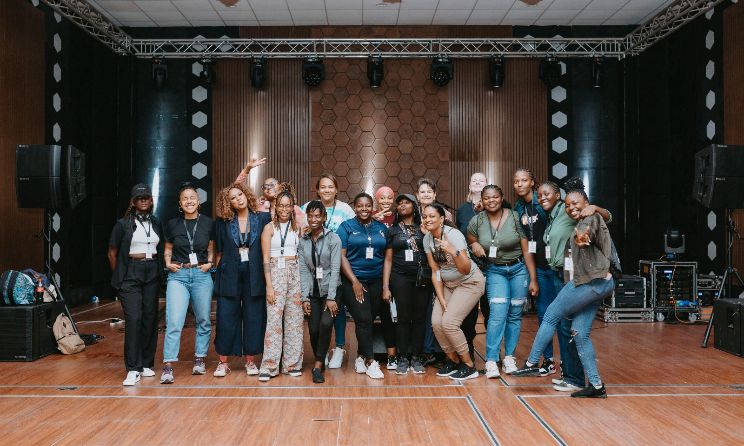
Music In Africa Gender @ Work is a three-year training programme aimed at upskilling and increasing the participation of female professionals in the African music sector. Launched by the Music In Africa Foundation (MIAF) in April 2019, the programme is connected to the MIAF’s ACCES music conference – a pan-African event held in a different African country every year. This connection enables the programme to reach new participants in a different African country every year. The programme marks the beginning of a more concerted effort by the Foundation to support the participation and inclusion of women in all facets of its programmes and the music sector in Africa as a whole. Over the three years, the programme will aim to address gender imbalances in the sector through training, lobbying, facilitating knowledge exchange and dialogues that foster the interest of women. The broader objectives of the programme are to: Provide industry training for women on critical music industry skills, focusing on: Stage management Electronic music production and recording Music business management Technical knowledge Provide an opportunity for both professional and aspiring women to benefit from the Music In Africa network and its broad range of activities in 2019, 2020 and 2021. Provide a solution-based platform in the form of a round table at ACCES with a view to identify challenges, discuss opportunities and lobby for the interests of female practitioners. Offer participants the opportunity to benefit from programmes offered by MIAF’s partners. Increase access to educational materials. Integrate participants in the broader ACCES programme to maximise experience and exposure to the industry. Record and present training materials on the www.musicinafrica.net, including but not limited to tutorials, templates and other best-practice materials. Communicate women-based themes that support the initiatives and messages of the programme. MAIN TRAINING ACTIVITIES Training in first country (Ghana): In the first year, participants will be trained on all aspects of stage management by a team of experienced stage managers from 10 to 17 November 2019. The programme will offer robust classroom training as well as practical, hands-on training in which participants will also be given the opportunity to manage various aspects of the ACCES performance programme. Training in second country: The second training iteration will take place at ACCES 2020 when the programme will diversify its course to include music production lessons and training on other music business topics. A round-table platform will also be introduced to coincide with the ACCES programme. Training in third country: The third training iteration will take place at ACCES 2021 in a different country, offering an advanced course. HOW DO YOU GET INVOLVED?  As a participant, facilitator or trainer: The programme enrolls up to 12 trainees every year. All opportunities are advertised publicly on this website, and will be added to this page. Please keep checking this page for new calls (below under UPDATES & CURRENT OPPORTUNITIES). As a partner Please contact Claire Metais at [email protected]. APPLY The call for applications for 2020 will be announced soon. The Music In Africa Gender @ Work programme is made possible with the support of the Prince Claus Fund, Siemens Stiftung and Goethe-Institut.

Sound Connects Fund
Sound Connects Fund

For cultural and creative practitioners and organisations operating in southern Africa, access to funding remains a major challenge. The COVID-19 pandemic has also had a massive impact on government policy, spending and the economy in general, and has seen spending on culture being moved further down the list of priorities. Further, the cultural and creative industries repeatedly cite four main areas where investment is needed for growth, which are increased visibility, mobility including access to new markets, finance and support structures.

Instrument Building And Repair Project

Experience the Vibrations African Instruments Exhibition online in 3D

Reviews

Blinky Bill’s We Cut Keys 2: A music maverick returns

31 Jan 2024 - 09:41

cc-img flag-img

Let’s face it. It’s every African musician’s dream to hit the heights of Kabza De Smalls and Burna Boys of this world. Such is the power Afrobeats and amapiano have wielded over the continent’s music scene that artists from as far as Sokodé (Togo) to Salima (Malawi) are experimenting with the genres with varying degrees of success.
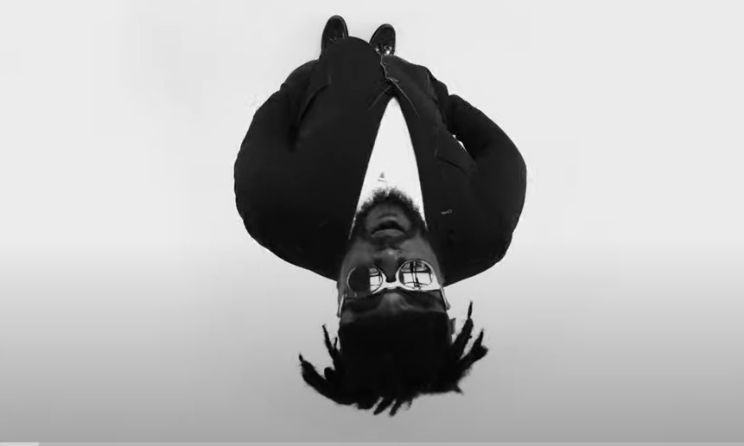
Blinky Bill: Turning Kenyan music on its head since 2008.

While experimentation is a requirement for every solid musician, few artists will ever wear the ‘experimental’ tag stylishly as Kenya’s Blinky Bill. Not a slave to trends, Blinky has carved a musical path all his own – one that is not reliant on fleeting adulation but based on true mastery of his trade.

This is something Blinky’s fans have always known – and one that they had been starved of for a very long time. This is the reason on the evening of 25 January, as Nairobians were starting to shake off the last strains of their post-holiday spending blues, they gathered in their hundreds to witness the unveiling of Blinky’s third studio project, We Cut Keys 2.

Nearly six years in the making, the 16-track collection that has weathered a pandemic, jet lags, creative blocks and all manner of delays was finally here… and the wait was worth it.

We Cut Keys 2 is once again a demonstration of the pure artistry possessed by its creator. Laced with elements of electro, hip hop, funk, jazz, traditional Kenyan music and a potpourri of arcane tunes, the album is at once chill, atmospheric, bouncy, radical, introspective…

A product of global collaboration, one can’t help but be amazed by the respect and admiration Blinky’s work has been able to garner outside Kenya. While he may still enjoy the luxury of popping into a village roadside food kiosk without as much as turning heads, his status as a star is cemented.

Here is why: the project was mixed by legendary engineer Gordon ‘Commissioner Gordon’ Williams, who has won several Grammy awards for his work on Lauryn Hill’s Miseducation of Lauryn Hill, Amy Winehouse’s Frank, Damian Marley’s Welcome to Jamrock. The mastering was then left to Tony Dawsey who has mixed Jay-Z’s Black Album and The Blueprint, Whitney Houston’s My Love Is Your Love and Jay Electronica’s A Written Testimony, and other top albums.

Now let’s take a look at the guest list. There is Mikel Ameen (UK), emawk (Kenya/US), Fuse ODG (Ghana), Muthoni Drummer Queen (Kenya), Shauna Fung Yee (Jamaica), Maji Maji (Kenya) and GoldLink (US), to name just but a few.

By working with these equally talented musical counterparts, Blinky is affirming the power of the well-worn maxim – great minds think alike. By assembling this highly diverse group of artists, Blinky is able to channel their dynamic talents into creating an album that is not only thematically deep but a sonic chef-d'oeuvre.

Right from the intro to the outro, the collection takes listeners through the artist’s world. Even though many of his fans tend to be in love with his beat-making skills, We Cut Keys 2 is bound to give them something else to rave about. Delivered at a breezing pace in sheng (Kenyan slang), English and even Dholuo (Blinky’s mother tongue), the recording weaves tales that are lively as they are thought-provoking.

Here, Blinky is both able to pay homage to his musical influences/icons and delve into the social-political arena. ‘Dracula’, for instance, is a Damian Marley’s ‘Welcome to Jamrock’- and K'naan’s ‘Soobax’-esque offering that addresses oppression going on in the world and a call to push back.

‘Mtaona Nikipaa’, Swahili for you’re going to see me fly, tackles self-belief. It’s an electro-hip hop track reminiscent of Flying Lotus, Mac Miller, and Disclosure.

‘Voice of Kenya’ is an ode to the horn sections in Africa, or as the artist himself says: “It imagines what a Kenyan horn section would sound like in New Orleans and vice versa.” It features Grammy-winning US-based Kenyan trumpeter Owuor Arunga.

‘Boss’, meanwhile, was born after a night out where tipple was partaken liberally, meaning the artist had to take the cab home. During the ride, he came into contact with a drum pattern featured in traditional Luo music that the driver was playing and he was so fascinated by it. The very next day Blinky was in the studio hard at work trying to replicate it.

Away from sound design and storytelling aspects, you can also get a glimpse of Blinky’s visual abilities on ‘Get That Paper’, the track that samples a high-energy sermon by Kenyan televangelist Pius Muiru to an unexpected musical triumph.

Indeed, as someone else has already put it, We Cut Keys 2 – much like its predecessors We Cut Keys While You Wait and Everyone's Just Winging It And Other Fly Tales – is a box of chocolates made with the listener in mind. My advice: go ahead and take a bite.

Artist: Blinky Bill
Album: We Cut Keys 2
Label: Rauka Music (Independent)
Year: 2024

Please log in to post a comment.

Most popular

Disclaimer: Music In Africa provides a platform for musicians and contributors to embed music and videos solely for promotional purposes. If any track or video embedded on this platform violates any copyrights please inform us immediately and we will take it down. Please read our Terms of Use for more.

newsletter banner

Subscribe to our monthly Newsletter

Follow us on social media