






























































By Kevin Eze
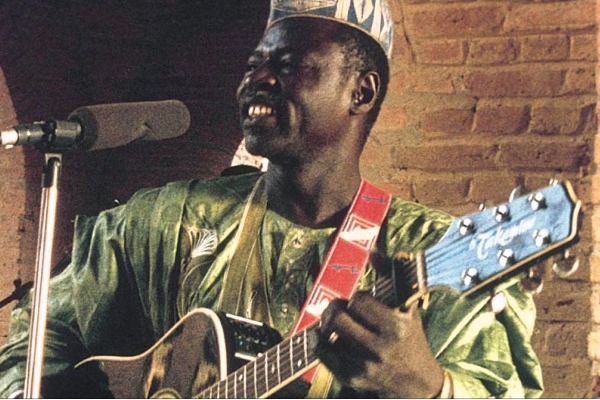
Blues is a vocal and instrumental musical form derived from the work songs of the African-American population that has become an international popular genre. In a trans-Atlantic search for the roots of Blues, answers are found in the traditional rhythms and oral music of the people of Mali. Such answers include the oral tradition, the resonances of sound, the association of ideas, the simmering grooves, as well as the link between Mali’s musical culture and the African-American identity in what we call Blues. While some people are now aware of this genre in Bamako and the surrounding cities, many in Mali still ignore the phenomenon. In a bold move, Mali’s musical luminary Ali Farka Touré once affirmed that the genre is “nothing but African”.
Like that of most African nations, the music of Mali is ethnically diverse. It is rooted in the ancient Mali Empire of the Mandinka. The literary tradition of Mali is mainly oral, championed by griots singing and reciting stories and histories from memory. Then came the Atlantic slave trade. From the 16th through to the 19th century, Africans from the western and central parts of the continent were shipped off to Western Europe or directly to the Americas. African slaves (some of whom were Malians) carried over something of their traditions. What was – and still is – traditionally played in Mali was brought by African slaves to the plantations of the United States. They played and sang in the plantations in the absence of their masters. As part of a long cultural struggle, drums were banned in the United States. The reappearance of flutes and drums, as played in Mali, in Memphis and other parts of the USA, particularly in the south, signaled the resurgence of suppressed emotion. And just as the oral form propelled Mali’s musical performance, vocals formed a powerful part of the Blues, especially when lamenting over bitter love adventures, or yearning for better work.
Rise to popularity & key releases
Globally, the popularity of Blues coincides with the rise of the commercial recording industry. Similarly, the rise to popularity of Blues in Mali corresponds to spotlighting Malian musicians performing on the international scene and signing mouth-watering contracts. African Blues (Shanachie Records, 1990), an album by Ali Farka Touré, abounds in noticeable African and American Blues influences. The death of Ali Farka Touré widened the discussion and speculation among ethnomusicologists on the Malian roots of Blues. Malian guitarists, flautists and percussionists were seen playing side-by-side with American Blues singers, leading to a musical crossbreeding of Malian and American Blues. A striking example is the fusion between JeConte and the Mali Allstars resulting in the album Mali Blues (Soul Now Records, 2014)[i] and a wide-reaching international tour, including performances at the Copenhagen World Music Festival. Also worthy of note is Dutch guitarist Joep Pelt performing Blues with Mali’s Baba Salah[ii].
Mali features a wide array of musicians that fall within the Blues tapestry. Top on the list would include Salif Keita with albums like Moffu (Emarcy, 2009) and Folon (Island, 2001); Habib Koité with Muso Ko (Contre Jour, 2009) and Afriki (Cumbancha, 2007); Ali Farka Touré with African Blues (Shanachie Records, 1990); Toumani Diabaté (one of Mali’s best Kora players and Grammy Award winner) with In the Heart of the Moon (World Circuit, 2006), Ali and Toumani (World Circuit, 2010) and The Mande Variations (The Mande Variations, 2008); Oumou Sangaré (a female, relatively rare for the male-dominated Blues) with Bi Furu (World Circuit, 1993) and Seya (World Circuit, 2009); the Vieux Farka Touré-Raichel Collective; and a host of other well-known and emerging musicians entering the global marketplace.
International attention
As one of the musical cultures of Africa to have enjoyed a relatively large amount of international exposure and acclaim, the Blues of Mali has graced world-class events like WOMAD: be it Salif Keita performing, Oumou Sangaré singing or Vieux Farka Touré fiddling with his guitar, Charlton Park in England has come alive with the grooves of Blues - Mali style - at WOMAD.
As if sound alone did not suffice to celebrate it, film and radio have also played their part. With From Mali to Mississippi (AlloCiné, 2003) Martin Scorsese succesfully merged sound with video[iii]. Through his documentary video, originally titled Feel Like going Home and released in 2004, Scorsese travelled in search of the roots of Blues from Mississippi to Mali, in the third episode of a three-part series called The Blues, A Musical Journey (Hip-O Records/Sony, 2003). Similarly, the documentary Dambé: The Mali Project[iv] weaves the story of a 3000-mile cross-cultural musical experience by two Irish musicians. Radio has also provided a platform for exposing the genre. One of the places to go when yearning for Blues in Mali is BBC Radio 3, which has featured long-running programs like Mali Bambara Blues[v].
Because of its significance as the cradle of the Blues, Mali has spurred new interest in the development of ethnomusicology. Gerhard Kubik’s book Africa and the Blues (University Press of Mississippi, 1999) remains a vivid example as a study of the genealogy of Blues encompassing forty years of field work done in Africa, the United States and elsewhere. Combining scholarly care and ease for the general reader, Kubik proposes an entirely new theory on Blues notes and their origin. Tracing what musical traits came from Africa and what mutation and merges occurred in the Americas, he shows that the African American tradition we call the Blues is a musical invention of the African cultural world.
Through the Festival au Désert (Festival in the Desert)[vi] held annually in Essakane, near Timbuktu, guitar-based Toureg Blues (associated specifically with the Toureg people of the Sahara, including Mali) has been showcased alongside music from around the world. The Festival has projected Blues from Mali to global Blues musicians and fans. Created in 2001, Festival au Désert is a yearly event that takes place in the north of Mali. At its inception, there were songs and Toureg dances, poetry, camel rides and games. Today, the Festival has metamorphosed into an international event drawing musicians from other Malian regions, from other African countries, and from Europe and the rest of the world.
Add the fact that specific international labels such as Sahel Sounds are releasing Mali Blues to a global market; and more Malian musicians are now performing on the world stage than ever before.
Future trends
Blues from Mali is expected to delve further into the swirling waters of our globalized music culture. More Malians musicians would be seen at ease (on stage or in the studio) with musical crossbreeding, a confident attempt at fusion, at cross-cultural experience, even going beyond this to search for a common ground. The encounter would be essential, just as would the musical dialogue and exchange. This fusion may take place between Mali and American Blues, or with another related genre from another part of the world. One recent sign of things to come is The Tel Aviv Session (Cumbancha, 2012) by Vieux Farka Touré and Raichel released in 2010. After Touré’s band joined Raichel on stage at the Tel Aviv Opera House, they gathered the next day in a nearby recording studio and made what became The Tel Aviv Session, released by the Touré-Raichel Collective. Culled from a lengthy jam session that also included Israeli bassist Yossi Fine, who produced Touré’s second solo album, and Malian percussionist Souleymane Kane, the deeply affecting, at times experimental album rises from searching grooves enriched by Touré’s stinging solos on acoustic or electric guitar and Raichel’s pianistic artistry.
Blues in Mali offers a wealth of materials for music students, teachers, journalists and fans. This is because Mali is essential not only to understanding the global Blues journey, but also to grasping the extent to which the African cultural world has cradled it.
[i] Listen to an extract at www.themaliblues.com
[ii] http://joeppelt.net/videos/joep-pelt-baba-salah-mali-blues/
[iii] Streaming at www.youtube.com?v=75MbaT2EBiw
[v] http://www.bbc.co.uk/programmes/p005xlv6
[vi] http://www.festival-au-desert.org/


Most popular

Top Naija songs of 2026
31 Mar 2026

Top Afrobeats songs of 2026
19 Mar 2026

Ghana: Mr Eazi and MOLIY’s ‘Comfort’ earns Urban Music Awards nomination
21 Oct 2026

Top amapiano songs of 2026
16 Feb 2026

Open call: CANEX Music Business Lab and Songwriting Camp
15 Oct 2026

Nigeria: CANEX WKND unveils 2026 programme
21 Oct 2026
Disclaimer: Music In Africa provides a platform for musicians and contributors to embed music and videos solely for promotional purposes. If any track or video embedded on this platform violates any copyrights please inform us immediately and we will take it down. Please read our Terms of Use for more.

Subscribe to our monthly Newsletter
Follow us on social media


Please log in to post a comment.