




























































Brian Shimkovitz on his quest to find awesome African albums
23 Oct 2019 - 14:16


American music collector Brian Shimkovitz has a keen ear for music that could be easily lost in the bargain bin of history. Before realising his Awesome Tapes From Africa (ATFA) music blog and DJ project, Shimkovitz had gone to Ghana to study the hip hop scene in the country. He returned to the US with a host of audio cassettes that one could only find at African markets.
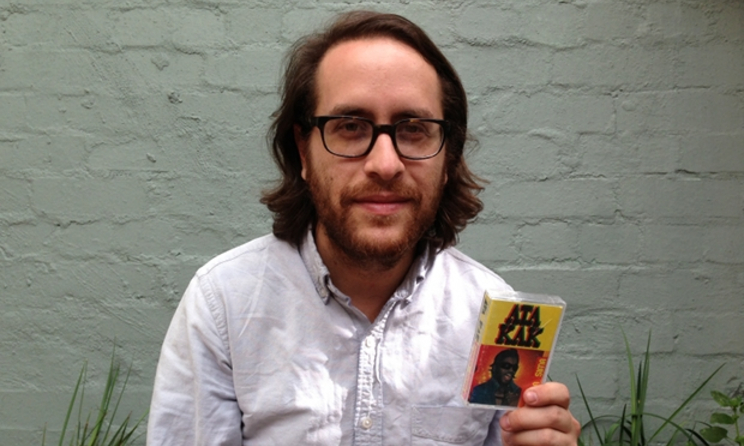
In 2011, Shimkovitz wanted to expand the audience of some of the music he had 'discovered' and grew the ATFA concept from a blog that listed information about his collection of tapes to a record label that would reissue out-of-print releases. The formula to doing so was quite straightforward: track down an artist, strike a 50-50 deal on all album sales and begin production and distribution, albeit the collector has said previously that finding the artist whose album he wants to reissue quickly became a full-time job.
Western excavationists have been often criticised by purists who liken the unearthing of forgotten or unnoticed music in Africa to colonial violence and treasure theft, even if the act results in preserving music and reigniting the careers of the original creators. But Shimkovitz's ethnomusicological background, which was the reason he travelled to Africa in the first place, has always provided an ethical guideline that dictates how his reissues should be curated, particularly in terms of appearance. To this end, ATFA's cover art of the albums the label reissues is much the same as the originals. This, in effect, has stayed true to an aesthetic that is authentic and historical, as opposed to hackneyed reimaginations of retro eras.
One of Shimkovitz's biggest rediscoveries, which was covered widely by media outlets around the world and has by now become a well-known story, is that of Ethiopian great Hailu Mergia who had found fame in his native country with Walias Band. Conflict in Ethiopia under the autocratic rule of Mengistu forced Mergia to emigrate to the US where he ended up driving a taxi. While in Ethiopia, Shimkovitz came across Mergia's 1985 solo album Hailu Mergia & His Classical Instrument and soon after had the artist signed to the ATFA label, which resulted in his resurgence as a musician, decades after his career had seemingly ended.
Awesome Tapes From Africa has released 35 reissues to date, and Shimkovitz is now readying No 36 – Ivorian songstress Antoinette Konan's 1986 self-titled album – on 2 November.
Shimkovitz recently spoke to Music In Africa from Berlin.
MUSIC IN AFRICA: What made you start collecting music?
BRIAN SHIMKOVITZ: I was always a music collector from childhood. I was interested in a wide variety of music as a kid from the age of about 10. I bought a King Sunny Ade tape in a second-hand music shop in my hometown near Chicago in junior high school, and from then I was hearing African pop music here and there. I wasn't super into it until university though.
I was buying used tapes and records all through junior high and high school and just kind of curious about jazz, classical, rap, rave music, but also just obsessed with the usual American kid stuff of the era, like Nirvana. I grew up playing the drums and studying jazz at school. I was very excited to hear Fela for the first time in my freshman year of college.
What influenced you, a regular American kid just listening to what some may call 'strange music'?
I had never travelled outside America and when I had the chance to study abroad I chose Ghana because I wanted to see some place different and because I am dedicated to music and had pretty much no other interests. I was drawn to Ghanaian hiplife around 2002. I had begun studying ethnomusicology at university so it all kind of flowed together for me.
One could say that your specialisation is in West African music. What's the main reason for this?
I spent the most time in West Africa, travelling between Ghana and other countries, so my initial collection of music and basic background knowledge is based around there. Africa is massive so I have never tried to act like I know much about such a diverse place. I focus on the little bits that I have had the chance to visit.
West African music, especially that of Mali and Nigeria, seems to be irresistible to audiences outside Africa. A lot of popular music from Mali just sounds so rhythmically and harmonically similar to Western pop music, but with better singers and cooler drummers. I think there is such a huge array of sounds around the various African countries in other regions that have been more or less ignored by international audiences.
What can be done to expose more African musicians around the world?
Awesome Tapes From Africa the blog was started to make it possible for people worldwide to hear very specific regional musical styles. I think for me the Internet made all this possible because I was constantly searching for info about the music I was finding. It was bare-bones until the Internet came along and even then it was very minimal until the age of blogs and Web 2.0.
Nowadays there is a lot more African music of all kinds from every region available through various streaming services based in those particular countries, as you know I am sure. But for a long time, this wasn't the case. People think we make a lot of money from releasing African music, the majority of which is heard for free online, and most artists won't get that many views on YouTube.
When did you hear about Hausa music for the first time?
When I lived in Ghana for a year in 2004 and 2005, I stayed in a neighbourhood that was quite diverse. Part of it was an area known particularly for Muslim folks from various parts of West Africa. I heard the music coming from Northern Ghana and further afield. Many of my friends in that area spoke Hausa and I had heard some of the music on their TV shows and films. Later my general interest in the music of northern Nigeria got me interested in Hausa music and culture. I hope I can visit Nigeria and see many of the different states one day.
Hausa films and music, in particular, reminded me of Bollywood at first but that was because I was sometimes seeing the movies interpreted, with Bollywood films in Ouagadougou cafes and Togolese hotel lobbies.
These days the singing has gotten even more autotuned than ever and it seems like the music itself is more geared toward being heard on mobile phones, as it has so little bass and low end. I follow some of the actors on Instagram and the songs are fun, then someone gave me a lot of Nigerian tapes once and there were Hausa praise songs in there that I liked a lot but I haven't had the chance to read about that. Several years ago I was really into the Hausa style of singing but lately the auto-tune has gotten to be extreme.
What other Nigerian music are you into?
I am very into Fuji music and I wish I could hear all the different singers. I first heard Wasiu (KWAM 1) when I was riding in a taxi in Brooklyn where I used to live. The driver sent me down to Flatbush where I found a Nigerian grocery store with tons of old tapes collecting dust in the backroom.
There was a well-known American ethnomusicologist, Christopher Waterman, who wrote a pretty intensive book on juju and I remember reading that in college and wanting to know more.
Tell us more about the Awesome Tapes From Africa label.
Awesome Tapes From Africa the label exists, I think, to release music that isn't so well known in the rest of the world, music which other labels that specialise in African music wouldn't invest their time and money in. So if other parts of the world get platforms that distribute their music to fans who wouldn't otherwise get introduced to it, then there could be a super huge band from Chad or Guinea Bissau or Central African Republic. Right now in the European and North American music scenes there aren't bands from those places touring to my knowledge. There's tons more space for African music in my opinion.
We have access to so much music at this point in history that if music listeners aren't given something right in front of their faces they might not catch it. Therefore labels and music journalists still exist, somehow.
Why tapes?
When I first visited West Africa in 2002 and then later in the 2000s, it was always tapes. The widest variety of music I could find was on tapes and as a researcher, I've always been interested in the most accessible creative expressions and media. I was always interested in urban popular music so I decided to pursue a research grant for studying hiplife in Accra. Most releases were on tape at that time so when I moved to New York and decided to start this blog it made sense to focus on tapes. Now the project has taken on a more retro tone because of the format focus, but I of course listen to all kinds of contemporary music on whatever format. I am not a cassette fetishist. I found LPs when I was in Ghana but it was never a thing for me. I am not a 'digger'.
Which artists stand out for you?
Ata Kak was a musician whose music no one in Ghana I knew was aware of, but he sort of inspired me to start the blog. Now he is touring the world and having a blast. So that was a lucky, long-term obsession that turned into something bigger than I ever imagined. He is a lovely guy and deserves all the success. And his music is timeless.
Hailu Mergia's music became a thing for me when I found his tape in Ethiopia and then looked for his phone number. He is now playing shows all over the world and recording new albums. He was driving a taxi in DC and now he focuses on music only. His music is a mix of jazz and Ethiopian pop and funk. He plays the keyboard and accordion. We collaborate with the artists to reissue their records and promote them worldwide and split the profits 50-50. Oftentimes they end up touring on the back of the release. We are down to hear any cool artists to see if we can help them.
Any current projects?
Antoinette Konan, the songstress from Ivory Coast, reissue coming out 22 November!


Most popular

Top Naija songs of 2026
31 Mar 2026

Ghana: Mr Eazi and MOLIY’s ‘Comfort’ earns Urban Music Awards nomination
21 Oct 2026

Top Afrobeats songs of 2026
19 Mar 2026

Top amapiano songs of 2026
16 Feb 2026

Open call: CANEX Music Business Lab and Songwriting Camp
15 Oct 2026

Nigeria: CANEX WKND unveils 2026 programme
21 Oct 2026
Disclaimer: Music In Africa provides a platform for musicians and contributors to embed music and videos solely for promotional purposes. If any track or video embedded on this platform violates any copyrights please inform us immediately and we will take it down. Please read our Terms of Use for more.

Subscribe to our monthly Newsletter
Follow us on social media


Please log in to post a comment.