

























































Call for applications: 2023 Arab world grants for training and events

19 May 2023 - 08:07


The Arab Fund for Arts and Culture (AFAC) is calling on individuals or teams working in the arts and culture sector in the Arab region to submit applications for its grant.
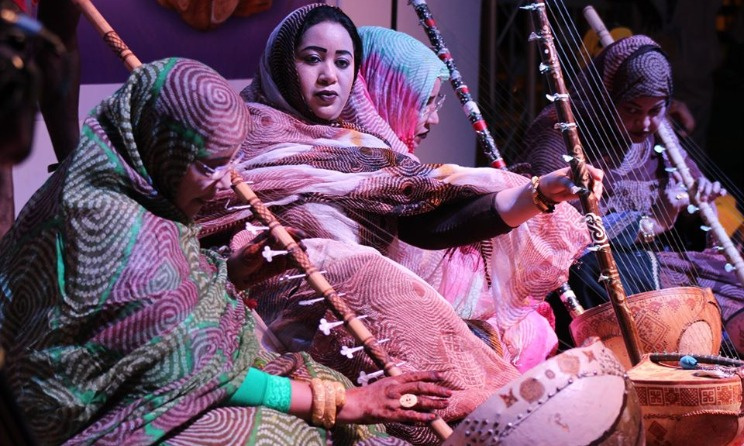
The opportunity is designed to support training and workshops in different cultural and artistic fields, in addition to residencies, symposiums, forums, and festivals (multidisciplinary, music, film, performing arts, visual arts, and literature).
About the grant
The programme provides annual grants up to $25 000 for individuals and teams and up to $35 000 for institutions and collectives.
AFAC reserves the right to distribute its resources for wider impact. Given the high demand for support, it is not guaranteed that potential grantees will be awarded the requested amounts in full. It is therefore encouraged that applicants diversify funding sources for the submitted project.
When the amount solicited from AFAC is above $10 000 yet only covers a portion of the project’s overall budget, the grantee is requested to raise 70% of the remaining budget in order to be awarded the grant. The grant will be cancelled in the event that the grantee is unable to procure that sum within 90 days of being awarded the grant.
The grant will be cancelled in the event that the grantee does not sign the grant contract within 60 days of receiving it. Projects must be completed within two years of signing the contract, during which time grantees are expected to submit the necessary financial and narrative reports.
No grantee will be awarded more than two deadline extensions during the grant period. Such extensions should be justified by the grantee and approved by AFAC. AFAC does not offer mobility grants. Travel expenses may be covered by the AFAC grant only as part of project implementation.
Eligible candidates
- AFAC is open to receiving project applications from all individuals from the Arab region working in arts and culture irrespective of age, years of experience, country of residence (the Arab region or the diaspora), race, ethnicity, gender, or religion.
- AFAC also accepts proposals from local, regional, and international institutions whose projects are related to arts and culture from the Arab region.
- These include artistic, cultural, social and educational institutions, galleries, centres and both governmental and non-governmental organisations that engage with regional arts and culture.
Ineligible candidates
AFAC will not consider applications submitted by:
- Members of the AFAC board of trustees, their business partners or family members.
- AFAC staff members, their business partners or family members.
- Members of the current year’s reader and juror committees.
- Applicants with a current open grant.
- Recipients of grants in two consecutive years will not be eligible to apply for the next two consecutive years. For example, if you received a grant in 2020 and another one in 2021, applicants will only be eligible to reapply in 2024.
- Applicants whose submission is being processed. They may not submit another application in any category until the result of the current application is announced.
- Each applicant (individual or institution) can submit one application in the same grant cycle.
Eligible expenses
The AFAC grant covers project-related expenses, including artist fees of up to 30% of the total grant amount. In the case of institutions, up to 30% of the grant amount can be allocated for certain running costs. AFAC and the jury reserve the right to determine whether the proposed running cost items are relevant.
Place and duration
- AFAC will not provide support retroactively to projects that have already been completed.
- For projects that have already started, AFAC will cover the expenses starting from the signature of the contract, if the project is selected.
- Projects may be implemented anywhere as long as the applicant fulfils the above-mentioned eligibility criteria. The project’s time frame should not exceed 24 months.
How to apply
- Applications are only accepted through the AFAC online forms available on the official website. Applications submitted via regular mail or email will not be considered.
- Applicants will receive a confirmation email once the online application has been submitted. Applicants are advised to follow up on the full completion and delivery of the requested material, as AFAC will not contact applicants if any part of their application is incomplete.
- Incomplete applications will not be considered.
- To apply, applicants should login with their usernames and passwords. Once logged in, they should visit the page of the programme they are interested in applying for and click on “apply.”
- Applicants who don’t have an existing account, should create one, here.
- The deadline for submission is 4 July.
Application form previews:
Performing Arts Grant for individuals and project teams can be previewed here and here, respectively.
Supporting material
Applications lacking supporting material will not be considered, nor will the applicant be contacted to send the missing material. The submission of the below listed supporting material/samples for the project you are applying with is required:
- A detailed budget must be included for all projects.
- Samples of previous works/projects (maximum of three) are required unless the project you are applying with is your first work.
- For projects involving training and workshops, the following supporting materials are required:
- Training curriculum; including titles and briefs of the sessions
- CVs of the trainers and agreement/commitment letters confirming their participation.
- For projects that include an exhibition of artistic/cultural work, proof of consent of the exhibited artists and commitment of a venue are required.
- For projects that involve work with external consultants, a commitment letter is required.
- For projects that involve multiple performances/festivals (theatre, dance, music, screenings, and multidisciplinary projects), the following supporting materials are required:
- Proof of consent of participating works.
- Proof of committed venue/space.
- Supporting files/samples of submitted projects and/or previous work smaller than 10MB should be uploaded directly to the application.
- Supporting files/samples of submitted projects and/or previous work larger than 10MB should be included as links to files on sharing websites (such as Dropbox, Vimeo, and YouTube).
Note: For further inquiries regarding supporting material, contact the AFAC grants management team via email at r[email protected].
Evaluation and selection process
Following the submission deadline, AFAC will conduct an administrative check to ensure that applications are complete and adhere to the guidelines. Only applications that pass the administrative check will be processed. An independent readers’ committee will then assess the submitted proposals and select the applications to be sent to the independent jurors’ committee. The jurors will assess the selected applications and choose the projects to be awarded grants. Please see the AFAC Evaluation Process document for more details. An automatic email will be sent to the applicants whose projects do not pass the initial selection phase.
Grants announcement
The grant winners will be announced and published on the AFAC website and social media platforms after the jury meetings conclude. An automatic email will be sent to applicants whose projects are not selected to receive grants.
Grant contract
As soon as the grant awardees are announced, AFAC will draft a grant contract to be signed by the grantees. The contract will include start and end dates, grant amount, budget breakdown, financial requirements, payment schedule, general provisions, implementation and amendments, required reports and project results.
Payment conditions and schedule
For grants up to $10 000, 70% of the grant amount will be transferred to the grantee upon signing the contract. The remaining 30% will be transferred upon completion of the project and submission of deliverables as well as narrative and financial reports. For grants exceeding $10 000, grant instalments will be disbursed only after the grantee submits proof of securing 70% of the remaining total project budget from a source other than AFAC. When the latter condition is fulfilled, grantees will receive 50% of the grant amount as a first payment.
When 80% of the first payment has been spent, the grantee must submit an interim narrative and financial report to AFAC. Once the report is approved, grantees will receive 35% of the total grant amount as a second payment. With submission of the final deliverables and reports, the remaining 15% of the total grant amount will be transferred and the grant will be closed.
Grantees should provide AFAC with 10 copies of the final outputs of the project, where applicable.
View the original call here.


Most popular

Top Naija songs of 2026
31 Mar 2026

Ghana: Mr Eazi and MOLIY’s ‘Comfort’ earns Urban Music Awards nomination
21 Oct 2026

Top Afrobeats songs of 2026
19 Mar 2026

Top amapiano songs of 2026
16 Feb 2026

Open call: CANEX Music Business Lab and Songwriting Camp
15 Oct 2026

Nigeria: CANEX WKND unveils 2026 programme
21 Oct 2026
Disclaimer: Music In Africa provides a platform for musicians and contributors to embed music and videos solely for promotional purposes. If any track or video embedded on this platform violates any copyrights please inform us immediately and we will take it down. Please read our Terms of Use for more.

Subscribe to our monthly Newsletter
Follow us on social media


Please log in to post a comment.