






































NEFCISA
NEFCISA

The Music In Africa Foundation (MIAF) is proud of its partnership with the Industrial Development Corporation (IDC) as a Strategic Implementing Partner (SIP) for its Social Employment Fund (SEF). Through this collaboration, MIAF is running a national programme that is creating jobs, addressing skills gaps, and strengthening South Africa's creative industries — in line with the SEF's overarching goal to generate work for the common good and build community value through employment, social contribution, and inclusive economic participation. Operating under the banner NEFCISA (National Employment Facility for Creative Industries in South Africa), the initiative is recruiting and training participants, matching them with host organisations, and has already placed 1 500 workers across the country — surpassing its original target of 1 000. NEFCISA is delivered through a network of 20 host organisations spanning five provinces, who are actively hosting participants and contributing to work for the common good across South Africa's creative and cultural industries. Key Objectives: Support employment and entrepreneurship in the creative industries. Offer skills development and training programmes. Foster partnerships between public and private creative sectors. Promote South African creativity at both provincial and national levels Foster community development through social contribution.

ACCES
ACCES

ACCES Conference and Showcase Festival is Africa's leading music industry gathering, bringing together the people shaping the future of the continent's music business. Artists, entrepreneurs, executives, investors, policymakers and cultural leaders from across Africa and around the world come to ACCES to build partnerships, exchange ideas, discover talent and create new business opportunities. Since its launch in 2017, ACCES has become the continent's premier platform for professional exchange and music market development. Combining a high-level conference with a curated showcase festival, networking, exhibitions and industry programmes, ACCES offers a unique space where creativity meets business and where African music connects with the global industry.

Gender@Work
Gender@Work

Music In Africa Gender @ Work is a three-year training programme aimed at upskilling and increasing the participation of female professionals in the African music sector. Launched by the Music In Africa Foundation (MIAF) in April 2019, the programme is connected to the MIAF’s ACCES music conference – a pan-African event held in a different African country every year. This connection enables the programme to reach new participants in a different African country every year. The programme marks the beginning of a more concerted effort by the Foundation to support the participation and inclusion of women in all facets of its programmes and the music sector in Africa as a whole. Over the three years, the programme will aim to address gender imbalances in the sector through training, lobbying, facilitating knowledge exchange and dialogues that foster the interest of women. The broader objectives of the programme are to: Provide industry training for women on critical music industry skills, focusing on: Stage management Electronic music production and recording Music business management Technical knowledge Provide an opportunity for both professional and aspiring women to benefit from the Music In Africa network and its broad range of activities in 2019, 2020 and 2021. Provide a solution-based platform in the form of a round table at ACCES with a view to identify challenges, discuss opportunities and lobby for the interests of female practitioners. Offer participants the opportunity to benefit from programmes offered by MIAF’s partners. Increase access to educational materials. Integrate participants in the broader ACCES programme to maximise experience and exposure to the industry. Record and present training materials on the www.musicinafrica.net, including but not limited to tutorials, templates and other best-practice materials. Communicate women-based themes that support the initiatives and messages of the programme. MAIN TRAINING ACTIVITIES Training in first country (Ghana): In the first year, participants will be trained on all aspects of stage management by a team of experienced stage managers from 10 to 17 November 2019. The programme will offer robust classroom training as well as practical, hands-on training in which participants will also be given the opportunity to manage various aspects of the ACCES performance programme. Training in second country: The second training iteration will take place at ACCES 2020 when the programme will diversify its course to include music production lessons and training on other music business topics. A round-table platform will also be introduced to coincide with the ACCES programme. Training in third country: The third training iteration will take place at ACCES 2021 in a different country, offering an advanced course. HOW DO YOU GET INVOLVED?  As a participant, facilitator or trainer: The programme enrolls up to 12 trainees every year. All opportunities are advertised publicly on this website, and will be added to this page. Please keep checking this page for new calls (below under UPDATES & CURRENT OPPORTUNITIES). As a partner Please contact Claire Metais at [email protected]. APPLY The call for applications for 2020 will be announced soon. The Music In Africa Gender @ Work programme is made possible with the support of the Prince Claus Fund, Siemens Stiftung and Goethe-Institut.

Sound Connects Fund
Sound Connects Fund

For cultural and creative practitioners and organisations operating in southern Africa, access to funding remains a major challenge. The COVID-19 pandemic has also had a massive impact on government policy, spending and the economy in general, and has seen spending on culture being moved further down the list of priorities. Further, the cultural and creative industries repeatedly cite four main areas where investment is needed for growth, which are increased visibility, mobility including access to new markets, finance and support structures.

Instrument Building And Repair Project

Experience the Vibrations African Instruments Exhibition online in 3D

opportunities

Call for participation: Ingoma Competition in SA

14 Feb 2023 - 07:17

cc-img

The Playhouse Company, an agency of the Department of Sport, Arts and Culture, is inviting dance groups to participate at the 10th edition of the Ingoma Competition, which will take place at Curries Fountain Sports Development Centre in Durban, South Africa on 18 March.
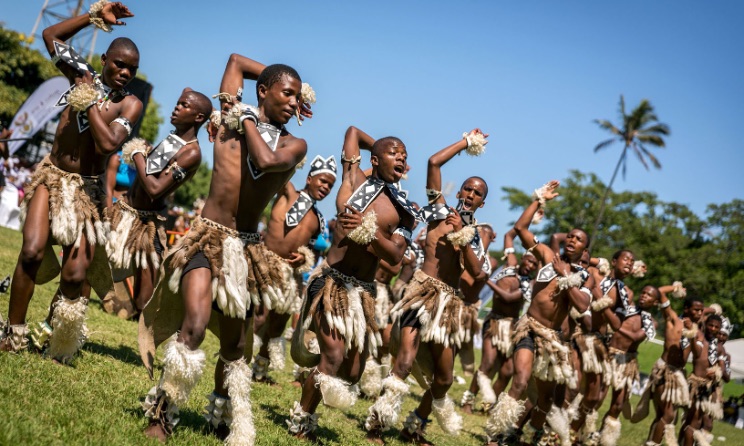
Dance groups interested in participating should arrive promptly at 9am.

Dance groups interested in participating should arrive promptly at 9am. Admission is free and all are welcome.

The competition is presented in accordance with The Playhouse Company’s mandate to produce diversely equitable live productions in the fields of music, drama, and dance, throughout KwaZulu-Natal.

Launched a decade ago, the event took a two-year gap due to the COVID-19 pandemic. This year’s 10th anniversary landmark will showcase 42 Zulu dance groups, who will pit their skills against each other in a bids to take home the coveted prizes in each category.

Groups will be judged on their performances in the following seven dance style categories:

Omama Besigekle

This style was created for women, ideally married women, as an alternative to amahubo, a dance strictly for men chanting to the ancestors. Performed at weddings, isigekle is accompanied by singing, clapping and drumming, and dancers avoid raising their feet too high to show respect. Dancers wear headgear (isicholo) and traditional skirts (isidwaba). They carry small shields and knobkerries, and each group has a specific theme and costume colour scheme.

Ingoma yezinsizwa

Accompanied by singing, clapping and drumbeats, this highly exciting dance form features bare feet and traditional costumes, including a form of animal-skin apron. The dance is commonly performed during young men’s rite of passage formalities, as well as at weddings and other traditional ceremonies. It is most distinctive for the dancer having to keep a leg straight while kicking it up to reach the side of the ears. Dancers carry shields and decorated sticks.

Indlamu

Performed with small shields and sticks, this is a beguiling, striking war dance that was introduced by Shaka Zulu to psyche up his ambato (warriors) while they were being prepared for battle. Resembling a military drill with strict precision, the dance style has dancers following a specific pattern, accompanied by drums and minimal singing. A lot of showing off is highlighted, accompanied by much loud whistling, to lend encouragement to whoever is dancing at the time.

Umzansi

The history specific to umzansi dancing, as recounted by Johnny Clegg, “is that it originated around Bergville, Ndwedwe, Maphumulo and the Umvoti area of KwaZulu-Natal, it was taken up by the migrant workers around eThekwini and became very popular at the organised dance competitions that were held around the end of each year.”

Ushameni

Named after the Shameni River in Umsinga, KwaZulu-Natal, this style was formed at a time when railways were being built. It is a variation of ingoma yezinsizwa, mixed with indlamu, but with a regional flair. Dancers bend one leg during the dance to show the ankle, and they follow specific line formations, stretching their hands up high, while accompanied by singers who also clap. The dancers wear pants and vests or T-shirts, as well as traditional sandals (udabuluzwane).

Ingoma yezintombi

This colourful dance is specific to maidens. It is linked to different rite-of-passage ceremonies for young girls – such as when they reach puberty, undergo virginity tests or to celebrate lobola and weddings. The dance is accompanied by drumming, clapping and singing, and the music is highly energetic. The dancers’ costumes are traditional skirts made from colourful beads. A requirement of the dance is that legs have to be raised high.

Ingoma sikhuze

This dance, another variation of ingoma yezinsizwa, originated in the Umbumbulu region, becoming popular after the arrival of the missionaries. A pattern formation, known as isifuba, performed by more experienced dancers, is at the centre of this dance style. It is supported by isipani, referring to dancers that shadow whatever is done by isifuba: The typical costume consists of thigh-length socks with stripes and short skirts (sometimes rugby shorts). The leg is not raised very high in this dance, for which dancers carry shields and traditional sticks which are also used to create formations. Accompaniment is via song and hand clapping (ukukhwahla).

View the original call here.

Please log in to post a comment.

Most popular

Disclaimer: Music In Africa provides a platform for musicians and contributors to embed music and videos solely for promotional purposes. If any track or video embedded on this platform violates any copyrights please inform us immediately and we will take it down. Please read our Terms of Use for more.

newsletter banner

Subscribe to our monthly Newsletter

Follow us on social media