





































NEFCISA
NEFCISA

The Music In Africa Foundation (MIAF) is proud of its partnership with the Industrial Development Corporation (IDC) as a Strategic Implementing Partner (SIP) for its Social Employment Fund (SEF). Through this collaboration, MIAF is running a national programme that is creating jobs, addressing skills gaps, and strengthening South Africa's creative industries — in line with the SEF's overarching goal to generate work for the common good and build community value through employment, social contribution, and inclusive economic participation. Operating under the banner NEFCISA (National Employment Facility for Creative Industries in South Africa), the initiative is recruiting and training participants, matching them with host organisations, and has already placed 1 500 workers across the country — surpassing its original target of 1 000. NEFCISA is delivered through a network of 20 host organisations spanning five provinces, who are actively hosting participants and contributing to work for the common good across South Africa's creative and cultural industries. Key Objectives: Support employment and entrepreneurship in the creative industries. Offer skills development and training programmes. Foster partnerships between public and private creative sectors. Promote South African creativity at both provincial and national levels Foster community development through social contribution.

ACCES
ACCES

ACCES Conference and Showcase Festival is Africa's leading music industry gathering, bringing together the people shaping the future of the continent's music business. Artists, entrepreneurs, executives, investors, policymakers and cultural leaders from across Africa and around the world come to ACCES to build partnerships, exchange ideas, discover talent and create new business opportunities. Since its launch in 2017, ACCES has become the continent's premier platform for professional exchange and music market development. Combining a high-level conference with a curated showcase festival, networking, exhibitions and industry programmes, ACCES offers a unique space where creativity meets business and where African music connects with the global industry.

Gender@Work
Gender@Work

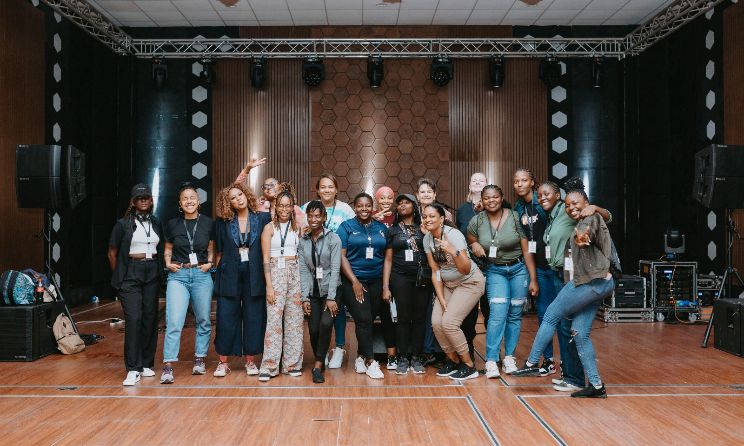
Music In Africa Gender @ Work is a three-year training programme aimed at upskilling and increasing the participation of female professionals in the African music sector. Launched by the Music In Africa Foundation (MIAF) in April 2019, the programme is connected to the MIAF’s ACCES music conference – a pan-African event held in a different African country every year. This connection enables the programme to reach new participants in a different African country every year. The programme marks the beginning of a more concerted effort by the Foundation to support the participation and inclusion of women in all facets of its programmes and the music sector in Africa as a whole. Over the three years, the programme will aim to address gender imbalances in the sector through training, lobbying, facilitating knowledge exchange and dialogues that foster the interest of women. The broader objectives of the programme are to: Provide industry training for women on critical music industry skills, focusing on: Stage management Electronic music production and recording Music business management Technical knowledge Provide an opportunity for both professional and aspiring women to benefit from the Music In Africa network and its broad range of activities in 2019, 2020 and 2021. Provide a solution-based platform in the form of a round table at ACCES with a view to identify challenges, discuss opportunities and lobby for the interests of female practitioners. Offer participants the opportunity to benefit from programmes offered by MIAF’s partners. Increase access to educational materials. Integrate participants in the broader ACCES programme to maximise experience and exposure to the industry. Record and present training materials on the www.musicinafrica.net, including but not limited to tutorials, templates and other best-practice materials. Communicate women-based themes that support the initiatives and messages of the programme. MAIN TRAINING ACTIVITIES Training in first country (Ghana): In the first year, participants will be trained on all aspects of stage management by a team of experienced stage managers from 10 to 17 November 2019. The programme will offer robust classroom training as well as practical, hands-on training in which participants will also be given the opportunity to manage various aspects of the ACCES performance programme. Training in second country: The second training iteration will take place at ACCES 2020 when the programme will diversify its course to include music production lessons and training on other music business topics. A round-table platform will also be introduced to coincide with the ACCES programme. Training in third country: The third training iteration will take place at ACCES 2021 in a different country, offering an advanced course. HOW DO YOU GET INVOLVED?  As a participant, facilitator or trainer: The programme enrolls up to 12 trainees every year. All opportunities are advertised publicly on this website, and will be added to this page. Please keep checking this page for new calls (below under UPDATES & CURRENT OPPORTUNITIES). As a partner Please contact Claire Metais at [email protected]. APPLY The call for applications for 2020 will be announced soon. The Music In Africa Gender @ Work programme is made possible with the support of the Prince Claus Fund, Siemens Stiftung and Goethe-Institut.

Sound Connects Fund
Sound Connects Fund

For cultural and creative practitioners and organisations operating in southern Africa, access to funding remains a major challenge. The COVID-19 pandemic has also had a massive impact on government policy, spending and the economy in general, and has seen spending on culture being moved further down the list of priorities. Further, the cultural and creative industries repeatedly cite four main areas where investment is needed for growth, which are increased visibility, mobility including access to new markets, finance and support structures.

Instrument Building And Repair Project

Experience the Vibrations African Instruments Exhibition online in 3D

Reviews

Delasi — #ThoughtJourney

23 Oct 2015 - 10:24

cc-img flag-img

Artist: Delasi
Album: Thought Journey
Label & Year: Independent, 2015

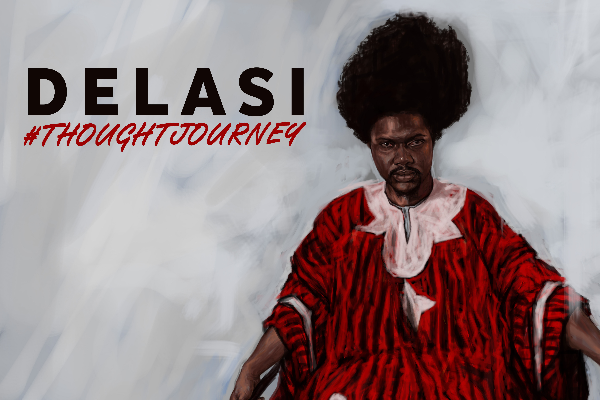
#ThoughtJourney cover

‘You are way ahead of all these people because you can rap and sing,’ someone tells Ghanaian artist Delasi early on his debut album #ThoughtJourney. That sentiment as expressed is both consolation and critical insight. It also sells the artist short. Delasi may rap and sing—and he does—but he is essentially a spoken word poet who has recorded an album. It is all there in his themes and the minimalist production on show. Clearly, #ThoughtJourney isn’t for clubs; there are no pop domination plans here. In its place is intimacy. As the contemporary Ghanaian scene thrives on hiplife, Delasi has provided the alternative.

There are social concerns but even a conscious poet has women on his mind. But when women and lust make an appearance on the pair of songs ‘Adabraka Girls’ and ‘Miss Material’ it is about the transactional basis upon which much sex is carried out. In other words, Delasi fuses sex with consciousness.

‘Adabraka Girls dropped out of tuition,’ he sings. ‘Grass to Grace and back again.’ The deft trick here is that Grace could refer to the state of grace or to a pimp named Grace.

The narrator on 'Adabraka Girl' try as he may to show support by not judging a fallen woman appears motivated by bitterness. As the story goes, this one time he expected a discount from one such girl but never got it. He ‘caught feelings’ and true to the nature of transactional sex those feelings were unreciprocated. Thus the bitterness.

The conceit of a bitter, unreliable narrator comes up again on ‘Miss Material’. Madonna provided the manifesto of the material girl back in 1984, but we haven’t quite heard enough from or about the guys who can’t afford her. Now we know what those guys do. They whine. Compare the glee in young Madonna’s voice when she says, ‘We are living in a material world and I am a material girl!’ to the sombre, pleading tone of ‘Is that all you care about, Miss Material?.... we used to be good friends, hook up every weekend.' Indeed. And now the rejection rankles: 'She was all innocent now she’s full of sin.’

Despite the distance and decades both songs are in conversation. Delasi’s begin with a woman saying ‘Broke ass I’m leaving you’. Madonna’s begins with a burst of pop joy. Delasi's narrator may not know it but there’s only one winner here and she knows herself.

The next time women show up on ’Pigment Matter’ about ‘bleaching creams and tanning lotions’, the listener will be right to question Delasi’s view of women. Yet #ThoughtJourney brings something different to mainstream's presentation of women—he may protest too much but he has made femalefolk the centrepiece of his consciousness without objectifying them. And in any case, there is a counterpoint pair of songs. ‘She’s Ghanaian’, where the subject could be woman or country. It is a celebration of both. (But Delasi is a poet carrying melancholy in his pouch: ‘If the sun dey shine for your eyes make you no smile, maybe just frown ‘cos there’s nothing to smile about.’)

‘Fine Gal’, the second of the counterpoint songs, speaks of love—but what is love between man and woman without lust? ‘The way she kisses me…she looks like she’s heaven-sent. Like an angel so innocent but she seducing me.’ The song has #ThoughtJorney’s most delightful beat, over which Delasi employs a languorous flow like he is in the throes of a pleasure that cannot be named. So delicate is this happiness that calling its name soils its nature. Our narrator’s switch in demeanour—from bitterness to languor—shows a fact that abides in men-women relations: a woman is the solution to the problems men blame on womenfolk. It is, in part, the logic behind remarriages.

#ThoughtJourney loses its sparseness towards the end and becomes something that could work in a club, especially at ‘Lom Na Va’ and ‘Enyonam’. But at that point the listener may have tuned off. Running for 76 minutes, #ThoughtJourney is a trip too long. The skits are mostly disposable as are some songs. There was a chance for an ‘all killer, no filler’ album but Delasi has not taken that route.

‘Destination greatness,’ he says at some point. But like an artist unsure of the greatness of his material, Delasi opts for great length. It’s a mistake. With some editing #ThoughtJourney could easily be a thriller, delivering delights every four minutes—instead it’s a reference book. Pick it up, skip to your favourites, close. Repeat.

Nonetheless, the excess works within the ambit of thought journeys, because there is always a chance that certain stops are of interest only to the driver/thinker. You can't censor a poet's thoughts. As he says about the album, ‘I want you to hear what’s inside my mind. I want to be able to start discussions through the music.’

He is wrong, though. Discussions are fine. But the thing to do as a passenger on this ride is to lay back, enjoy the view. And, yes, play ‘Fine Gal’ again.

Please log in to post a comment.

Most popular

Disclaimer: Music In Africa provides a platform for musicians and contributors to embed music and videos solely for promotional purposes. If any track or video embedded on this platform violates any copyrights please inform us immediately and we will take it down. Please read our Terms of Use for more.

newsletter banner

Subscribe to our monthly Newsletter

Follow us on social media