

























































Fatoumata Diawara: Music is presenting yourself as you truly are
31 Oct 2024 - 10:08


As the headliner at the 25th edition of the Standard Bank Joy of Jazz Festival held recently at the Sandton Convention Centre in Johannesburg, South Africa, Malian singer-songwriter Fatoumata Diawara dazzled. Stepping onto the stage in regal attire, her guitar riffs and vocals in Bambara showcased both softness and strength.

Earlier in the morning, during the press conference organized before the festival, I had the privilege of sitting down with the singer for an interview.
Adorned in a multi-coloured jacket with African prints and sporting cowrie shells in her hair, Fatoumata is instantly recognisable at the rooftop bar of the Sandton Sun Hotel’s terrace. She is clearly the most sought-after artist at this press junket, as evidenced by the activity of journalists around her table.
“She is an interviewer’s gem,” a journalist who has just completed her interview with the artist told me as I headed towards her. Just a few minutes into our discussion, I came to the same conclusion. Indeed, despite the short time allocated to each journalist, Fatoumata is gracious and generous with her time and responses. I can feel the "apparent desire to convey a message," noted by my colleague in Senegal almost a year ago.
“I am particularly moved because this is the very first time I am performing in South Africa,” she says as we begin our conversation. “South Africa is so deeply rooted in history. You can't talk about South Africa without mentioning its history, culture, and great artists like Miriam Makeba, Hugh Masekela, Busi Mhlongo, etc."
Fatoumata speaks at length about the connection she feels to South Africa. “This country has left a mark on all Africans, and even though this is my first time here, I feel as if I’m coming back to a place I’ve always belonged to. I’ve always loved its strong culture, its colours, its traditional clothing, though I feel like some of that is disappearing a bit. In fact, in my concerts, I often wear outfits inspired by South Africa, even though I hadn’t been here before."
Indeed, Fatoumata appeared on stage on the first night of the festival wearing a traditional Zulu beaded hat.
"Performing tonight for the first time in this country is a very important moment for me. It won’t just be another concert, but a major milestone in my career," she adds.
The Standard Bank Joy of Jazz Festival, I explain to her, is held annually in September, a month that is referred to as Heritage Month, dedicated to celebrating South African cultural traditions.
“How do you stay connected to your Malian and African roots while trying to appeal to a mainstream international audience?” I asked as our conversation shifted to artistic identity, cultural preservation, and the African women who have inspired her.
“I believe it’s a decision an artist must make from the very beginning of their career. The way you present yourself to your audience is what they will remember. For instance, if you start your career singing in English or French, that’s what your audience will associate with you, and they won’t want you to do anything else. From the start, I decided that I wanted to be the continuation of all those great African women: Miriam Makeba, Angélique Kidjo, Oumou Sangaré... All these singers made themselves heard around the world while staying true to themselves. These women always sang in their respective African languages, and they always remained loyal to and proud of their African culture. They always presented themselves as African singers, nothing else. They’ve won Grammys and many other awards with this African identity."
You can feel that this question of cultural identity and authenticity is essential to Fatoumata and is part of her artistic DNA. She speaks with a soft, calm, but passionate voice.
She continues: “This has always been clear to me from the start. These women are my idols, and I follow their paths. The younger generation doesn’t need to look elsewhere for inspiration because all the women I just mentioned are our own role models.”
“Looking at the new generation of African artists, many of them get trapped early on in styles that aren’t theirs, and that limits them. At this rate, I worry about the future of African music, and that in the future, there won’t be many singers who represent the African woman.
“These singers I have mentioned were celebrated worldwide, with their headscarves, their bazin, wax, and bogolan outfits. So, I wonder why the younger generation is so determined to adopt a style in the name of a so-called modernity that, in the long run, we don’t know where it will lead us.
“I would say that my music is open-minded because I allow myself to draw from jazz, pop, rock and roll, and blues, but the root remains Malian. That’s why I only sing in my native language, Bambara, even if I include some French and English phrases in certain songs. I display my identity clearly and with pride. That’s what has kept me touring worldwide for many years.”
Finally, I ask her how she connects with a new audience, like at this festival, especially with those who may not be familiar with her musical style or repertoire.
“During my performances, I carry with me Mali, Africa, and I present my vision of music. Because for me, that’s what music is about: presenting yourself to the world as you truly are. I started my musical career performing in bars in Paris. Paris being a cosmopolitan city, I began very early performing in front of diverse audiences, with people from Senegalese, Nigerian, French, Congolese, Malagasy, British, and American backgrounds, to name a few. These beginnings shaped my international career and helped me build the experience that now allows me to perform for all kinds of audiences across the world.”
This feature was originally first in French here.


Most popular
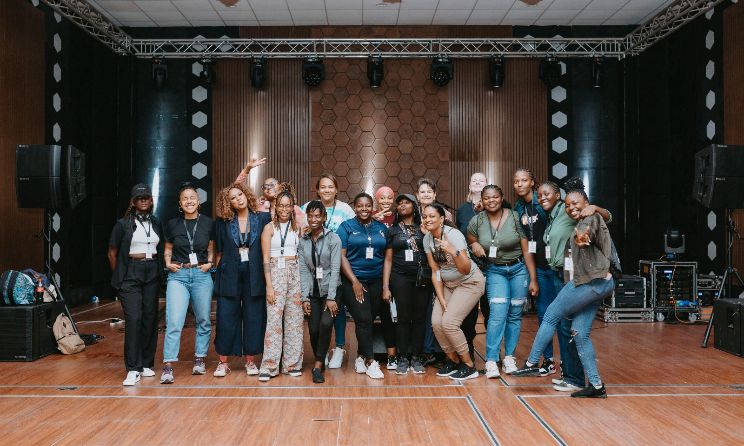
Open call: 2026 Gender@Work music industry training in Johannesburg
09 Oct 2026
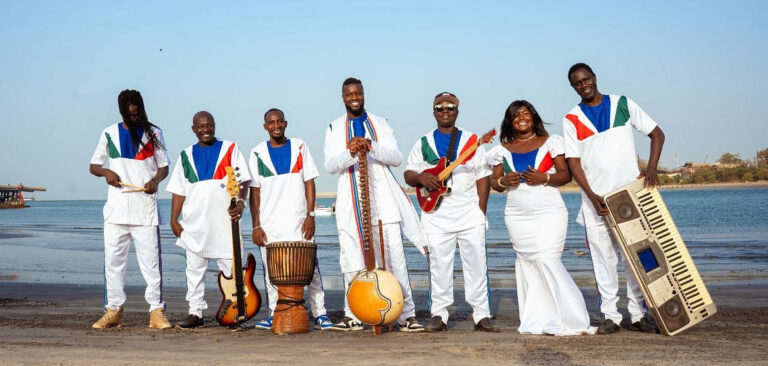
Gambia: Suntou Susso announce UK tour for ‘The Path of a Griot’
09 Oct 2026

Top amapiano songs of 2026
16 Feb 2026

Top Afrobeats songs of 2026
19 Mar 2026
Call for applications: ACCES 2026 Emerging Artist Spotlight Competition
01 Oct 2026

Top Naija songs of 2026
31 Mar 2026
Disclaimer: Music In Africa provides a platform for musicians and contributors to embed music and videos solely for promotional purposes. If any track or video embedded on this platform violates any copyrights please inform us immediately and we will take it down. Please read our Terms of Use for more.

Subscribe to our monthly Newsletter
Follow us on social media


Please log in to post a comment.