


















































How to make a living as a musician in Malawi
17 Jun 2015 - 13:38


By Gregory Gondwe
Making a living in Malawi as a musician is not easy because the industry is disorganized with little regulation, leading to a loss of potential revenue for the sector. However, there are activities that allow for an artist to generate an income. This text provides an overview of some of these.
Recording deals
Malawi has no established record labels and no professional recording studios[i]. There are therefore no meaningful record deals, except on a few occasions where a group of performing artists has teamed up to offer contracts to performers, although these seldom last long. Malawi has plenty of uncoordinated and unprofessionally run recording spaces mistakenly called studios. Most musicians end up establishing such spaces themselves. In Lilongwe’s Area 23 alone, there are different places that are called studios which do not fit such a definition. For example, one studio in the capital uses blankets hanging on a few ropes for soundproofing and an ordinary microphone removed from a tape recorder wrapped in foam and hung from the ceiling. Be warned: such spaces that are mistaken for studios are plenty!
Record sales and distribution
In the past, musicians would visit these places and some other professionally operated studios like Andiamo Studios[ii] (owned by the Catholic Church which has now since changed to Alleluya Studios[iii]) and MC Studios, which would record musicians. Soon after getting the master copy, they would then take it to Afri Music Company[iv] (popularly known as O.G Issa) for duplication and distribution of their albums. Until 2012, this company had been doing this for the last 30 years and had seven wholesale outlets that it was supplying, where street vendors would visit to purchase music albums that they would then sell. At that time, the vendors would travel from all across the country to purchase album cassettes for re-sale. However, since the company was closed, musicians have been struggling to sell. In the past, one artist could sell 600 000 copies of an album, but now they can barely sell even 500 copies (according to an interview with Copyright Society of Malawi executive director Dorah Makwinja).
Lately there has been the introduction of online sales and streaming platforms such as Malawi-Music.com, the first online platform to stream local music in Malawi[v]. However, these have largely left out the majority of Malawi’s music-buying populace because of limited access to the internet and a lack of knowledge of credit card transactions. In February 2015, a Malawian who studied in Glasgow launched Mvelani.com (Chichewa for ‘listen’), which international media erroneously called “the African nation’s first music streaming platform”[vi]. Already it has courted trouble with some top Malawian musicians. One of the country’s top selling musicians, Lawi, has since asked him to stop streaming his music because like all the local artists that can be found there, they were never asked[vii].
Live performance & touring
Unlike in the past, musicians are no longer dependent on the sales of their albums on the market but are rather conducting local tours to earn money from live performances. As a result of the decline in income from record sales, most musicians are resorting to conducting live performances in different spots of the country from January to December without enough resting space and time for new productions in studios. A major challenge in this regard is the lack of musical equipment. Other entrepreneurs have taken advantage by investing in this aspect and hiring out their equipment to the musicians. There are at least three investors in Malawi that are known to lend out their musical equipment. These include lawyer Jai Banda[viii] who trades as Entertainers Promotion [ix], sound engineer Lemekeza Phiri[x], as well as Mibawa One Stop Multimedia and Events Management Centre owned by entertainment entrepreneur John Nthakomwa[xi].
Royalty collection
The Copyright Society of Malawi (Cosoma)[xii] was established in 1992 and it operates under the 1989 Copyright Act, which protects copyrights and "neighbouring" rights in Malawi. There are three ways that musicians in Malawi can earn through royalty collections. Firstly, Cosoma collects mechanical royalties that it gives to an artist after they record with a record company. Secondly, there are broadcasting royalties that come from airplay of an artist’s music by a radio or TV station. Thirdly, there are public performance royalties, which is the money that the artist earns when his or her music is played in public places like bars, public transport system, hotels etc.
Dora Makwinja, Executive Director of Cosoma, says in the past they used to keep data on sales of music by authorized distributors, especially those that they had given licenses. She says when Afri Music Company was still in the business of producing and distributing music, they used to have a good database of record sales – and even for others who were also in the same business because there was some kind of control. Before, Makwinja says the system was beneficial to musicians. For example, in 2009 musician Lawrence Mbenjere set a new record when he became the first musician to take home money in excess of over K2.5 million (over US$5700) in royalties[xiii]. Now, with parallel markets where musicians are also selling their own musical works, it is difficult to have complete data of record sales. This leads to a huge loss of royalty collection.
There have also been challenges in collection, especially broadcasting royalties. Some radio stations, including the state-owned Malawi Broadcasting Corporation(MBC)[xiv], have been failing to remit the royalties[xv]. At one time in 2013, MBC owed Cosoma K45 million (over $US100 000)[xvi]. To solve this, the Malawi Communication Regulatory Authority (Macra)[xvii] announced that it has acquired a Consolidated ICT Regulatory Management System. Cosoma Senior Licensing Officer Rosario Kamanga says this will help them managing broadcasting royalties because other broadcasting institutions where neither logging the number of times they had played music of artists nor indicating at all whether they had played it or not. [xviii]
Other opportunities
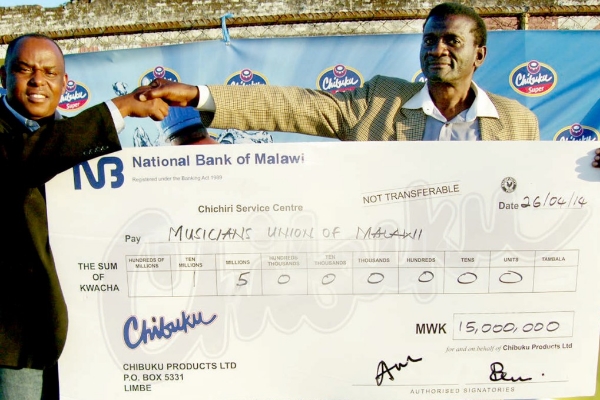
Other opportunities that the Malawi musicians have include competitions that are organized by companies in collaboration with Musicians Union of Malawi (MUM)[xix] like the Chibuku Road to Fame competition, where musicians that have never recorded compete for a recording deal, a tour outside the country, as well as money[xx]. There is also the Music Crossroad competition, which allows budding musicians to compete where the participating artists benefit from workshops while the winners get scholarships and attend international festivals[xxi].
Dora Makwinja of Cosoma says her institution has facilitated a number of workshops for musicians as well as other artists in various arts disciplines. For example, in 2013 they had two workshops - one on management of creative enterprises and another one on the performance and economic contribution of the copyright-based industries in Malawi. Such training can equip musicians with the skills and knowledge required to ensure they can earn money from their music.
International organisations and corporations also offer a source of potential income. There have been different ventures that music artists have entered in their own personal capacity, like Malawi’s hip-hop artist Third Eye, who has done various musical projects and shows with UNICEF, Goethe Institut, British Council, Coca-Cola, Madonna’s Raising Malawi[xxii] and other similar organizations. At least two telecommunications companies have also engaged Malawi musicians - RnB artist Maskal is Access Communications Limited’s brand ambassador, while Airtel Malawi supports urban artist Piksy.
In 2011, the US Embassy in Malawi also got involved in musical promotion. On 26 September 2011, the Embassy hosted a five-hour workshop on bass guitar and invited Chris Baio of American rock band Vampire Weekend to instruct the class in an exciting learning environment for players of all abilities who were exposed to various styles and techniques of bass guitar[xxiii]. A few months later, on 30 November 2011 and in commemoration of World AIDS Day, the embassy presented ‘Mau a Malawi: Stories of AIDS’, a musical performance by Fulbright scholar Andrew Finn McGill and Malawi’s Peter Mawanga and his band the aMaravi Movement at Crossroads Hotel Auditorium.
The Malawian government is currently trying to introduce music as a career path in the country’s technical college (according to an interview with Luis Msasa, spokesperson for the country’s Technical, Entrepreneurial and Vocational Education and Training Authority (Teveta)[xxiv], an initiative that might turn around Malawi’s music industry. The other potential solution is to facilitate the introduction of entertainment and recreation departments in Malawi’s cities, municipals, towns and district councils.
After everything is weighed and considered, it is clear that Malawi’s music industry has enough talent to take it to the international stage. All that is required is to bring in a semblance of order so that every part of the industry – from identifying and nurturing talent through music schools to building the market through promotion, sales and record deals – is in synch and therefore able to allow musicians to earn a living.


Most popular

Call for applications: ACCES 2026 Emerging Artist Spotlight Competition
01 Oct 2026

Top amapiano songs of 2026
16 Feb 2026

Top Naija songs of 2026
31 Mar 2026

Top Afrobeats songs of 2026
19 Mar 2026
Open call: 2026 Gender@Work music industry training in Johannesburg
03 Oct 2026

AFRIMA 2026: All the winners
12 Jan 2026
Disclaimer: Music In Africa provides a platform for musicians and contributors to embed music and videos solely for promotional purposes. If any track or video embedded on this platform violates any copyrights please inform us immediately and we will take it down. Please read our Terms of Use for more.

Subscribe to our monthly Newsletter
Follow us on social media


Please log in to post a comment.