













































Interview: Boddhi Satva discusses his new album ‘Transition’
19 Oct 2015 - 09:14


Recently featured as one of Music In Africa’s 10 African musicians making it big overseas, Boddhi Satva is the most influential producer to come out of the Central African Republic, and indeed one of the biggest names in global electronic music today. His debut studio album Invocation was released on 2011/2012 on Vega Records/BBE Music. It was championed the world over by tastemakers including Gilles Peterson and showcased the names of musical luminaries such as Oumou Sangaré, C. Robert Walker and Vikter Duplaix.
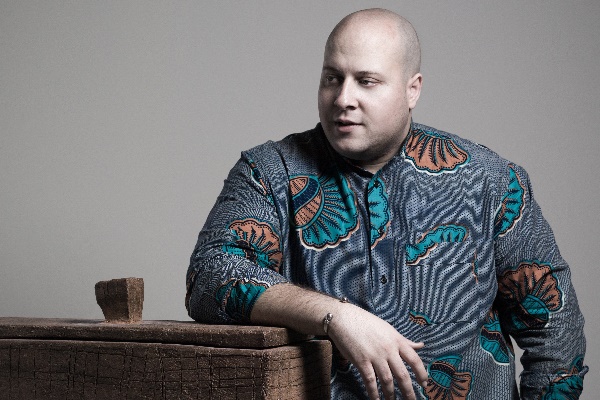
His long-awaited follow-up album, Transition, mines deeper into his signature ‘Ancestral Soul’ sound. The album features a range of outstanding artists including Karun (Kenya), Davido (Nigeria) and DJ Arafat (Ivory Coast), among many others. Production on the album began late in 2012 when the producer returned to CAR for the first time in 12 years. Within months of that visit, his father passed away due to sudden illness. The album was created in his honour and released in September 2015. Boddhi Satva took some time to speak to Music In Africa about the journey…
Music In Africa: As a producer, how does one attempt to create a pan-African sound, or appeal to a pan-African/global audience, without 'watering down' your sound so that it becomes generic? Are you consciously trying to 'represent' Central African Republic, or cover the whole continent, or is it simply about finding your own voice/sound and not bothering about borders?
Boddhi Satva: When you don’t know where you are going, look back where you came from. In times of doubt, that’s what I always do - just to remember myself what was my initial reasons for making music. I always wanted to create music that would bridge the gap between Underground and Mainstream and therefore I’ve never really limited myself to one particular sound. I have refined my style through the years and focused much more on Afrocentric rhythms and sounds.
I’ve never liked to be put in one particular and pre-established category, but understood that I had to somehow be identifiable by as many people as possible. Therefore through thousands and thousands of hours of practice, I was able to create my own sound signature.
That being said, I try to refresh my inspirations and sitting comfortably in one particular vibe isn’t my thing. I can’t stress enough the fact that conformity for an artist is simply allowing yourself to never grow, and consequently limits the chances of your audience to be exposed to your full potential. Because I believe firmly in pan-Africanism, I refuse to also limit myself to one particular region or country. My music through the years has testified that vision.
MIA: You bridge the gap between Africa and the African diaspora in Europe. What would you say makes a particular artist 'African'? Is there a big divide/difference between the African music scene in Africa versus the African music scene in Europe or the US? Which one are you making your music for (or both)?
BS: I make my music for everyone who loves Afrocentric rhythms and sounds, but of course to achieve that I must be open and include certain elements to appeal to as many people as possible.
No, I don’t think that there’s a big difference between the African music scene in Africa and Europe or the US. Maybe the only difference might be that the African diaspora in Europe and the US is more open to African music, no matter where it comes from. Whereas in Africa we tend to have a domination of sounds from Nigeria, Ivory Coast, South Africa, Congo, DRC and Angola throughout the continent.
I recently performed at both the opening and closing of the All African Games in Brazzaville (Republic of Congo). And I was amazed to see how open everyone was, as I played music from all over the continent. Though some were totally unfamiliar with the sounds, they still where grooving. The main divide I see is in the way the business of music is handled in Africa. We have no or few collection companies that are trustable. That is due to the fact that the money collected by some of those companies is never paid to the artists. We need to really work on improving that and finding a way to stop this loss of resources for hard-working and dedicated talents.
MIA: What do you feel is the current state of 'African music' within the global music market? How do you (or other producers) balance tradition/heritage/'authenticity' on the one hand with globalisation/Americanisation/'accessibility' on the other? And how does the concept of 'Ancestral Soul' fit into all this?
BS: I think that in today’s over-connected world, it is almost ludicrous to hope that one can stop globalisation from happening. I don’t believe that producers from the continent see the globalisation of the market as a bad thing, for the simple fact that for example social media have made it super easy to reach out to your favourite artists or get your music heard by anyone at any given time, anywhere in the world.
Now, if you look at this evolution of African music from a slightly conservative perspective, we are for the most part losing the connection with the traditional sounds in certain instances. But overall our traditional/ancestral sounds are more likely to survive modernisation/globalisation than any new trendy genre. Ancestral Soul is for me the sound that has afforded me the opportunity to connect both ancestral/traditional African music with more electronic or modern melodic or rhythmic elements.
MIA: Can you elaborate a little on your father's influence on your musical tastes, your career and this album in particular?
BS: Well, Transition is a tribute to my father, who passed away on 27 January last year after battling bone marrow cancer. He was my biggest fan and supporter and has impacted my career in many ways. He actually introduced me to Mali’s own Oumou Sangaré or Mangala Camara, to mention a few. He would literally go to their concerts and would wait to the end of their concerts to go and speak about me and my music. As a child I remember him always playing jazz, soul, funk, disco, etc. He was my mentor, best friend and definitely a massive source of inspiration.
MIA: You feature a wide variety of vocalists on the new album. Can you share with us some of your experiences... Who were your favourites? Any surprises? Any tracks you are particularly proud of? How did the lyrics come about - is it up to the singers, or do you guide them?
BS: It’s hard to pick a favourite song from the album. However I can say that two songs that are very dear to me are ‘Papa’ feat. Mohamed Diaby and ‘Benefit’ feat. Omar. Both songs are the only ones my father heard before he passed away and I always remember how he felt when he heard them.
As for the lyrics, everyone I work with is free to create, even if I may give a guideline with an overall feel of the song and what inspired it in the first place. I really leave that part to the writers and when you work with professionals and kindred spirits, it’s so smooth and natural, there’s literally nothing to be changed.
MIA: Only the final track 'Fighting Spirit' is instrumental. Why the focus on vocal tracks instead of instrumentals? Is this the future of electronic music?
BS: This is simply because I wanted the album to appeal to a wider audience, just like I did with my first album Invocation. Instrumentals tend to make a project much more underground than when you actually have vocals on it. I just wanted to have an overall balance in the album. That was going to allow me to touch both the masses and the music connoisseurs.
I don’t think that instrumentals are going to be the future of electronic music. I believe that it all depends on the scene, but even considering that, I feel like it’s going to be a fifty-fifty situation.
MIA: Finally, can you please touch on the significance of the title Transition - where is Boddhi Satva heading and what does the future hold?
BS: Transition is inspired by the passing of my father, but not only tha. In my life I’ve gone through quite a few stages and I think that Transition is part of a trilogy. My first album was Invocation, this one is Transition and the third one will be… that time will tell. But Transition is clearly that stage of motions in your life where you have the possibility to make the best or worst of opportunities offered to you. The future looks bright and filled with blessings, even through the challenges. I’ve got loads of music in the pipeline and several projects that I hope will keep on pleasing your senses!
Transition is available from iTunes here.


Most popular
Call for applications: ACCES 2026 Emerging Artist Spotlight Competition
01 Oct 2026
Open call: 2026 Gender@Work music industry training in Johannesburg
03 Oct 2026

Top amapiano songs of 2026
16 Feb 2026

Top Naija songs of 2026
31 Mar 2026

Top Afrobeats songs of 2026
19 Mar 2026
AFRIMA 2026: All the winners
12 Jan 2026
Disclaimer: Music In Africa provides a platform for musicians and contributors to embed music and videos solely for promotional purposes. If any track or video embedded on this platform violates any copyrights please inform us immediately and we will take it down. Please read our Terms of Use for more.

Subscribe to our monthly Newsletter
Follow us on social media


Please log in to post a comment.