























































Interview: Lojay talks Ikorodu, fusion and seduction
19 Jun 2023 - 15:35


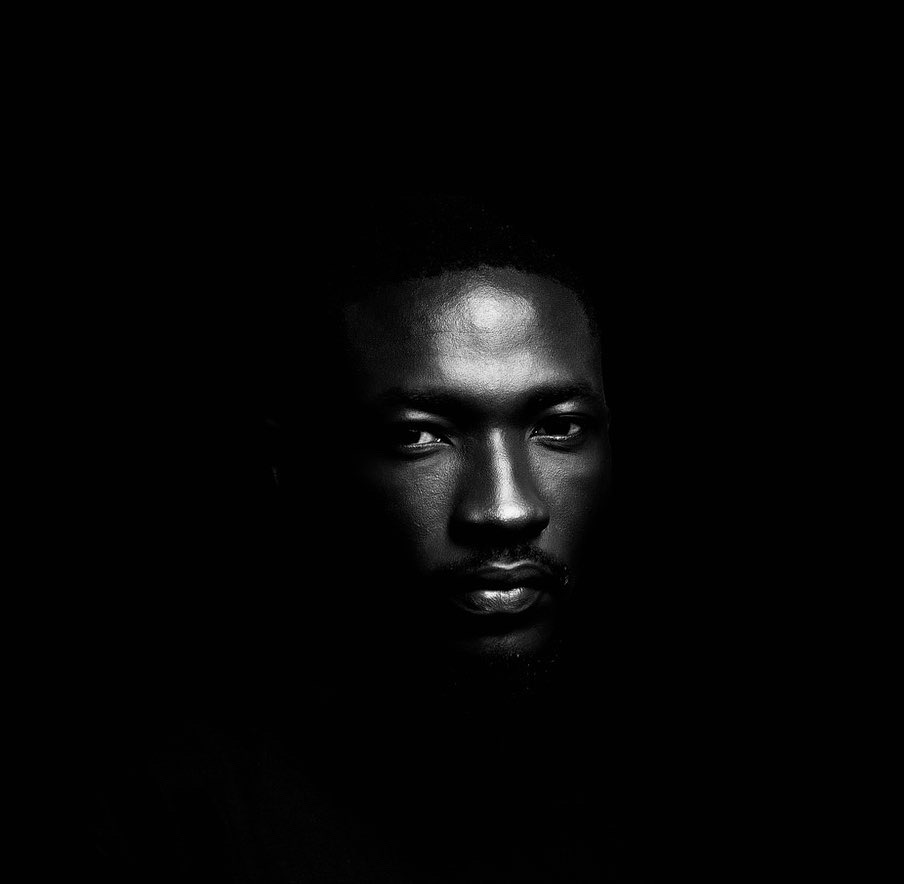
When Nigerian singer Lojay finally appears on my laptop for our conversation after several rescheduled attempts, I am relieved. Known for his riveting voice and clever love songs, the man’s rising popularity within Afrobeats has kept him busy with the responsibilities of stardom.

Still, here he is. Tired, but present and prepared, our interview orbiting the profound emotional depth of his voice, the core essence of love songs, and the personal experiences that shape his music.
Whatever impression exists out there, Lojay must reiterate early in our chat, that he is no gangster, even if that last word forms part of his latest record. Still, Ikorodu, the Lagos State city he grew up in, toughens a man up. Wouldn’t he agree?
Lojay laughs and admits that he is adaptable and has experienced different worlds, including growing up in Ikorodu for 14 years. While he acknowledges that Ikorodu exposed him to certain things, he believes that being a gangster encompasses more than just the place where one lives. He clarifies that he does not want to be seen as someone who supports violence. However, he does express the belief that in today’s world, everyone needs to embody a sense of “gangsterism”, emotionally or romantically, to survive, which is the essence behind his latest project’s name.
I remain with Ikorodu and its reputation for toughening people up. How does one transition from that environment to singing love songs about well-contoured damsels?
“In as much as I lived in Ikorodu, I feel like love has always been in my life, from my family to my friends to relationships, etc. I think one of the best things about me and one of the reasons I know how to tell stories people can relate to so well is because I’ve experienced so much. I’ve just seen a lot of things from the good and bad to the adventurous. Ikorodu, more than anything, actually taught me love. If anything, it helps you appreciate the love around you.”
I ask if he has mastered love as a subject, seeing that he has had to actively think about it over multiple EPs, the latest being Gangster Romatic.
“I wouldn’t say I have mastered love,” he chuckles. “There’s always something to learn when it comes to emotions in general, but I’ll say I have a pretty decent understanding of emotions and how they work.”
The conversation then moves to Lojay’s distinctive voice and its connection to love songs. Reflecting on my theory that a person’s voice serves as the wellspring of love songs, Lojay chuckles again. “My voice may play a role in just how musically you’ll understand the music I make. I feel like people connect more to things I’m saying than the texture of my vocals. But if I was to describe my voice as something, I’ll probably say: soothing.
He tells me that he has always been aware of the elasticity of his voice. He shares that his singing voice holds a different depth compared to his speaking voice, allowing him to explore both lower and higher registers. This vocal range has been honed through practice and a relentless pursuit of developing his sound, something that has authentically shaped his sound.
Lojay also acknowledges the popular sentiment that his voice is ideal for love songs, albeit coyly. He attributes this association to the tender nature of his vocals and the emotional themes prevalent in his music. With a giggle, he agrees that his voice naturally resonates with emotional music, creating a deeper connection with his audience.
How much of Gangsta Romantic, a densely vulnerable and expressive submission, is autobiographical, seeing that all art must come from a personal place, I ask.
“It’s a very personal project,” he stresses. “To be honest, that was the key for me. The whole point of that project was just to have my friends know who I am; see me in a more personal light than anything. And I think that was the best decision I made or could’ve made.”
Lojay sees the transition from personal to universal as a testament to the power of creativity and the impact music can have.
On navigating the duality of writing music individually, in private, and then having it consumed by the whole world, Lojay believes that every musician wants their music to be heard. He adds that the fact that a song that originated from a personal and intimate place can become a massive hit and be sung by people everywhere reinforces the fact that special things can be created from a simple idea.
Lojay shares an example of his song ‘Moto’ and how it came to be. He started creating the beat while at an airport in Switzerland during an 18-hour layover. Unable to record at the time, he composed the melodies and ideas in his head during the next flight. Once he landed, he recorded the song. Despite the personal nature of the song, Lojay didn’t have specific expectations or intentions for it. He simply wanted to create a nice song that reflected his past relationship. “And now people are hearing my pain and they’re dancing and drinking alcohol.”
What about his reputation as the melody man?
Lojay is surprised by this, emphasising that he doesn’t attach himself to external perceptions and tries not to get distracted by them. He acknowledges hearing the praise but prefers to focus on improving his craft.
I highlight the irony that his music revolves around attachment while he himself detaches from external opinions, to which the man explains that Gangsta Romantic was about detachment and acceptance.
I then raise the topic of Lojay’s music blurring the line between love songs and songs with sexual undertones, noting that he is behind some of the most memorable and raunchy lines in Afrobeats these days.
“I mean they’re kind of intertwined, aren’t they?”
At first, I’m unsure if this last question is rhetorical. Lojay goes quiet. He’s clearly expecting a response.
“I’m the one asking the questions,” I shoot back.
We both laugh.
“The difference between a friendship and a relationship is sex, if we’re really being honest. A good relationship is basically a friendship with sex involved.”
‘Yahweh’, the opening song to his new EP, becomes the focus of discussion. Lojay tricks listeners with its title and position on the album, creating an initial impression of religious significance. However, once the song begins, any traditional associations with the word “Yahweh” and the artist’s sexual experiences are separated. Lojay cleverly uses the word as an exclamation that provokes unchaste thoughts, making it difficult to ignore. This departure from conventional moral values is not typical in the pop music of the region. Lojay’s approach is unique and inventive, serving as an intelligent introduction to his project.
He tells me that he doesn’t aim to be raunchy in his music but rather focuses on creating a sense of sensuality and using insinuations to spark listeners’ imaginations. While his music may contain raunchy elements, Lojay believes it’s more about teasing and leaving the audience wanting more.
True seduction, he believes, lies in leaving room for interpretation rather than explicitly stating everything. Ultimately, his goal is to create detailed music that reflects the normal patterns of human interaction.
Therefore, would I be accurate and say seduction is his superpower… that he is the voice of seduction?
“Wow. I don’t know. One thing about me as an artist that I really like is my ability to change. I feel like I have enough range to change to anything I want at any given time. It could just happen in a snap. Right now, the conversation is on emotions. Tomorrow when the conversation changes, I know that there are still some songs that will change the narrative and it’ll no longer become ‘Lojay the Loverboy’. Lojay is Lojay. I have songs centred around money, my life, family, etc. I’ll say my superpower is my ability to adapt and transform at a moment’s notice. That’s what I’d say is my strongest [point and] I’m going to show that this year.”
“What about observation, then?
His response: I’m very good at observing and summarising what is around me.
Lojay says his role as a producer greatly influences his creative process, even when working with other producers, admitting that he can be demanding during collaborations. He has a fast-paced thought process and if he feels someone is being slow, he takes charge and does things himself. Lojay is accustomed to producing and recording himself, and working with other producers is more of a supplementary experience for him rather than a necessity.
Regarding his partnership with regular collaborator Sarz, Lojay highlights mutual artistic trust. When working with other producers like P.Priime or Lauda, Lojay says he focuses on that specific collaboration, appreciates the different perspectives and contributions each producer brings to the table, and doesn’t try to bring Sarz’s influence into the session.
My next question targets the unpredictability of commercial success. Lojay explains that he didn’t release Gangsta Romantic with commercial intentions, but instead focused on creating music that he connected with personally. He cites his 2021 breakout hit ‘Mona Lisa’, whose remix guests US pop star Chris Brown, as an example.
“When I composed it, I didn’t know how well it’ll do. I made ‘Mona Lisa’, finished the song and tossed it aside. It was just an up-tempo beat and I wanted to make this song and make people dance. That was what I basically did and tossed it aside and picked something else. Heck. I don’t know what is going to blow. Today, in hindsight, we can all say ‘Mona Lisa’ came out and it was good and it was maybe the best option.
I suggest that ‘Mona Lisa’ will always be a part of his story as it marked a watershed moment in Afrobeats and it also pointed out where Afrobeats could go.
Lojay compares the song’s lasting impact to fellow Afrobeats star Davido’s 2012 opus ‘Dami Duro’, which he observes has haunted its author throughout his career.
Finally, I ask if Lojay’s music can even be classified as Afrobeats. I sigh, because of how much he struggles with the question. I wonder how someone can be so successful and not really be able to say what they are.
Lojay attempts an answer again. To his mind, he doesn’t fit neatly into that classification. Rather, he compares himself to a mixologist whose ability to bend genres allows his music to be versatile and defy categorisation.
“I know how to fuse things, bringing them together... I don’t know. Maybe it’s because of the mix of being a producer and an artist at that same time. I think I need to find a name for what I have, but I’m in avatar mode right now.”


Most popular
Open call: 2026 Gender@Work music industry training in Johannesburg
09 Oct 2026

Top amapiano songs of 2026
16 Feb 2026

Call for applications: ACCES 2026 Emerging Artist Spotlight Competition
01 Oct 2026

Top Naija songs of 2026
31 Mar 2026

Top Afrobeats songs of 2026
19 Mar 2026

AFRIMA 2026: All the winners
12 Jan 2026
Disclaimer: Music In Africa provides a platform for musicians and contributors to embed music and videos solely for promotional purposes. If any track or video embedded on this platform violates any copyrights please inform us immediately and we will take it down. Please read our Terms of Use for more.

Subscribe to our monthly Newsletter
Follow us on social media


Please log in to post a comment.