




















































Interview with Muthoni DQ, the founder of Blankets & Wine festival (Part 2)
29 May 2015 - 12:11


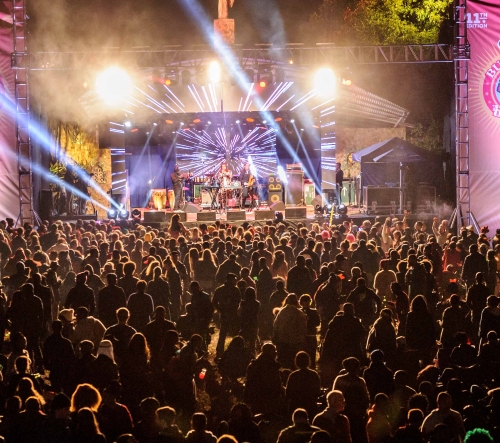
(Muthoni Ndonga, variously known as Muthoni the Drummer Queen or Muthoni DQ, is one of the most successful event-organizers in Kenya at the moment besides other big names like Rani Jamal of Ranee Productions. A musician in her other self, Muthoni turned what started out as a side-hustle into a fully-fledged enterprise that has managed to host 50 quality live shows since its inception in 2008, showcasing not just top Kenyan musicians but international stars as well. Here’s the second part of a candid interview by Ketebul Music's Steve Kivutia with the founder of the Blankets & Wine Festival)

(CONTD…….)
SK: For the international promoters, when they booked shows there were lots of logistics involved. With Blankets you managed to keep things flowing on a steady basis. How was that?
MDQ: I feel that part of our success with being able to bring in international artists was that we were very careful with our cash flows to make sure that there is enough to sustain the bookings. We’ve never had any problem with any artist, international or local. For me it was always the first priority that people must get paid, that we negotiate and agree. Secondly we worked with a very strong booker who’s based in South Africa who books artists from Africa and so his word is gold. And so he would make sure that the artists are available and would expedite the conversations, we would agree and say that this is our wish-list for this quarter and somehow we were always in time. Obviously I’ve never spent this much money on artists because we made a lot of money over the years and we spent a lot of that on our artists. They’ve been consistently the biggest bottom-line in our expenditure books. That was the basic idea…that the big beneficiary of our internal efforts should be the community who had access to the artist and the artist who was performing gets promoted and goes home with some money.
SK: So, what are your projections for the future both in Kenya and elsewhere?
MDQ: The thing that has become apparent to us is that that kind of production is way too intense to do on a monthly basis. And so the future of Blankets as we speak is that we are really gonna pull back on the frequency of the events in the whole market, which is Nairobi and Kenya as a whole. This has come out of the desire to take Blankets out of Nairobi to other areas of Kenya and to get people to experience music, you know, an afternoon of fun with family and friends. So the vision for us in 2015 as far as the Kenya market is concerned is to roll back the Nairobi events and to hold an event a month in other regions of Kenya and just experience the cultures of Kenya.
“In Nairobi we’ll put on a maximum of two events a year, which will be a two-day festival with the multiple stages. There’s something very beautiful about being able to experience the fullness of Kenyan music and the Kenyan arts because we began with music but at the end of 2014 we realized we can create a platform for the arts experience for the filmmakers, for the writers, the musicians etcetera. To create this real huge idea that’s really what a festival is like; different spaces and different experiences. And to do it properly you have to do it a few times but do it well.
“So you get the best on the writers’ stage, you get the best thespians and musicians as well…for me it’s about that…now that we already know the template to bring the best on the platform and then to have a very heightened experience that lingers for many hours, and to do that a few times in the Nairobi market and then to take it on the road to other people. Kampala has been off the ground since 2013, and is doing very well and has achieved the take-off stage successfully.
“This year our target is to make sure that Dar-es-Salaam, Tanzania gets off the ground. It’s going to be in the model of Kenya so that it is not just based in Dar-es-Salaam but goes around. We will also establish Kigali as a biennial music event. I feel that the dream is still valid to create these spaces outside Kenya. We should be able to say to an artist, look we can take you on a tour of Kenya and we can also give you a tour of East Africa. So we create a set that comfortably works, and an artist can say, if I get booked by Blankets & Wine I can get up to 6 shows in Kenya and at least three shows in the region. That’s about nine shows a year, but that are produced well and well marketed. I think that is high value.
SK: If you were to step out of Blankets &Wine as an organizer and be an artist, what would you say has changed in Blankets and in music in Kenya in particular? What are the growths you’ve seen? What do you think of the trends?
MDQ: One of the core things that have changed since we began Blankets & Wine is that the music space has expanded. I feel like live music appreciation has increased. This is evidenced by the little weekly live music events that have mushroomed around the city. I just feel like there’s a deep appreciation and demand for live music now. And that is great because it means the artist gains. I feel that the trend going forward will be finding ways to ‘Kenyanise’ the music. I know that this is contentious but I feel that there will be an increase in looking at our ethnic music and finding ways to remake it with a clear focus that the music is not just made for the African market. I feel that a lot of artists see these as achievable aspirations within their grasp now. I feel like Kenyan performers are advantaged in the sense that they are good live performers and they figured out that the way to work an audience is to perform and I think this is going to serve us well in the coming years. This gives us an edge when competing with other African musicians.


Most popular

Top amapiano songs of 2026
16 Feb 2026
Call for applications: ACCES 2026 Emerging Artist Spotlight Competition
01 Oct 2026
Open call: 2026 Gender@Work music industry training in Johannesburg
03 Oct 2026

Top Naija songs of 2026
31 Mar 2026

Top Afrobeats songs of 2026
19 Mar 2026

AFRIMA 2026: All the winners
12 Jan 2026
Disclaimer: Music In Africa provides a platform for musicians and contributors to embed music and videos solely for promotional purposes. If any track or video embedded on this platform violates any copyrights please inform us immediately and we will take it down. Please read our Terms of Use for more.

Subscribe to our monthly Newsletter
Follow us on social media


Please log in to post a comment.