





















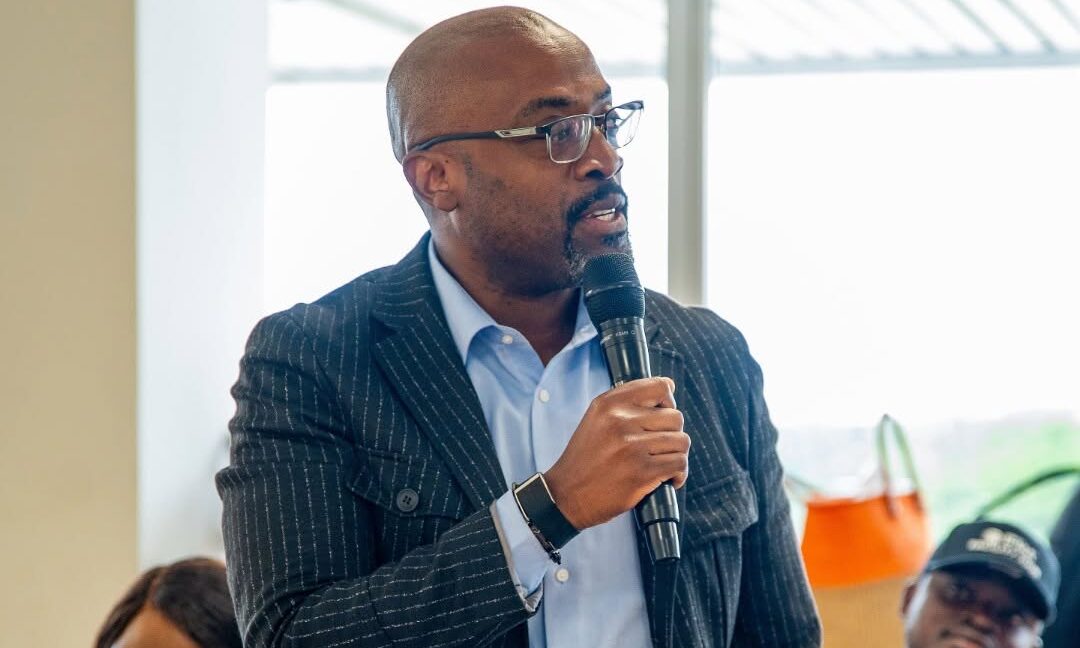




































Since taking on the role of CEO at the Southern African Music Rights Organisation (SAMRO) in January 2023, Annabell Lebethe has been committed to making a positive change at the organisation. Under her leadership, SAMRO has experienced financial growth and operational improvements.

One of the key areas of focus for Lebethe has been improving royalty distribution for SAMRO members, while also introducing system enhancements with a view to align Africa’s largest CMO with the ever-changing dynamics of the music industry .
We sat down with Lebethe to discuss her critical role at SAMRO, her accomplishments, strategies, opportunities and challenges.
MUSIC IN AFRICA: What have been your greatest accomplishments in your first year as CEO, and how have these impacted SAMRO?
ANNABELL LEBETHE: I joined SAMRO in January 2023, halfway through the financial year (FY23). The organisation was at a critical juncture, requiring both the stabilisation of ongoing operations and the initiation of a refreshed strategic directive. My primary objectives were to streamline our operations to enhance efficiency, reduce costs, and refine our strategic focus to align with long-term goals and industry trends. This involved a comprehensive review of our processes and strategic planning to ensure our efforts were impactful and relevant.
The initiatives put in place significantly improved the organisation’s financial performance for FY22/23, with an increase in revenue of 15.3%, from R515m in 2022 to R594m in 2023. The organisation also saw a reduction in operational costs, which has positively impacted our bottom line. Additionally, streamlining operations led to a 20% reduction in time spent on administrative tasks. This efficiency gain allowed our team to concentrate on core activities and drive performance. We have seen increased client satisfaction and a more robust market presence, reflecting our competitive edge.
These accomplishments highlight not only the progress we’ve made but also the resilience and dedication of the SAMRO team. The solid foundation laid during my first year positions SAMRO for continued growth and success. We are well prepared, with a clear strategic focus, to address new challenges and seize emerging opportunities, ensuring that SAMRO remains a leader in the industry and a valuable advocate for our members.
What strategies have you put in place to enhance royalty distribution and benefit South African music creators?
We have put in place an array of critical measures to improve royalty distribution to ensure that our members receive fair compensation for the use of their musical works such as:
Distribution of royalties: We’ve had great success in the Radio and General distribution category for two consecutive years. In FY22/23, the organisation distributed a remarkable R147m in the Radio and General category, followed by an even more impressive R242m for FY23/24, marking our largest distributions to date. Additionally, R73.8m was distributed in FY22/23 in the Television category. These numbers highlight our continuous dedication to enhancing royalty collection and guaranteeing our members receive direct benefits from the revenue produced. Moreover, SAMRO distributed more than R33m in royalties from digital platforms like Apple, Spotify, Netflix, and TikTok in FY23/24, further demonstrating our commitment to fair compensation in the digital era.
System enhancements: Improvements to the system were a priority during my first year as CEO in order to improve our operations. Utilising data from digital service platforms (DSPs) and video-on-demand (VoD) platforms, along with advanced tools such as auto-copyright systems and CISNET, has enhanced the efficiency of our royalty distribution process. These achievements established a new benchmark for SAMRO and showcased our continued dedication to the progress and financial prosperity of our members. We are looking forward to the future with enthusiasm and have confidence that these initiatives will continue to create value for our members.
How has SAMRO evolved under your leadership, and what cultural changes have you introduced?
I have highlighted the importance of cultivating teamwork, diversity, and acceptance culture within SAMRO. We have made strides to establish a welcoming and encouraging atmosphere where every employee feels appreciated and empowered to share their individual perspectives and abilities. This has resulted in increased employee involvement, leading to improved decision-making and innovation throughout the organisation.
Moreover, I have advocated for a member-focused strategy, emphasising the importance of comprehending and fulfilling the requirements of our key stakeholders. By paying attention to their input and constantly looking for ways to improve our services, we have enhanced our connections and provided more value to them. These cultural shifts have played a crucial role in advancing SAMRO and setting us up for ongoing achievements.
What partnerships or collaborations have you fostered to advance the interests of SAMRO members and the broader music industry?
To advance the interests of SAMRO members and the broader music industry, we have several key partnerships and collaborations that align with our vision for the future of music rights management in Africa. We are deeply committed to empowering our members through education and support. Through initiatives like the Music Business Lab Training Programme, Music Business Masterclasses, and partnerships with institutions like the Soul Candi Institute, Academy of Sound Engineering, Music Business Network, etc, we equip music creators with essential business skills to navigate the complexities of the industry.
Our involvement with CISAC, the world's largest creative sector network, allows us to advocate for the rights of African music creators on global issues such as AI and copyright. This ensures that their voices are not just heard, but influential in shaping the future of the industry on a global scale. Additionally, collaborations with organisations like Basadi In Music Awards, which seek to empower and recognise women in the music industry and promote equal opportunities for all creators have been instrumental in advancing the course of women in the industry.
By leveraging these strategic partnerships and our commitment to innovation, SAMRO is positioned to lead the way in shaping the future of music rights management in Africa. Our focus on collaboration, diversity, and a member-centric approach ensures that we continue to deliver more value to our members and drive the African music industry forward on the global stage.
How do you envision the future of music rights management in Africa, and what role will SAMRO play in shaping that future?
I envision a streamlined, efficient, and transparent future for music rights management in Africa, ensuring that all music creators receive fair compensation for their musical works. At SAMRO, we are committed to being at the forefront of this transformation. How will SAMRO shape that future? Through advocacy for creators’ rights. SAMRO will continue to advocate vigorously for the rights of music creators, promoting a culture of respect for intellectual property across the continent. This includes engaging with policymakers and stakeholders to ensure that music creator’s rights are protected and prioritised especially with the entry of AI in the music industry.
At SAMRO, we understand and recognise the technology used to enhance royalty distribution processes, such as Music Recognition Technology (MRT). We are committed to investing in innovative solutions that enhance the efficiency of these processes, making it easier for creators to access their earnings promptly.
We recognise the importance of collaboration in creating a cohesive and effective system for managing music rights across borders and we are dedicated to continuing to work closely with other Collective Management Organisations (CMOs) in Africa and globally, harmonising our efforts to ensure consistent and effective global music rights management.
We will continue to empower our members through educational initiatives that provide them with the necessary skills to navigate the music industry. By offering training programmes and allocating concomitant resources, we aim to equip music creators with the knowledge they need to thrive in an increasingly complex landscape.
How have you addressed issues related to transparency, accountability, and governance at SAMRO?
I am deeply committed to upholding the highest standards of transparency, accountability, and good governance. In adherence to the organisation’s Memorandum of Incorporation (MOI), we ensure that the organisation’s financial statements, as contained in the Annual Integrated Report, are shared with members and made publicly available so that music users and creators alike can clearly understand how we collect and distribute royalties. Governance serves as a framework for all our decision-making and ethical behaviour throughout the organisation, and I am striving to build a culture of integrity and excellence, setting the stage for sustained growth and success for SAMRO.
By continuously improving our practices and working together with our members, licensees, government, and industry partners, we aim to set an example for the industry and ensure that SAMRO remains a leader in music rights administration and a champion for the rights of music creators in South Africa and beyond.
Last year, the SAMRO Board confirmed fraudulent activities by some of its members who made irregular royalty claims and thereby defrauded the CMO of R3.4m and handed the matter to the police. Have there been any developments with this matter?
A process is currently underway, which has been communicated to the affected parties, including SAMRO members. In order not to prejudice those involved, we cannot provide further details on the matter. SAMRO has not disclosed any of the amounts linked to the fraudulent activities committed by members.
In 2021, we interviewed former SAMRO CEO Mark Rosin about a deal worth R40m, which the CMO entered with the Arab Emirates Music Rights Organisation (AEMRO) under Sipho Dlamini’s leadership. Part of his response reads: “But there’s nothing more I would like to do than get R48m back for my members. But you have to say, ‘At what cost?’ So, until there is an effective way of trying to get that money back, I am afraid it’s going to be just an investment that went badly wrong.” Have you made any efforts to re-examine this issue in the interest of transparency at SAMRO, or do you align with Rosin’s viewpoint?
The matter was reported to the relevant authorities, who upon reviewing the evidence, made a decision not to prosecute. SAMRO followed due process regarding this matter, hence there was no reason to re-examine it.
What are your thoughts on the impact of technology, especially artificial intelligence (AI), on the music industry, and how is SAMRO adapting to these changes?
Technology, particularly AI, is profoundly reshaping the music industry. Integrating these advancements presents both challenges and opportunities that we must navigate. Historically, the evolution of technology has transformed music creation, distribution, and consumption. Today, AI is at the forefront of this transformation, influencing various aspects of our industry.
The Copyright Amendment Bill (CAB) in South Africa, while aimed at updating copyright laws, does not adequately address the impact of emerging technologies like AI. This oversight leaves a significant gap in the regulation of AI and its implications for the creative industry. We can only hope the President does not sign the bill into law and that, once referred back to Parliament, this oversight can be addressed. Unfortunately, South Africa appears to be lagging behind in developing a comprehensive AI policy or strategy compared to other countries. The lack of clear AI regulations in South Africa’s copyright laws could lead to uncertainty and potential exploitation of creators' rights by AI-powered platforms and tools. Without proper safeguards, AI could be used to generate content that infringes on our members’ copyright, making it difficult for creators to protect their intellectual property.
What legacy do you hope to leave as CEO of SAMRO, and what goals have you set for your continued tenure?
As CEO of SAMRO, my primary objective is to establish a lasting heritage of ground-breaking advancements and long-term viability within the music sector. It is my aspiration to improve the organisation’s strategy to increase revenue and the value of distributed royalties, elevate the level of transparency and accountability and ensure that our members receive fair and equitable remuneration for their musical works. Throughout my term, I will concentrate on nurturing creativity, providing robust support for composers, authors, and publishers, and adapting to the ever-changing landscape of the music industry in order to ensure the sustained success and prosperity of our members.
In addition, I aim to strengthen partnerships with key stakeholders, forge new collaborations to promote music education and develop, sustain and advocate for the rights and interests of our members on both local and international platforms. By championing innovation, sustainability, and inclusivity, I am dedicated to leaving a legacy that will elevate SAMRO to new heights of success and relevance in the global music landscape.


Most popular

Top Naija songs of 2026
31 Mar 2026

Top Afrobeats songs of 2026
19 Mar 2026
Ghana: Mr Eazi and MOLIY’s ‘Comfort’ earns Urban Music Awards nomination
21 Oct 2026

Top amapiano songs of 2026
16 Feb 2026
Open call: CANEX Music Business Lab and Songwriting Camp
15 Oct 2026
Nigeria: CANEX WKND unveils 2026 programme
21 Oct 2026
Disclaimer: Music In Africa provides a platform for musicians and contributors to embed music and videos solely for promotional purposes. If any track or video embedded on this platform violates any copyrights please inform us immediately and we will take it down. Please read our Terms of Use for more.

Subscribe to our monthly Newsletter
Follow us on social media


Please log in to post a comment.