





















































The Southern African Music Rights Organisation (SAMRO) has faced criticism by the media and many of its members over the years. Many of the challenges the collective management organisation (CMO) faces were laid bare in 2019 by former SAMRO CEO Nothando Migogo, who spoke to Music In Africa, amid her exit from the organisation, about systemic problems too big to solve by one executive alone.
The scandals involving SAMRO are widely known by now. There were the millions owed by the South African Broadcasting Corporation (SABC) in royalties and the millions lost in a deal that went sour in Dubai in 2014-15 when SAMRO was headed up Sipho Dlamini.
SAMRO is facing a lot of pressure from its members, who are questioning transparency, administrative processes, late payments and the correct allocation of royalties. After Migogo, Ditebogo Modiba began cutting expenses by reducing temporary staff during her nine-month stint as interim CEO, but that was not enough to change SAMRO‘s image in the eyes of struggling artists.
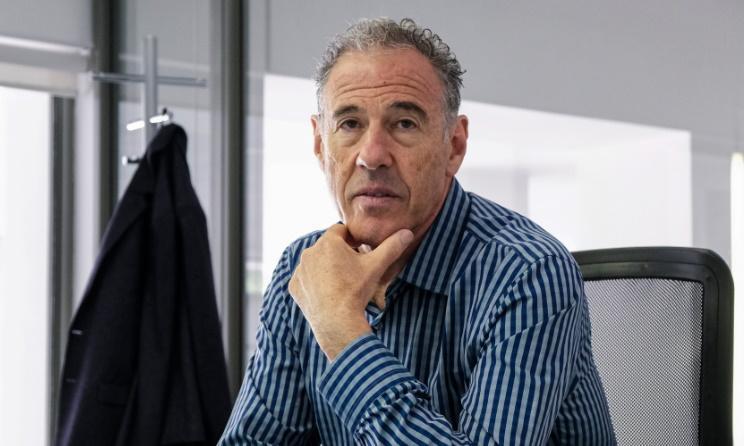
Since February 2020, Mark Rosin has taken up arguably one of the most difficult jobs in the South African music industry – one where members’ disgruntlement is the order of the day and where politics have been known to mar the activities of a critically important organisation in the livelihoods of rights holders.
To get a better understanding of the current state of affairs at SAMRO, we spoke to the corporate, media and entertainment lawyer about the measures he is taking to circumvent these challenges.
MUSIC IN AFRICA: What have been some of your achievements since you joined SAMRO?
MARK ROSIN: When I joined SAMRO, I thought the first year would be like a bumpy gravel road. Then, after the first year, I would go on to the tarred road, because I am only here for two years. I thought I would be able to see the blue sky, the smooth road, fix it up and leave. On some days I feel like I’m still cutting through the bush with a panga to get to the gravel road. I suppose the thing is that I underestimated the extent of the challenge. I thought it would be a certain number of problems to be fixed and then everything else would be okay. But as an organisation that has had a lot of pretty deep and endemic problems for many, many years, and when such problems are there, it takes a long time to work out of the system.
What are the big things I have done? The big things I have done was to make sure that we pay on money that we have received rather than on money we have invoiced, because SAMRO used to pay on what was invoiced even if it didn’t collect the money, which is a financial disaster. I implemented a system of payment on receipt. I have managed to write down a huge amount of leave in our balance sheet, so that we don’t have an obligation to pay people huge amounts of money when they leave. We have introduced a member portal for undocumented works, which are works that we are unable to identify that have been reported to us but without all the relevant information. We have significantly improved our member services department. We do more distributions per year than we have ever done before. So those are some of the big things. There are obviously hundreds of small things. We’ve had our best year of revenue ever in my first year where we invoiced more than R500m ($33m) in revenue. That was a very big achievement.
Last year you launched a new platform that gives SAMRO members access to undocumented musical works. What progress have you made with this project and how do artists benefit from this?
First of all, let me explain how undocumented works work. Let’s say you wrote the music for an advert that gets played on radio and TV, and it gets reported to us with thousands of plays. That ad would be allocated a certain amount of money from radio and TV. But when it was reported to us, we received no information that so-and-so was the author. We know we owe somebody money for thousands of plays, but we don’t know who. So what we do is take that money, hold it and wait for the rightful owner to claim it. Historically, we would wait for the author’s publisher to come to us and say, ‘Look you’ve got money for this ad, it‘s our song by the author. Pay us the money and we will pay the author.’
We have opened this portal to all members. You say, ‘I wrote the music for an ad and I never got paid for it.’ You come into our portal, you hunt for it, you claim it and you get your money. I suppose the aim of it is to help achieve access to distribution. Distribution works in two ways: knowing who the composer is and being able to pay the composer. The other way is knowing that the usage is reported; if we hadn’t been told that the commercial had played, we couldn’t pay you because we don’t know about it. So this is one of the things that I have done.
We have also introduced an automated music managing system, which never existed at SAMRO. We were relying on the SABC, e.tv, MultiChoice, Primedia, and so on, who were giving us cue sheets that said what they had played on their stations. But now we can check for ourselves. If you are a radio and say, we‘ve played A, B, C, and E, we can go into the monitoring system and say you played D as well. What we want to achieve is a greater percentage of matching, which is usage versus payment. So that is very good for members, obviously, because more members will be paid accurate amounts more often. This is what we do. SAMRO is a simple business: we collect money, we process it and we pay it.
What happens to money collected through unidentified royalties that remain unclaimed for a long time?
If the money is not claimed, that money goes back into a general pool and the composers will receive a proportionate cut of that money. So the money gets used and recirculated, but inaccurately. Let’s say you never claimed for your commercial and we’re sitting on R100 000 that was never claimed. We would put the money back into circulation and that money will be spread among all the members who earn money at SAMRO, and all of them will get a little bit extra ... Now what we are hoping to do is to reduce that number substantially so that there is more accuracy, because the problem is – let’s say you come for your money and we’ve put it back into circulation – we will pay you but will take that money out of the next stream where other members will get a bit less.
How has the COVID-19 pandemic affected SAMRO’s operations?
First of all, I suppose it would be inappropriate for me to talk about this, but we lost a great number of people in our community. We lost people such as Tsepo Tshola and Steve Kekana. It’s been terrible. In terms of running SAMRO, we made some adaptations in terms of equipping people to work from home. Some areas of SAMRO are easy to monitor, like data capturing, where individuals can do this work whether at home or the office. Other areas are less easy to measure, such as what are the HR and legal departments doing? But I think we’ve had minimum disruptions and the organisation is running very smoothly.
We obviously had to look significantly at our funeral policy benefits for members. At SAMRO, each member has R25 000 in funeral benefits to assist their immediate family. When lockdown started, we made presentations to banks to hold all repayments of loans for housing in relation to our community. There were a number of initiatives we just had to take. We approached a number of radio stations to play more local music to ensure that people get paid more of their royalty streams and we embarked on a programme called Concerts SA, which has been promoting online streaming concerts, to try to put some money into the pockets of our members who are suffering.
In May, SAMRO signed licensing agreements with TikTok, Facebook, and Netflix. When will SAMRO’s members begin to benefit from these licensing deals?
I can’t tell exactly but I think we will start paying at the end of this year. Those numbers aren’t big yet; we know that internationally these are huge platforms, but they are still small platforms in South Africa. People need to be worried about money from MultiChoice, e.tv and the SABC – that’s where the money comes from. South Africa is still way behind, we have so few Netflix subscribers. It’s important that people don’t think that because you’ve done a deal with a big multinational that huge amounts of money will flow in. It all has to do with usage and revenue that come from this.
The South African Music Performance Rights Association (SAMPRA) announced that it would take legal action against the SABC over needletime royalties. How much does the SABC still owe SAMRO and what measures are you putting in place to ensure the public broadcaster settles its remaining debt?
We have a very different relationship with the SABC. The difficulty that SAMPRA has is that it’s a relatively new royalty collection society for recording royalties, or needletime rights, and what the SABC did apparently is that they paid another organisation called IMPRA [Independent Music Performance Rights Association] a whole chunk of the royalties that SAMPRA said should probably have been paid to them. SAMRO has been doing this since 1961, so we have a long-standing relationship with the SABC and they know that there is only one public performance society and it is SAMRO. We have a deal and they pay us. We’ve had times, historically, in which the SABC had difficulties paying, but we have reached arrangements and the SABC is pretty much up to date.
In 2017, SAMRO entered into an investment partnership with the Arab Emirates Music Rights Organisation (AEMRO) worth R40m ($2.8m then) under Sipho Dlamini’s leadership. The deal was signed when AEMRO was recognised as a potential partner in line with SAMRO’s strategic growth priorities in 2015. His successor, Nothando Migogo, told us that SAMRO commissioned two reports, an initial investigative report with PricewaterhouseCoopers and a forensic report with auditing firm SekelaXabiso, which then went to the police. What has been the outcome of this?
The outcome from the police is that there was not enough evidence in those reports to be able to prosecute anybody and they will not, subject to being given more evidence. You know, this is probably the single biggest question that I get asked: Why? Because SAMRO spent if I recall R48m, and the intention was to invest, but it went very bad. When I arrived here, I read these reports and the decision we had to take was, ‘What do we do?’ Do we take more money from our members and set up investigations in Dubai? Do we go to court and try to get access to people’s bank records?’ The amount of money we would spend trying to chase after something without knowing the results would have been too substantial to warrant the expenditure of more millions. So there comes a time – I’m a lawyer, that’s my training – where you say, ‘You know, take a practical view here. Am I going to throw good money at this? What are my prospects of success in a case? Can I succeed in the case?’ There are people who want to see people thrown in jail, and members want to see people thrown in jail. It’s easy for me, I am new here, I have nothing to do with it, but there’s nothing more I would like to do than get R48m back for my members. But you have to say, ‘At what cost?’ So until there is an effective way of trying to get that money back, I am afraid it’s going to be just an investment that went badly wrong.
So nothing is going to happen? It’s going to die just like that?
Unless some new evidence comes to light. Don't forget, when it comes to matters of theft and fraud, you can be charged with something that happened 10 or 20 years ago if the evidence comes up.
Given an opportunity to extend your contract at SAMRO, would you?
[Laughs] You know, that's an interesting question. I suppose if the members and the board want me to, I would look into it. I must say, though, in all good conscience, I do believe that the CEO at SAMRO should be a BEE [black economic empowerment] candidate and not an old white guy. I know why I am here. I am here because I have many years of experience, I am deeply embedded in the industry, I understand the issues, I understand the rights and I work hard. I know why I am here but I don't think it's a long-term prospect and it shouldn’t be a long-term prospect. I suppose the point would be this: if the members and the board want me to stay, I would look at it subject to it being until such time that we find a suitable black candidate to step into my shoes.
Any interesting projects that you want to share with our readers?
I think our music automation is going to be fantastic. I think that's going to change the way in which we process, report and match things. I think SAMRO is going to become a completely different and much more effective place.


Most popular

Top Naija songs of 2026
31 Mar 2026

Top Afrobeats songs of 2026
19 Mar 2026

Top amapiano songs of 2026
16 Feb 2026
Open call: CANEX Music Business Lab and Songwriting Camp
15 Oct 2026
Ghana: Mr Eazi and MOLIY’s ‘Comfort’ earns Urban Music Awards nomination
21 Oct 2026
Nigeria: CANEX WKND unveils 2026 programme
21 Oct 2026
Disclaimer: Music In Africa provides a platform for musicians and contributors to embed music and videos solely for promotional purposes. If any track or video embedded on this platform violates any copyrights please inform us immediately and we will take it down. Please read our Terms of Use for more.

Subscribe to our monthly Newsletter
Follow us on social media


Please log in to post a comment.