







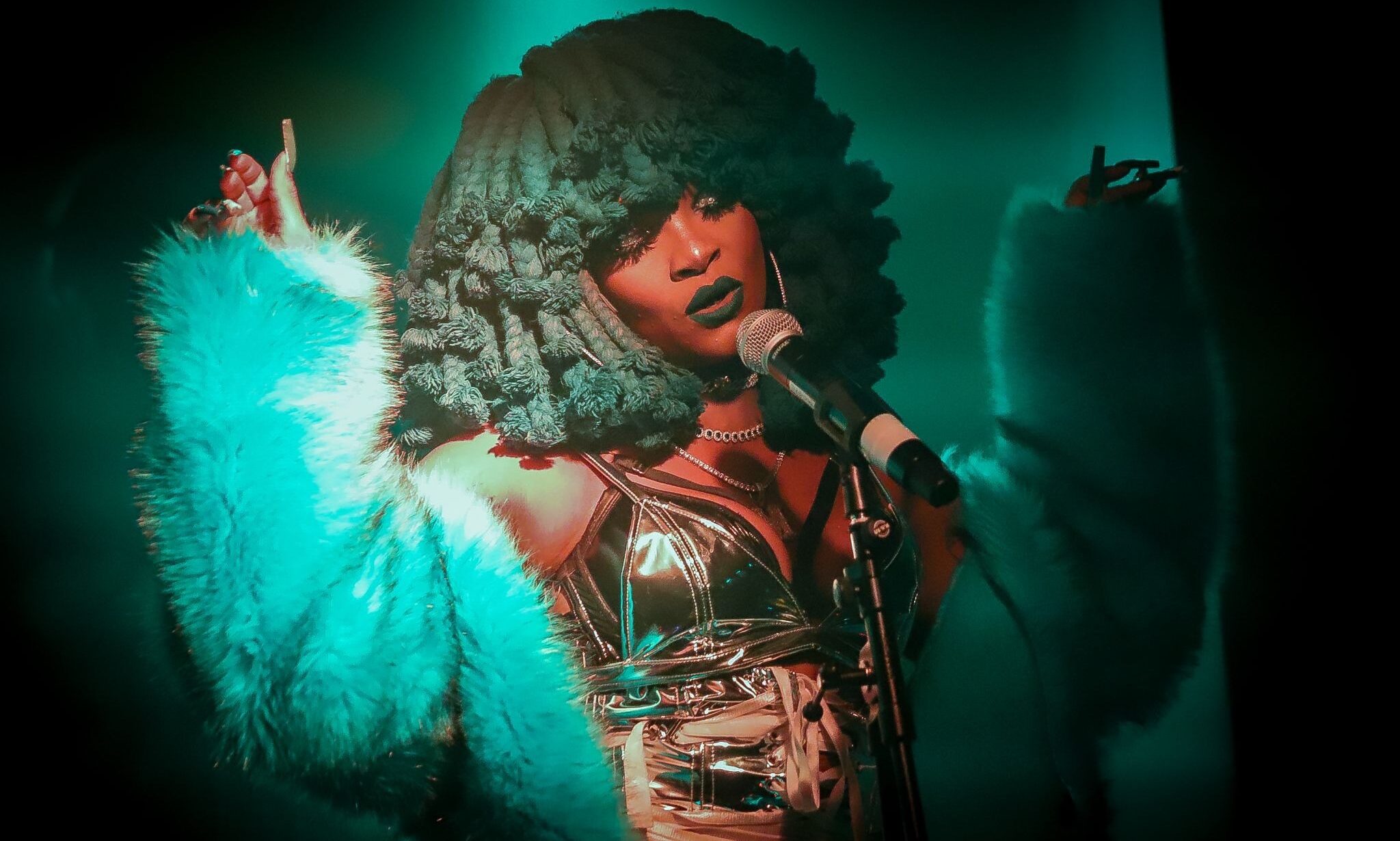















































Interview: Uganda’s Jemimah Sanyu ready to take on the world

23 Nov 2015 - 13:41


Born in Jinja, the source of the Nile in eastern Uganda, singer Jemimah Sanyu has been tugging on Ugandan heartstrings since the release of her breakthrough single ‘Ziba Amaaso’.

Her extensive musical journey over the past 13 years has seen her grace the stages of numerous regional platforms, including Bayimba Festival, Last Band Standing, Jazzville (where she hosts ‘The Sanyu Talks’) and Blankets & Wine, as well as DOADOA Performing Arts Market and Selam Festival in Addis Ababa, Ethiopia. Following energetic performance with her band Unit 446 at nearly every major festival around the country, Jemimah has earned a reputation as ‘The Stage Gladiator’. In the process she has collaborated with some of the top African singers and rappers, like Navio (on ‘Amaaso Go Googera’), Joanita Kawalya (of Afrigo Band) and Juliana Kanyomozi, among others.
Her debut solo album, Amaaso Go Googera, is a mature and honest studio album co-produced by Legend P at Fenon recording studio, where it was recorded in a mere five days. This delicately moving album delivers the thoughtfully personal and often heart-wrenching sincerity of an artist who music forces you to fell, with a voice impossible to ignore.
Jemimah and her band were recently invited to showcase their talents at Visa For Music (VFM) in Rabat, Morocco, the premier music industry conference for North Africa and the Middle East. She took some time to chat to Music In Africa….
Getting started
The singer explained that she started singing while at school. After studying computer literacy at university, she joined a church choir, where she was soon discovered by talent scouts in the local industry, including producer Nash and hip-hop heavyweight Navio, who soon set her off on the road to stardom. She formed her own backing band, Unit 446, the name coming from the date of the band’s formation: 4 April 2006.
“I worked with many people behind me,” Jemimah explains. “They found me in church and realized ‘Jemimah, a music career is more than just about singing in church choir, it can be a career’. I really loved it from the word go, but I didn’t realize I could be someone big, someone people can listen to - not only back home, but even all over the world. So I was pushed by these producers. They took me to the studio and we started recording songs. We started a band… I also went for ‘I’m a Ugandan’, a big project in Uganda, done by over 30 Ugandan musicians. It was very big, it was about patriotism.”
In 2010 Jemimah’s hard work paid off with the hit ‘Amaaso Go Googera’ (in 2010). The song, literally translated as ‘Your eyes speak’ gives a simple yet powerful message that most people can relate do. Jemimah explained: “You advertise a lot of things, the eyes don’t lie. For example, when you’re in love with someone, however much you pretend, your eyes will never betray you, so I talk about that in the song… It was a very big hit.”
Jemimah calls her music Afro-fusion, as it fuses different African languages with modern instruments like keyboards and guitars. Although she began singing in church, she said she is not tempting to venture into gospel territory. “I tried it at first, but things were different back then. Most of the audiences in Uganda were not interested in gospel… I think I have a bigger vision. I’m a God-fearing lady, but I think there are bigger issues to focus on – issues like war, sickness, political problems - that we must discuss. My mission is to try and turn all that into positivity. Most people think we are dying, doing bad, we are suffering, there is no one to help us. My voice is totally different. I’m a positive person, to show the whole world that everything is OK… All we have to do is to believe, because we’ve got the talent, we’ve got it all. I’m here to show people that we are growing, we are powerful, we are fighting for ourselves.”
Going global
Jemimah now has her sights set beyond the Ugandan music industry and on continental or even global success. “At first I was only focusing on Ugandan music, with the songs we were doing, the languages we were using, and even the production. I think I’ve grown now, we are getting there. Studios from abroad are calling us to start recording with them, which is a better sound from our Ugandan sound, but still staying original. I went to Selam Festival in Addis, and the people were really interested in the kind of performance we were doing. That was last year, in 2014. That was the first big festival outside of Uganda. Those people were really interested, they loved our sound, the energy…”
Jemimah is quick to credit the support and encouragement of numerous people in the Ugandan music industry, particularly Faisal Kiwewa, director of the Bayimba festival and DOADOA conference in Uganda, who accompanied her to Morocco, as well as producers Legend P and Nash.
Looking ahead, Jemimah says she is looking to tour more. “I have to show the whole world that we have talent in Uganda.” Meanwhile, she is also hard at work on a new album. “I am back in studio working on a second album. I’ve not yet settled on a name, all the songs are beautiful. I think we just have to sit down and come up with a name after all the tracks are recorded. It’s a little too early to tell, it might take more than a year still. We need more time in studio.”
In an industry still largely dominated by males, Jemimah is setting an example for Ugandan women. “Back home the man is the head of the family, and women do follow what the man says, so that thing has always dominated everywhere. Even when it comes to live bands, you find few women. It’s very rare, it’s always men (playing instruments). But I’m happy that I’m seeing a few women coming up… We really have to try to prove to the whole world that we can do it. We have to go the extra mile, to show that women can do this. We are powerful. We are getting there.”
Asked to elaborate on her advice for young female musicians, Jemimah said: “You have to fight, this is a battlefield. If you don’t believe in yourself, no one will ever believe in you. If you don’t take that first step, no one will take your hand and take you to the other steps. So it’s a hassle, but you have to be strong. But if you know that you have the talent, you have to fight, you have to push yourself there. Everything will work out in the end, the moment people see that you’re a fighter. That’s why they call me a gladiator, I don’t give up!”


Most popular
Open call: 2026 Gender@Work music industry training in Johannesburg
03 Oct 2026

Call for applications: ACCES 2026 Emerging Artist Spotlight Competition
01 Oct 2026

Top amapiano songs of 2026
16 Feb 2026

Top Naija songs of 2026
31 Mar 2026

Top Afrobeats songs of 2026
19 Mar 2026

AFRIMA 2026: All the winners
12 Jan 2026
Disclaimer: Music In Africa provides a platform for musicians and contributors to embed music and videos solely for promotional purposes. If any track or video embedded on this platform violates any copyrights please inform us immediately and we will take it down. Please read our Terms of Use for more.

Subscribe to our monthly Newsletter
Follow us on social media


Please log in to post a comment.