

























































Jazz: South Africa’s Shane Cooper and his band Mabuta make borders irrelevant
18 May 2022 - 08:15


By Gwen Ansell
South African jazz seems to be having another international moment. Recently, for example, the Blue Note jazz label launched a new imprint, Blue Note Africa dedicated to the continent’s music. Its first release – and his second for the label – will be South African pianist Nduduzo Makhathini’s In the Spirit of Ntu. In the same month, Jazz at Lincoln Centre hosted a South African season.

Even the UK’s annual BBC Proms this year will dedicate a night to The South African Songbook, with trumpeter Marcus Wyatt conducting the international Metropole Orkest and the voices of South African vocalist Siyabonga Mthembu and Zimbabwe-born UK singer/songwriter ESKA.
Of course, such exposure is not unprecedented. South African painter Gerard Sekoto was playing jazz in Paris bars in the late 1940s. The international careers of Miriam Makeba, Abdullah Ibrahim and Hugh Masekela are only the best known of a raft of musicians who sought exile from apartheid. The South African band Blue Notes were massively influential on European jazz scenes from the 1960s onwards.
There are risks in being “fashionable” – not least that straitjackets of international audience perception may be created about what “South African jazz” is. Many of today’s international showcases have a nostalgic focus on the greats of the past such as Makeba and Masekela. However, multiple legacies inform the sound of South African jazz and contribute to the rich lexicon from which it can draw. But none of them defines it.
Today, South African jazz speaks in multiple, diverse voices. Its internationalism, thankfully, is no longer driven by hideous repression at home and, in the digital age, doesn’t always even require physical journeys. One example (and there are many) is the new album Finish the Sun from the group Mabuta, led by bassist Shane Cooper.
Finish the Sun is only the latest demonstration of how South African jazz simultaneously looks inwards and outwards and communicates with listeners and fellow-players everywhere.
Finish the Sun
Mabuta takes its name for the Japanese word for “eyelid”, opening a door between the conscious and the unconscious. Liminality – crossing borders and the interrogation of boundaries – was on Mabuta’s agenda from its first release Welcome to this World (2018). Cooper himself is a bassist who also skips the border into electronic club music; the 2018 personnel was all-South African, with the addition of UK saxophonist Shabaka Hutchings.
On this 2022 outing, South Africans Cooper (on guitars and synths as well as bass), keyboard player Bokani Dyer, trumpeter Robin Fassie and reedmen Buddy Wells and Sisonke Xonti work with guest drummers from Switzerland (Julian Sartorius, Arthur Hnatek and Mario Hänni); Sweden (Christopher Castillo); the Netherlands (Jamie Peet); Lungile Maduna (South Africa); and Andre Toungamani (Senegal), some recorded at a distance.
Like its predecessor, Finish the Sun is “a bassist’s album but not a bass album”. Cooper created all the compositions but the instrumental solos come from everybody – although the track ‘Spirit Animal’ is quintessential Cooper. It is never clear whether he is the bass’s spirit animal or it is his. His concept sounds as much through his guitar and through his use of effects and washes. These shape the mood of the eight tracks, sometimes creating a feel that irresistibly invokes a time or place.
The album employs markers of national identity in surprising and often subtle ways so it speaks fluently across all musical borders. Nevertheless, it does draw deep from our lexicon.
The first two numbers, the title track and ‘Where the Heart Is’, are where South Africa speaks most explicitly. The title words can’t help recalling the classic song ‘Lakutshon’ Ilanga’ (When the sun sets, I’ll remember you). Here, the album notes say, it alludes to “the energy (that) was felt by all the musicians in a way that sounds as though we were in the same room after finishing some sun together”. It’s a fast, cyclical, galloping Eastern Cape sound, but layering modernity and tradition in its juxtapositions of electronic and instrumental voices. 'Where the Heart Is' maintains the pace, with a classic South African bass line, call and response and chorusing behind the solos; it can’t wait to get home.
By contrast, ‘Umshana’ carries a vibe of South Africa’s Afro-Soul era, with Xonti’s solo channelling the spirit of saxophonist Basil Manenberg Coetzee, while ‘Kucheza’ has Dyer’s organ reminding us of Black Moses and the Soul Brothers, and Cooper’s bass recalling bassist Bakithi Khumalo. None of these are obvious copycat quotes. Rather, the musicians are using a pinch of this and a dash of that to magick up some time-travel to where South Africans will recognise the scenery.
But if you’re in a club in Basel, you can just relish ‘Umshana’s gorgeous rhythmic complexity or ‘Kucheza’s chiming, joyful guitar and keys: you don’t have to have been where we’ve been. Nor do you need to know Johannesburg to recognise the moody urban vibe of Joburg Poem; Cantillo’s Swedish drums perfectly catch its feel.
Rather than retreating behind idiomatic musical borders, or spending energy explicitly fighting them, Mabuta simply make them irrelevant.
In many ways, that is the essential legacy of South African jazz on its international journeys from the 1940s onwards. And that, rather than any externally-curated definition, from however prestigious a platform, is what continues to keep the music vibrantly breathing and growing.
Gwen Ansell is an associate of the Gordon Institute for Business Science, University of Pretoria. This article first appeared on The Conversation.


Most popular

Top amapiano songs of 2026
16 Feb 2026

Call for applications: ACCES 2026 Emerging Artist Spotlight Competition
01 Oct 2026

Top Naija songs of 2026
31 Mar 2026
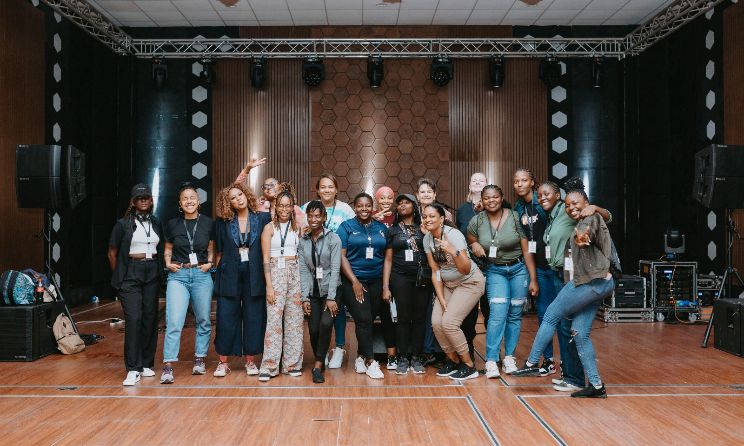
Open call: 2026 Gender@Work music industry training in Johannesburg
03 Oct 2026

Top Afrobeats songs of 2026
19 Mar 2026

AFRIMA 2026: All the winners
12 Jan 2026
Disclaimer: Music In Africa provides a platform for musicians and contributors to embed music and videos solely for promotional purposes. If any track or video embedded on this platform violates any copyrights please inform us immediately and we will take it down. Please read our Terms of Use for more.

Subscribe to our monthly Newsletter
Follow us on social media


Please log in to post a comment.