



















































By Selma Neshiko
The music of Namibia has a number of folk styles, such as Oviritje, Damara Punch, Afrikaans, Hikwa, Shambo, Kwiku, as well as pop, rock, reggae, gospel, jazz, house and hip-hop, but Kwaito remains the face of Namibian popular music. Kwaito in Namibia is seen as the mouthpiece of the ghettos. Many artists use it to express the hardships in their communities, or to brag about what they have or want to achieve. The genre has so many fans hooked on it that many artists started to venture into the kwaito movement.
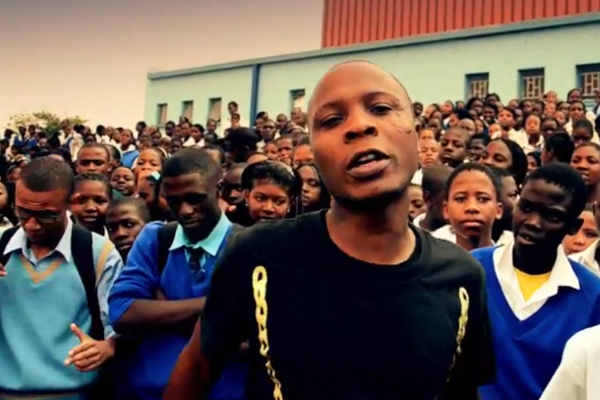
The kwaito genre is the most popular and prosperous music genre in Namibia. It is heavily supported by the youth, who see that the music industry as one of their only opportunities to earn money and achieve fame to escape the hopelessness of the townships. This is because of socio-economic concerns, as many artists enter the music industry as a means of self-employment and with hopes of making a living out of it.
South African roots
Namibian kwaito has been strengthened and directly influenced by the South African style of kwaito, which first emerged in the early 1990s. On various occasions many have debated that kwaito is not a Namibian genre but rather of South African origins. However, over the years Namibian artists have introduced a different type of kwaito, which makes it slightly different to the South African version of the genre and proudly Namibian.
The difference lies largely in production. Namibian producers tend to focus their production on party-oriented music. Some have admitted to the South African influence but changed the style since the early 2000s, making it their own. Music lovers love Namibian kwaito not only because it has a different feel compared to South Africa sounds but because fans can relate to the lyrics that are sang or rapped by the various Namibian kwaito artists.
Kwaito music in Namibia first became popular in the early 2000s. Since then it has led local artists from other genres to switch to kwaito due to its popularity among Namibians. Kwaito is what Namibian music fans want to hear. The message in the music is what has kept Namibian music fans supporting local acts. Today kwaito is still enjoyed mostly in Namibian townships, the reason being that people can relate to its message and the fact that it represents a means for artists to make ends meet.
Interestingly, there have not been many major collaborations between Namibian and South African kwaito artists. One exception is Namibian artist B.O.G, who featured on a bonus track to Zola's 2000 album Umdlwembe, which was produced by Namibian Elias Newton. Gazza is one of the few to collaborate with his South African counterparts, working with the likes of DJ Cleo, Mandoza, Zola, Brown Dash and Bleksem. The Dogg has performed occasionally in South Africa over the past few years and has also worked with various SA artists.
Key artists and albums
Pioneers of the Namibian kwaito include Matongo Family of Katutura. The trio was the first to embark on the Namibian stage with kwaito. They've been famous since 1998 and were arguably the only established kwaito musicians until 2002. Other early kwaito performers include the late Pablo, Oshiwambo rapper Shikololo and Guti Fruit. The Dogg, Legg-Ghetto and Gazza are also considered some of the earliest pioneers of Namibian kwaito.
The Dogg and Gazza in particular have helped shape the genre into what it is today. Soon after their arrival on the Namibian music industry, popular demand for international artists declined. For this reason the two are not only acknowledged for their contribution to the kwaito genre but to the Namibian music in general. Other remarkable figures include Sunny Boy, EES, Qonja, Bone Chuck, Exit, Mushe, Uno Boy and Dollar 6, who entered the industry following The Dogg and Gazza. They ensured that the genre continued to grow, to the point where today it contains more artists than any other genre in Namibia.
The Dogg's 2004 debut album, Shimaliw' Osatana, is considered the blueprint of Namibian kwaito, due to the fact that it was the first kwaito album released in Namibia by an Namibian artist. Other key albums that helped shape the Namibian kwaito genre include Gazza’s Zula II Survive (2004), The Dogg’s Take Out Yo Gun (2004), Sunny Boy’s Young Black en Gifted (2005) and Qonja’s Koek n Jam (2006).
In their music Namibia’s kwaito musicians reflect the beauty and hardships of life in the ghetto, encoded in lyrics using township slang. However, Namibian kwaito does not only protest against the injustices of life. Instead it emphasizes hope, often with a political angle. Many young people in Namibia have no interest whatsoever in politics, although many share a vision for a better future.
Only a handful of Namibian artists have managed to elevate their music beyond the norm, such as Exit, The Dogg and Gazza. These artists have remained committed to the kwaito genre and earned themselves huge fanbases, making them the most popular artists in the country.
Key Labels
Namibian kwaito artists were determined to take kwaito to a broader audience. However, Namibia lacked the major distribution and publishing companies. According to local critics, a lack of focus to produce financially feasible Namibian music products, as well as a lack of effective publicity and distribution channels, are two of the key factors that hinder the growth of the local music scene. A large number of kwaito musicians remain underground due to lack of promotion and support.
In time, however, Gazza Music Production (GMP Records) and Mshasho Productions have emerged to become the two biggest labels promoting kwaito in Namibia. In mid-2015 GMP became the first Namibian label to sign a distribution and publishing deal with Universal Music in South Africa, a major step in exposing Namibian artists to a wider African and international market.
The future of Namibian kwaito
One of the local act to spread Namibian kwaito internationally is Eric Sell, aka EES or Eric Easy Sell. With German-Namibian origins, EES was the first established white kwaito artist in Namibia and has been making an impact for Namibian kwaito music outside of Africa. He was won several awards, among them a MTV Listeners Choice Award (in 2009), Best International Artist at the NAMAs (2011) and a Channel O Music Video Award in 2012 for ‘Ayoba’, a collaboration with South African kwaito star Mandoza. EES continues to represent and endorse Namibian kwaito in Europe.
On the other hand, some kwaito ‘heads’ in Namibia are slowly starting to shift away from the genre towards another genre like house, as is the case in South Africa. But their loyal fans continue to label them as kwaito artists, evidence that some find it difficult to accept other genres. These days kwaito is so diverse that Namibian artists can easily collaborate with house musicians to produce a fusion of kwaito and house, which seems to be where kwaito is heading.


Most popular

Call for applications: ACCES 2026 Emerging Artist Spotlight Competition
01 Oct 2026

Top amapiano songs of 2026
16 Feb 2026

Top Naija songs of 2026
31 Mar 2026

Top Afrobeats songs of 2026
19 Mar 2026
Open call: 2026 Gender@Work music industry training in Johannesburg
03 Oct 2026
AFRIMA 2026: All the winners
12 Jan 2026
Disclaimer: Music In Africa provides a platform for musicians and contributors to embed music and videos solely for promotional purposes. If any track or video embedded on this platform violates any copyrights please inform us immediately and we will take it down. Please read our Terms of Use for more.

Subscribe to our monthly Newsletter
Follow us on social media


Please log in to post a comment.