




















































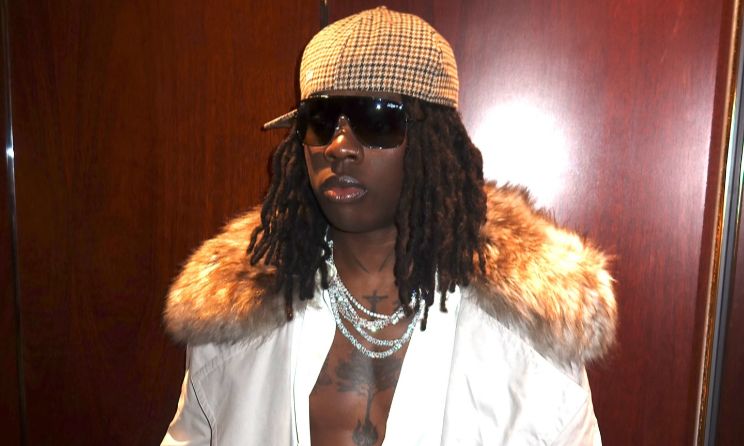
On the last weekend of July, my friend and I got up and on a whim, decided to go watch a live performance by D'banj D Kokomaster at The Koroga Festival, a Kenyan music event that celebrates the greatest African acts from around the continent. Normally, I would only attend the festival when the organisers featured musicians that played Traditional genres of music however, this time i was obliged to, besides the fact my lady friend was crazy about him, I had promised D'banj that i would not miss it.
By the time we arrived the crowd had already filled up the tent. One thing stood out, majority of those in attendance were revelers in their late teens and early thirties. One could literally count the number of those who were forty years and above. More often than not, a reverse of this happens whenever the organisers feature a Traditional musician, where a majority of those in attendance are usually in their late thirties and above.
Long story short, the Traditional African genres of music will in future have very few or no audience at all as the emergence of new genres of music have contributed to the erosion of traditional African genres of music.
Using East Africa as an example, the popularity of genres like Benga from Kenya, Muziki Wa Dansi from Tanzania, Kadongo Kamu from Uganda have over time been taken over by the Dancehall, Bongo and Hiphop genres of music.
Despite this, a good number of Africans still enjoy the Traditional genres however, great musicians and bands are quickly disappearing from the music scene. African bands such as TPOK Jazz and Afrisa International from Congo, Jimmy Katumba and The Ebonies from Uganda, Morogoro band from Tanzania, musicians John Nzenze and Peter Akwabi from Kenya among others, have all been forgotten despite their immense contribution to the growth of the music industy in their respective countries .
What happened? well I can tell you for a fact that firstly, African Bands that had star artists doubling as band leaders did not last longer after the leaders passed away.
In Kenya, years of success were wiped out after the death of Habel Kifoto, leader of Maroon commandos, a musical group from Kenya formed in 1970. Sadly, after Kifoto’s passing in 2011 the band was reduced to just a name performing at the Nairobi millitary barracks in Langata.
Secondly, legendary African bands that have survived over time were either formed collectively or the band leader/s are still alive. Orchestra Virunga was formed in 1981 by Congolese musician Samba Omar Mapangala popularly known as Samba Mapangala. The band released famous songs like 'Marina' and 'Vunja Mifupa'. Over the years some band members died while others left to persue solo careers, he relocated to the USA where he is currently based and performs with musicians on hire as Orchestra Virunga.
Thirdly, African Bands that were taken up by the musician’s family have seen better days. Fela Anikulapo Kuti popularly referred to as Fela is the pioneer of the Afrobeat music genre. He performed with his band the Egypt 80 which is still in exsistence to date. After his death in 1997, his son Seun then only 14 years old became the lead singer of the band and later leader.
Facts a side we must agree that we owe it to the next generation to preserve our African music and dance not only for educational purposes but also for social-economic reasons. It is because of the above reason that we must advocate for the preservation of African music and dance.
One family in Tanzania is making attempts in safeguarding the music and name of Tanzania’s legendary blind percussionist Morris Nyunyusa popularly known as Mzee Morris.
Mzee Morris became the sound of Tanzania Broadcasting News (TBC). Every hour for decades news was announced with a drum riff sounds from his drums. The Tanzanian government honored him by making him the official state percussionist, he drummed for all visitors to the government.
Using ten to twelve drums, Mzee Morris played his drums like a guitar as every drum represented a note. We have heard inspiring stories of great African musicians, one of my favorite is that of Congolese Rumba maestro Franco Luambo Makiadi who hand made his first guitar from a metal tin and strings because he was too poor to buy one. The same goes for Morris as he picked the skins for the drums and made them himself finding in each the perfect tone.
Tanzanian Swahili blues artist Leo Mkanyia told the singing wells early this year of how much he admired Mzee Morris “I met him when I was 10 years old but he had always been a familiar individual because i have listened to his drums all my life – his drums are used to announce the news on TBC. At 14 years old, listening to news became my new hobby because all i wanted was to master his drumming technique.”
Mkanyia is one among the many artists who were inspired by Morris’ work. Since his death in 1999 no one has come close to his legendary skills on the drum. However, his family has ensured that his legacy lives on through his descendants. According to the singing wells project, his son Raphael Nyunyusa created the Nyunyusa Dancing Troupe, which includes two of Mzee Morris’s grandsons, Abdala Nyunyusa Morris on vocals and Rajab Ali Nyunyusa Morris who is a percussionist – he plays twelve drums.
Ali’s skills on the drums is not the only fascinating thing about the group, the group’s dancers perform the snake dance that is famous among the communities in the northwestern part of Tanzania. Unlike the Ethiopian snake dance which emulates the movement of the snake, this particular dance has the dancers play around with snakes. Occasionally, the snake is set upon the audience but one of the dancers pulls it back by the tail just before it strikes making the whole routine comical.
More about Raphael and his dancing group has been highlighted on the book Tanzanian Writers and Their Country by Bridgette Kasuka.
Mzee Morris’ story will always be told to the future generations because his legacy lives on through his son and grand sons, regrettably we rarely get to hear of such success stories.


Most popular

Top amapiano songs of 2026
16 Feb 2026

Call for applications: ACCES 2026 Emerging Artist Spotlight Competition
01 Oct 2026
Open call: 2026 Gender@Work music industry training in Johannesburg
03 Oct 2026

Top Naija songs of 2026
31 Mar 2026

Top Afrobeats songs of 2026
19 Mar 2026
AFRIMA 2026: All the winners
12 Jan 2026
Disclaimer: Music In Africa provides a platform for musicians and contributors to embed music and videos solely for promotional purposes. If any track or video embedded on this platform violates any copyrights please inform us immediately and we will take it down. Please read our Terms of Use for more.

Subscribe to our monthly Newsletter
Follow us on social media


Please log in to post a comment.